TL;DR: the top 10 online auction platforms
- eBay: the biggest audience for almost anything, at about 13.6% in seller fees.
- Whatnot: live-stream auctions for cards, collectibles and sneakers.
- LiveAuctioneers and HiBid: thousands of real auction houses’ sales in one place.
- Catawiki and Heritage Auctions: expert-vetted collectibles, art and coins.
- Proxibid, Copart, GovDeals and Auction.com: equipment, salvage vehicles, government surplus and real estate.
Selling regularly? You can run auctions on your own site instead of paying a commission on every lot. See running your own auction platform.
A $100 sale on eBay costs the seller about $14 in fees. The same $100 lot at Heritage Auctions costs the buyer $122 to $125 once the buyer’s premium is added. Every online auction platform makes its money somewhere, and the fee model tells you a lot about who the platform is really built for.
This list covers the ten platforms that matter most in 2026, grouped by what they’re good at rather than ranked on some made-up overall score. For a longer list of 15, including niche sites, see the best online auction sites. A platform that’s perfect for a pallet of returns is useless for a signed Picasso print. For each one you get what it sells, who bids there, and what it actually costs.
Online auction platforms compared
| Platform | Best for | Auction format | Main fees |
|---|---|---|---|
| eBay | Almost anything, widest audience | Timed, plus Buy It Now | Seller: 13.6% + $0.40 per order (most categories) |
| Whatnot | Trading cards, collectibles, sneakers | Live-stream | Seller: 8% + 2.9% + $0.30 processing (US standard tier) |
| LiveAuctioneers | Art, antiques, jewelry | Live and timed, from auction houses | Buyer’s premium set by each house |
| HiBid | Estate, farm and liquidation lots | Timed and simulcast, from auctioneers | Buyer’s premium set by each auctioneer |
| Catawiki | Curated collectibles, watches, design | Weekly timed, expert-vetted | Buyer: 9% + €3. Seller: 12.5% + fixed fee |
| Heritage Auctions | Coins, comics, sports, currency | Timed and live Signature sales | Buyer’s premium 22% to 25% (min. $29) by category |
| Proxibid | Heavy equipment, industrial, ag | Live and timed, from auctioneers | Buyer’s premium set by each seller |
| Copart | Salvage and insurance vehicles | Timed pre-bid, then live online | Membership $99 to $249 a year, plus buyer fees |
| GovDeals | Government surplus | Timed | Free to register. Some sellers add a premium |
| Auction.com | Foreclosures, bank-owned homes | Timed and live online | Buyer’s premium on most properties |
General marketplaces
1. eBay
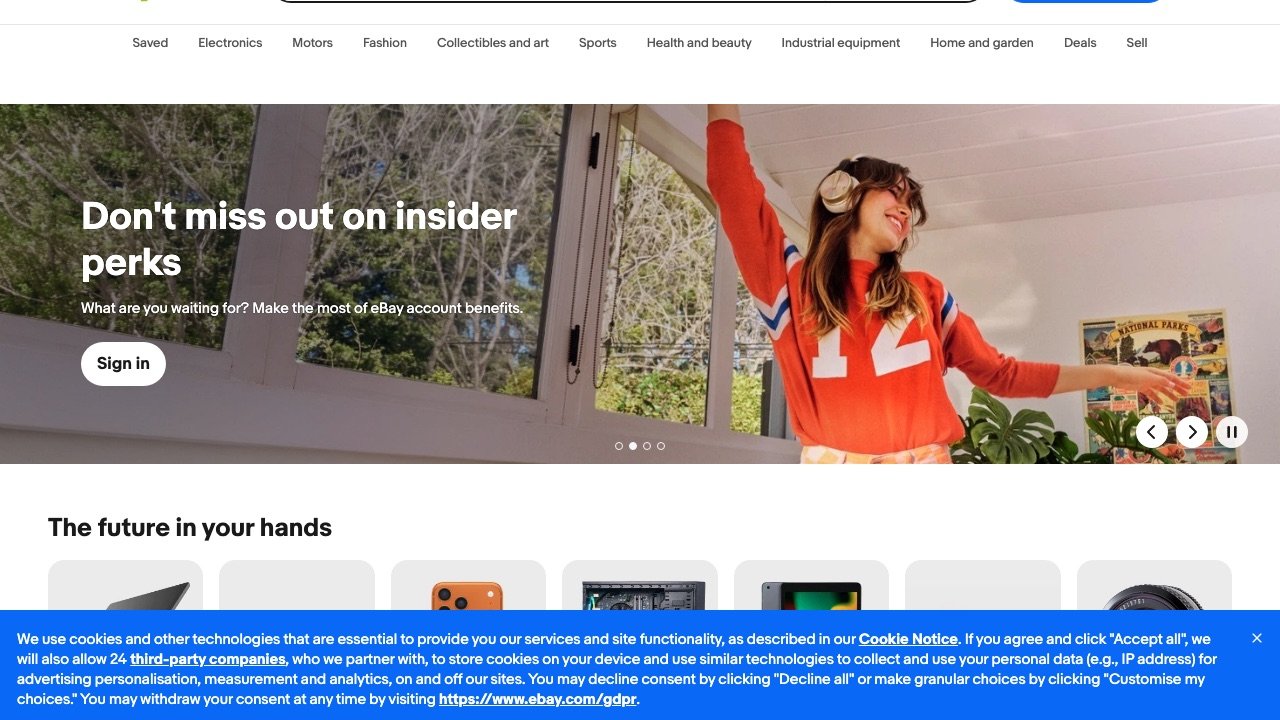
eBay is still where most people start, and for common items it’s hard to beat. Well over 100 million active buyers search it, so a used camera lens or a box of vintage Lego will find someone. Bidding is free. Sellers pay a final value fee of 13.6% on the whole sale (item, shipping and tax) in most categories, plus $0.40 per order, or $0.30 on orders of $10 or less. An eBay Store drops that rate to 12.7%.
The catch is that eBay has spent years pushing sellers toward fixed-price listings, so true auctions now compete with a wall of Buy It Now stock. Auctions still work well when you genuinely don’t know what something is worth. For higher-value watches, sneakers, handbags and trading cards, eBay’s Authenticity Guarantee adds a check before the item ships. Want something else? We compared 22 sites like eBay.
2. Whatnot
Whatnot turned the auction into a live show. Sellers stream, buyers bid in real time, and a lot can close in under a minute. It has grown very quickly since launching in 2019, and it now dominates live selling of trading cards, Pokémon, comics and sneakers.
US sellers pay an 8% commission on the item price at the standard tier (4% on coins) plus 2.9% and $0.30 processing on the full order. Since September 21, 2026, sellers who sell $15,000 or more in a four-week period get a lower rate for the next four weeks. Sellers have to apply and be approved before going live. One caution for buyers: card “breaks” and repacks are a big part of Whatnot, and in 2026 some customers filed arbitration claims arguing they amount to gambling. Know what you’re buying.

Auction house marketplaces
These platforms don’t sell anything themselves. Thousands of independent auction houses and auctioneers list their sales there, and the platform provides the bidding, the search and the audience. That makes them the best places to find real auctions with real auctioneers, and it also means quality and fees change from one seller to the next.
3. LiveAuctioneers
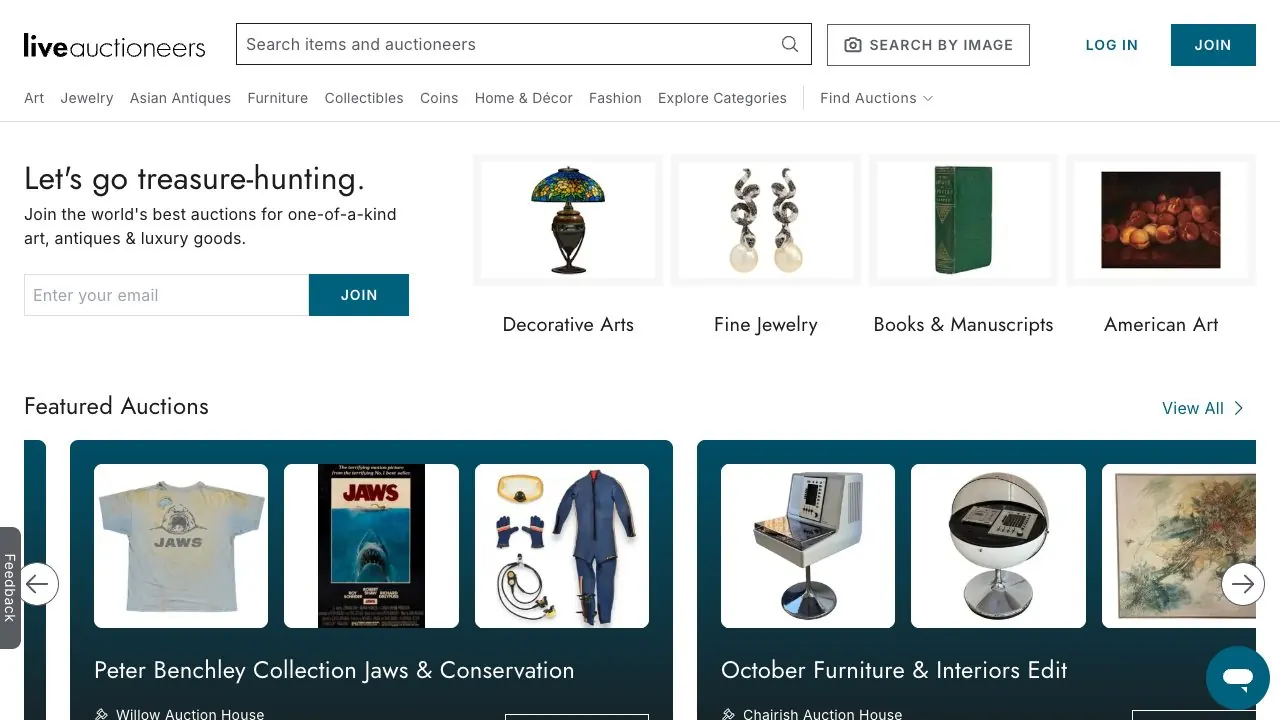
LiveAuctioneers is the main marketplace for art, antiques, jewelry and decorative arts from regional houses, with live bidding into the saleroom as the auctioneer calls the lots. It’s where you’ll find the estate silver and mid-century furniture that never makes the Christie’s catalogue.
Budget carefully. Each house sets its own buyer’s premium, often 20% or more, and some houses add another few percent (5% is common) for bidding through a third-party platform instead of their own site. Our guide to buyer’s premiums shows how fast that adds up.
4. HiBid
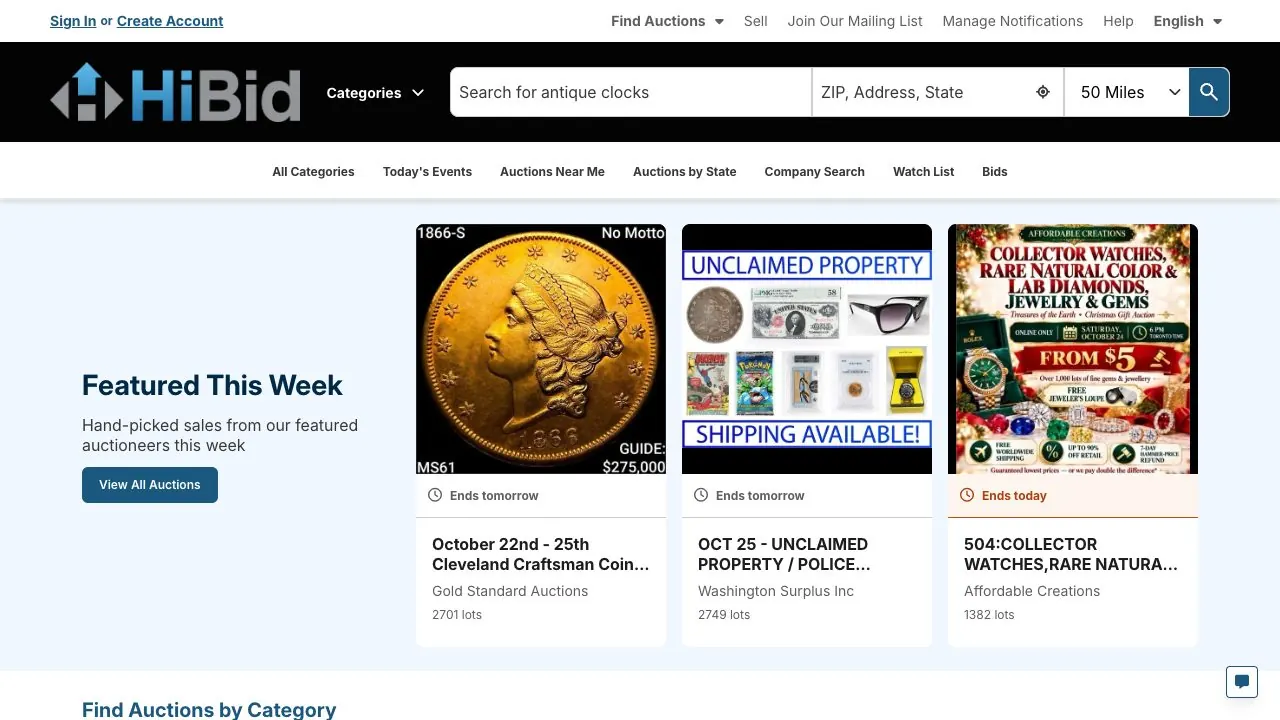
HiBid is the workhorse of North American auctioneers. Estate sales, farm dispersals, business liquidations, consignment nights: a huge share of them run as timed or simulcast auctions on HiBid. Registration and bidding are free, and the auctioneer sets any buyer’s premium.
The listings are uneven. One auctioneer posts 40 photos per lot, the next posts one blurry shot. But if you want genuine bargains near you, HiBid is usually better than anything else here, especially for bulky items you’ll pick up yourself. Estate buyers should also check our list of estate sale sites.
Curated collectibles and specialist houses
5. Catawiki
Catawiki takes the opposite approach to eBay. Every lot is reviewed by an in-house expert before it goes live, and the weekly auctions cover watches, coins, classic cars, comics, art, design and a lot of genuinely strange objects (fossils are a perennial favourite). It’s based in the Netherlands and strongest in Europe.
The fees are clear and fairly high. Buyers pay a Buyer Protection fee of 9% of the winning bid plus €3, and sellers pay a 12.5% success fee plus a fixed amount. Bids are binding: if you win and don’t pay, the order is cancelled and you’re still charged the buyer fee. See our Catawiki alternatives for similar sites.
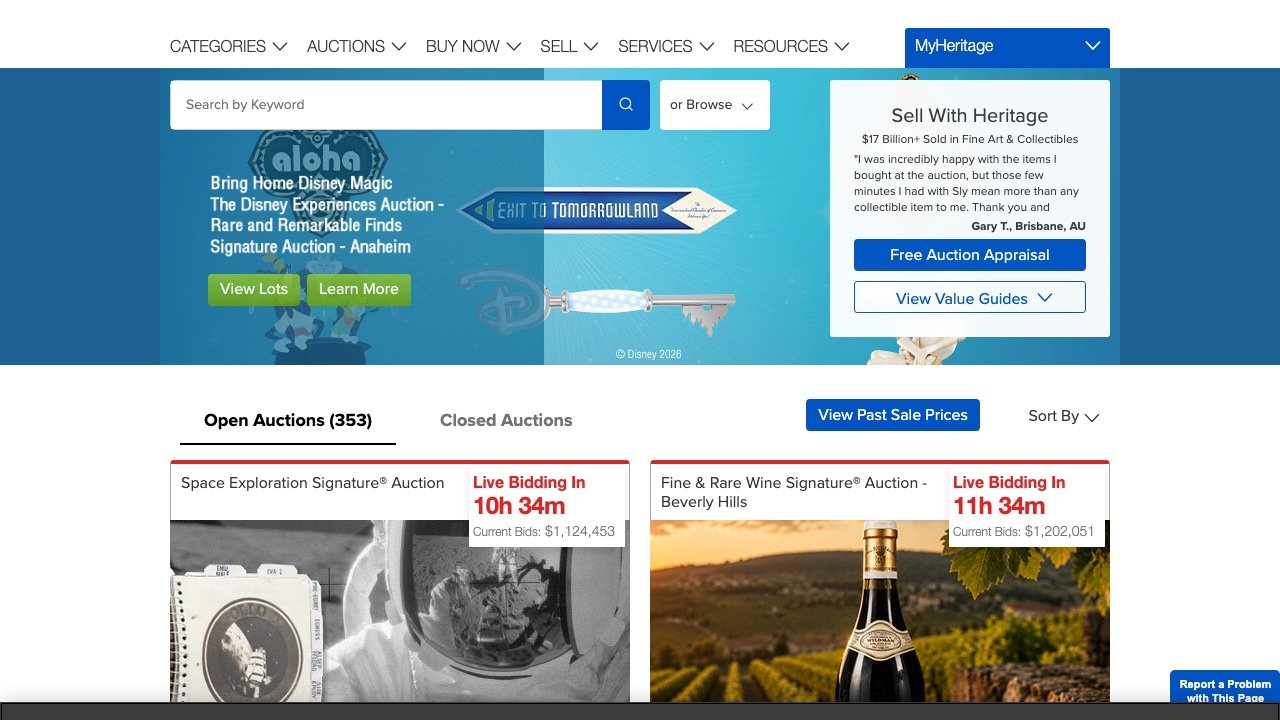
6. Heritage Auctions
Heritage Auctions in Dallas is the biggest name in American collectibles: coins, currency, comics and comic art, sports memorabilia, movie posters and much more, with weekly internet sales alongside its big Signature auctions. Its archive of past results is one of the best free pricing tools any collector has.
Buyers pay a premium per lot that depends on the category. In 2026 it’s 25% for comics and 22% for currency, each with a $29 minimum, so a $40 comic book really costs $69 before shipping. Fine for important pieces. Painful for cheap ones. More options are in our list of collectibles auction sites.
Equipment, vehicles, surplus and property
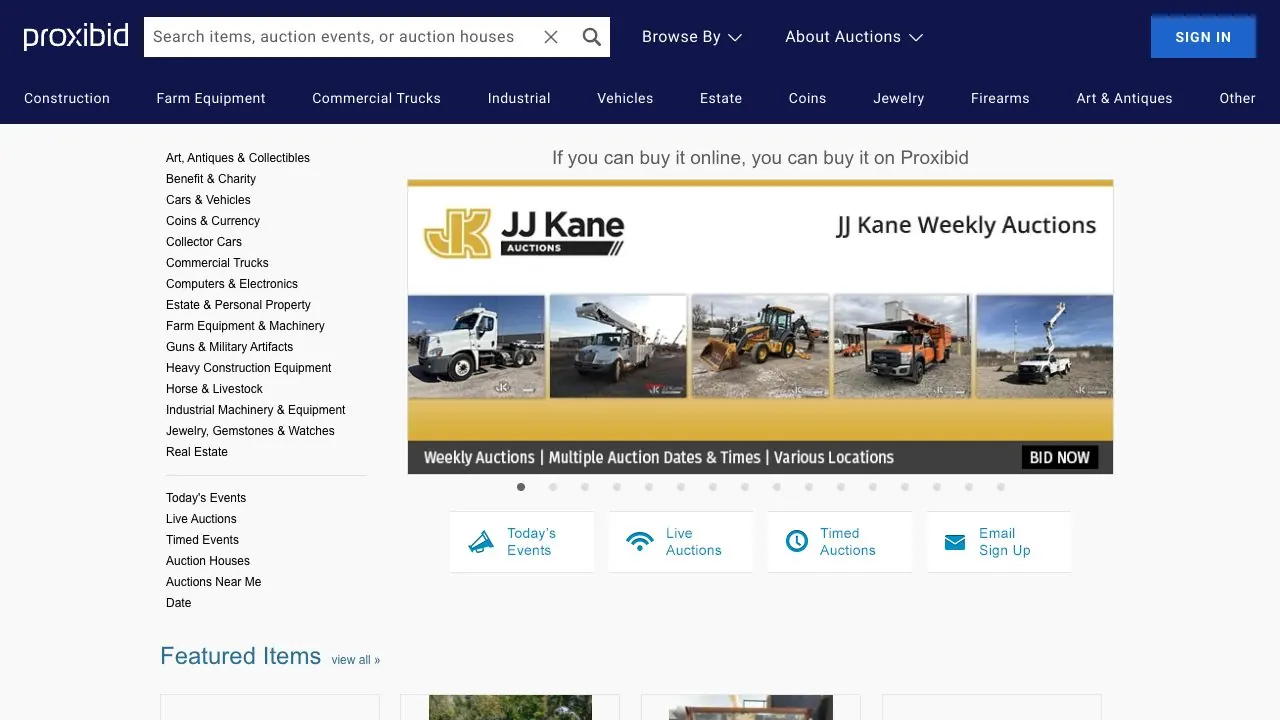
7. Proxibid
Proxibid is what HiBid would be if it only cared about machinery. Auctioneers use it for construction equipment, trucks, farm machinery, industrial plant closures and a fair amount of firearms and collectibles on the side. Bidders are mostly businesses, and lots often sell for five or six figures. Each seller sets its own buyer’s premium and terms, so read them per sale. For more options, see our list of heavy equipment auction sites.
8. Copart
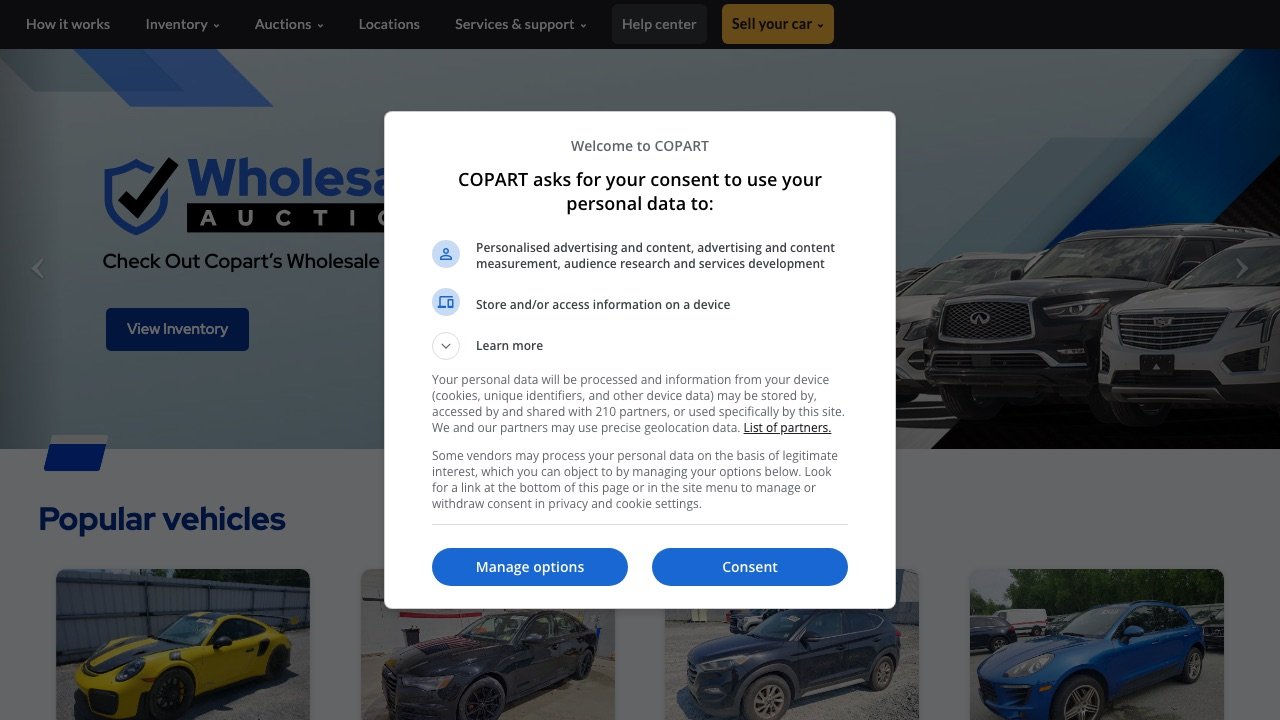
Copart sells cars that insurance companies, rental fleets and dealers want gone, many with salvage titles. You need a membership to bid: Basic costs $99 a year and lets you buy up to $2,000 a day without a deposit, while Premier costs $249 a year plus a $400 refundable deposit and raises the limit to $100,000 a day. Buyer fees, gate fees and storage come on top.
Without a dealer license, you’re limited to lots marked “No License Required” unless you bid through a broker. That rule depends on the state where the car sits, not where you live. Our explainer on how salvage auctions work covers the rest, and the best car auction sites list covers clean-title alternatives.
9. GovDeals
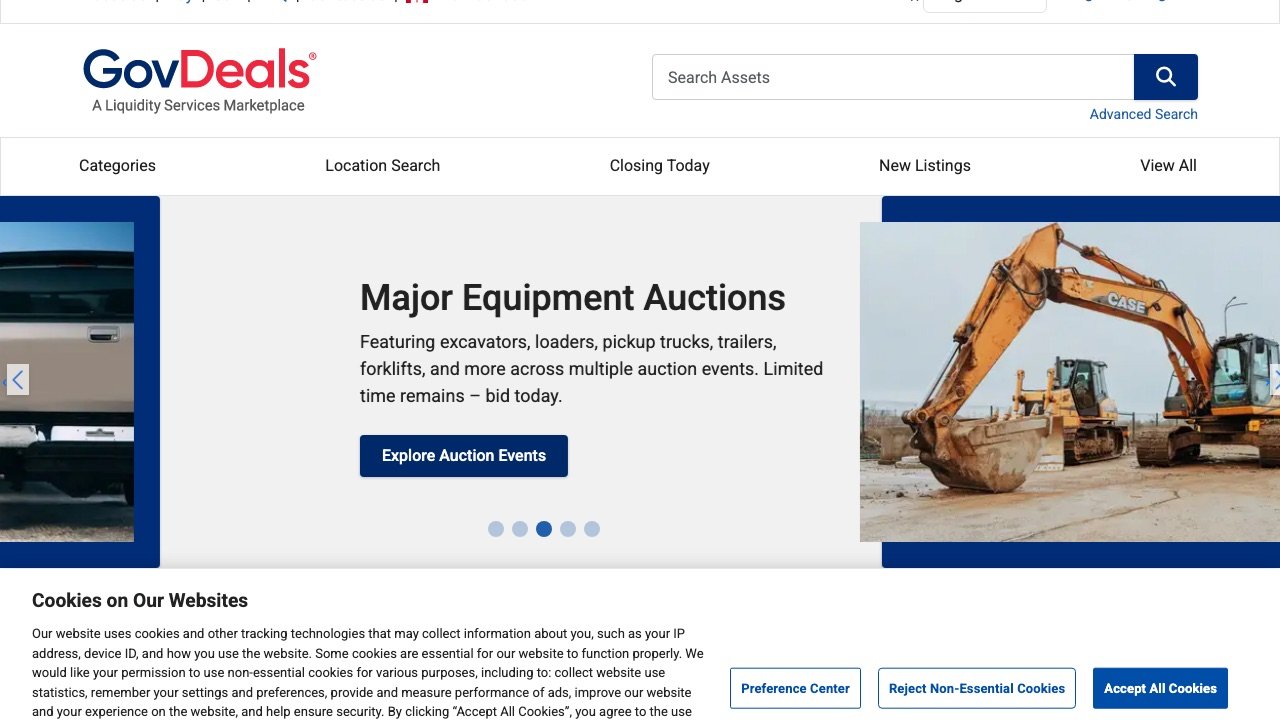
GovDeals is where cities, counties, school districts and police departments sell what they no longer need: retired patrol cars, dump trucks, office furniture, laptops by the pallet. The seller’s goal is disposal, not profit, so prices can be very low. Registration is free. Each agency sets its own payment terms, pickup window and any buyer’s premium, and almost everything is sold as-is with pickup required. We cover more options in our government auction sites guide.
10. Auction.com
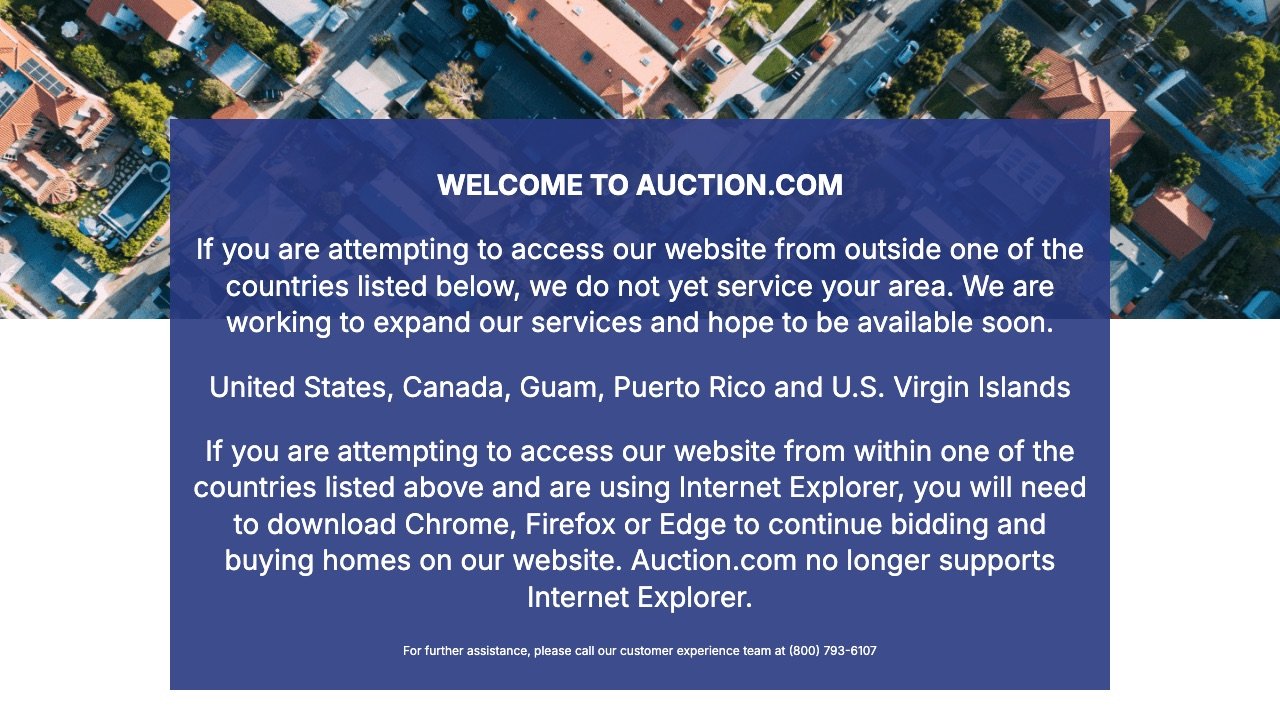
Auction.com is the largest online marketplace for foreclosures and bank-owned homes in the US. Investors use it to buy properties below market value, and it suits them far better than first-time buyers. Many homes can’t be inspected inside, most properties carry a buyer’s premium, and the funding and closing rules are stricter than a normal purchase. Read the property’s terms before you bid, not after. Our Auction.com alternatives compares other real estate auction sites.
How to pick the right platform
Start with what you’re buying or selling, not with the platform. The right one is wherever your buyers already are. A 1960s Omega belongs on Catawiki or LiveAuctioneers, a skid steer on Proxibid, a Charizard on Whatnot. eBay is the fallback for everything else.
Then work out the real price. On auction-house marketplaces, the buyer’s premium is usually the biggest number you’ll pay after the hammer price, and it varies from 0% to more than 30%. Add it, add shipping or freight, add tax, and set your maximum bid from that total. On a $500 hammer price with a 25% premium, $60 shipping and 8% tax, you’re paying about $735.
Check the rules that bite later. Is the bid binding? (Almost always, yes.) Can you return the item? Heritage gives a three-day return window on most internet auctions; many regional houses sell strictly as-is. How long do you have to pay and collect? Government and liquidation sales often give you a few days before the lot is forfeited. And for vehicles and property, confirm you’re actually allowed to buy before you bid.
Sellers have one extra question: how much of each sale goes to the platform? Between commission, processing and promotion, it’s common to give up 12% to 20% of every sale on a marketplace. That’s worth paying while you build an audience. Once you have regular buyers, it’s often money you don’t need to spend.
Running your own online auction platform
Every platform above has the same bidding engine underneath: lots, increments, proxy bids, timers, invoices. What it really sells is its audience. That’s why auction houses, dealers and liquidators who already have buyers tend to move their sales onto their own website, where they keep the buyer list, set their own premium and stop paying commission on every lot. We explain the economics in how online auction sites make money.
If you’re building one, these are the features that matter in a real sale:
- Proxy bidding and soft close, so serious bidders aren’t sniped in the last second.
- Timed, live simulcast and sealed-bid formats.
- Bidder approval, deposits or card authorization before people can bid on big lots.
- Your own buyer’s premium and invoicing.
- Buy It Now for stock between auctions.
- Escrow for high-value items.
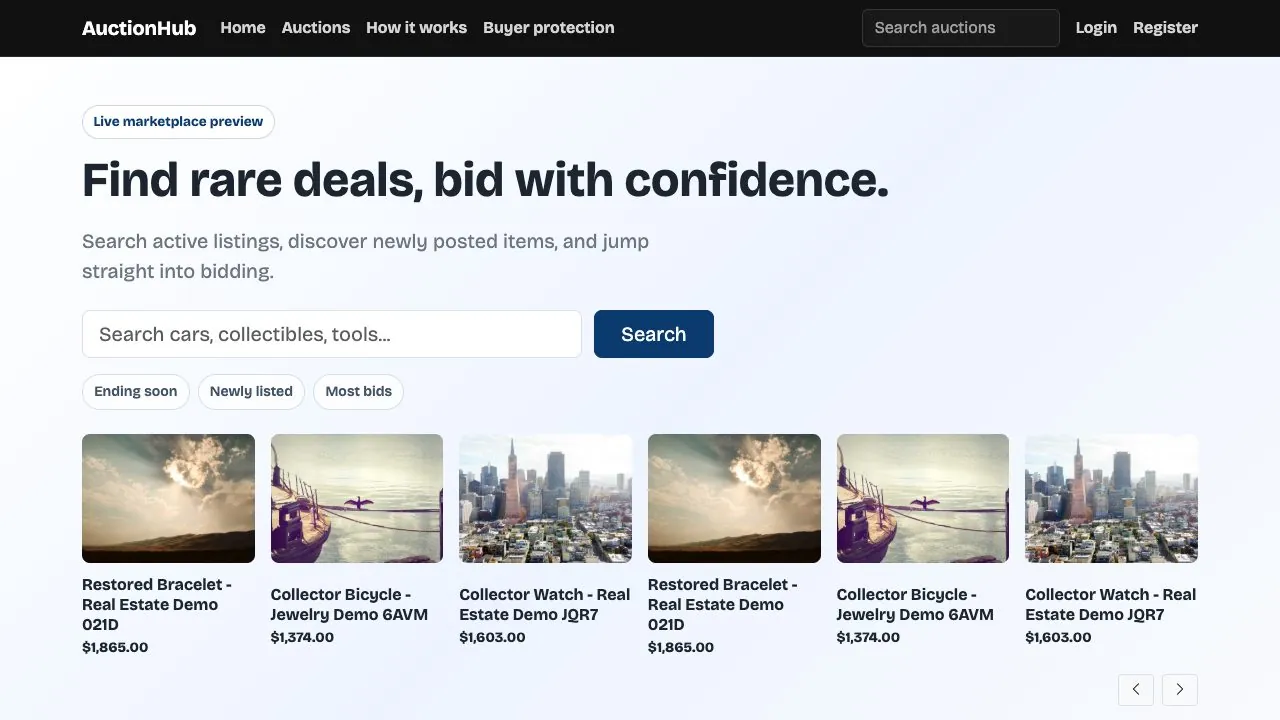
Our auction software covers that list. It runs on your own server under your brand, and our team installs and sets it up at no extra cost. It’s a one-time license from $899 to $2,999, with no monthly fees and no commission on your sales. Escrow.com integration, live simulcast, sealed bids and Buy It Now are included, and we can build and publish your own iOS and Android app. Custom features such as VIN decoding or lot-specific document fields are typically $1,000 to $10,000 one time. See the auctioneer software features, or compare the best auction website builders.
Launch your own online auction platform
Try the live demo, see license pricing, or tell us what you sell.
Frequently asked questions
What is the most popular online auction platform?
eBay, by a wide margin. It has the most buyers and the widest range of categories. For live-stream auctions, Whatnot is the best-known name, and for traditional auction houses, LiveAuctioneers and HiBid are where most regional sales are listed.
Which online auction platform has the lowest fees?
For sellers, Whatnot’s standard rate (8% plus processing) is lower than eBay’s 13.6% in most categories. For buyers, GovDeals and many HiBid sales charge little or no premium, while specialist houses usually charge 20% or more.
Are online auction platforms safe?
The established ones are. Pay through the platform, never by wire to a stranger, read the condition report and terms before bidding, and for high-value items use a platform with authentication or escrow.
Can I create my own online auction platform?
Yes. Auction software lets you run timed, live or sealed-bid auctions on your own website, so you keep your buyer list and pay no commission to a marketplace. See our pricing for what it costs.
