Catawiki’s proposition is simple: an expert looks at your object before it goes live, which means buyers trust the catalogue. For a private seller with one good item and no auction house relationship, that vetting is genuinely valuable.
The frustrations are equally predictable — submissions get rejected, listing timing is out of your hands, and seller fees are not trivial. Here are eight alternatives.
Curated and vetted alternatives
1. Bidsquare
Founded by a group of established auction houses with deliberately tight admission standards for participating sellers. Smaller catalogue, higher average quality, and a buyer base that understands the difference.
2. 1stDibs
Vetted dealers selling high-end design, furniture, jewellery and art, predominantly at fixed prices with some auction activity. Slower than an auction, generally higher realised prices on the right material, because the buyer is a designer furnishing a specific project rather than a bargain hunter.
3. The RealReal
Luxury fashion, watches and jewellery with authentication built in. Consignment rather than auction, but the same fundamental proposition — expert verification as the product.
Specialist auction houses
4. Heritage Auctions
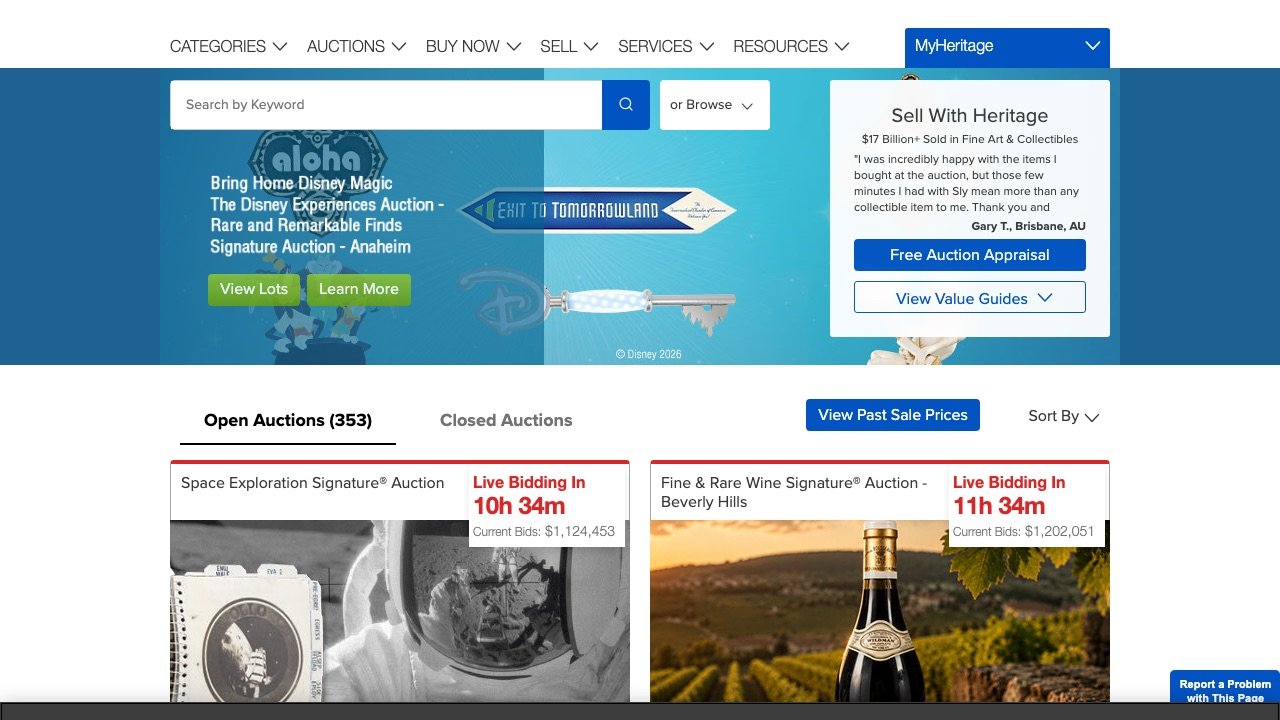
Broad specialist coverage across coins, comics, cards, memorabilia, Americana and more, with excellent cataloguing and research. For material in their categories, the buyer reach substantially exceeds a general curated marketplace.
5. LiveAuctioneers and Invaluable
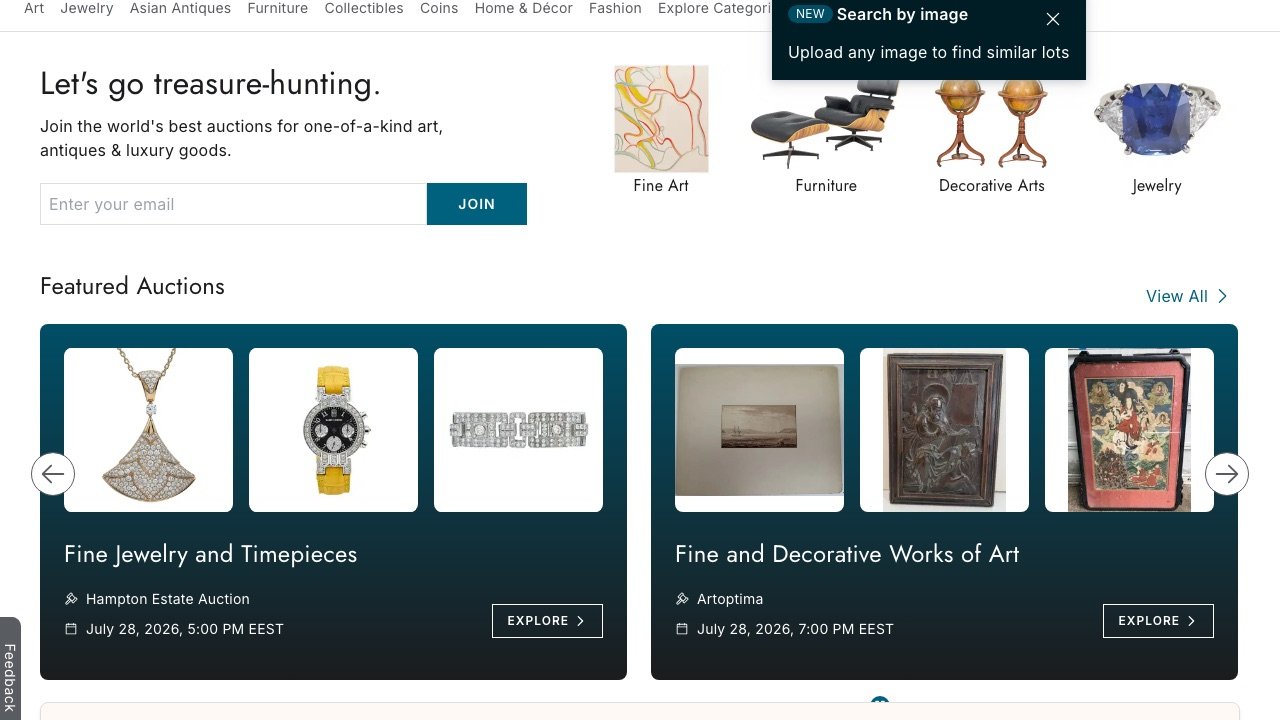
Not curated in Catawiki’s sense — they aggregate salerooms rather than vetting individual lots — but consigning to a good regional auction house that lists on these platforms achieves something similar. The house does the vetting; the platform provides the audience.
6. Artsy
For fine art specifically, connecting galleries and auction houses with collectors. A better audience for contemporary work than any general collectibles platform.

Open marketplaces
7. eBay
No vetting, no gatekeeping, no rejection. The trade is that buyers assess your credibility themselves, which means you need a track record to achieve good prices on significant items. Authentication programmes now cover several high-value categories, which narrows the gap considerably.
8. eBid and Delcampe
Lower-fee alternatives with smaller but genuine audiences. Delcampe in particular has deep European collectibles roots — stamps, postcards, coins — where its audience is larger than any US platform’s.
How to choose
Three questions:
- Does your object need explaining? If its value depends on details a general buyer would miss — a variant, a maker’s mark, an unusual provenance — vetting and expert cataloguing earn their fee. If it is instantly recognisable, they do not.
- Where does the specific buyer already look? European collectibles perform better on European platforms. US sports memorabilia performs better on US specialist houses. This matters more than any general ranking.
- What is the total cost to the buyer? High stacked premiums suppress bidding, and suppressed bidding comes out of your hammer price. See what a buyer’s premium is.
Why rejections happen
If Catawiki turned your item down, the usual reasons are worth knowing because they apply everywhere:
- Photography that does not show what the expert needs — hallmarks, signatures, condition detail
- Missing information the category requires, such as a reference number or dimensions
- Value below the platform’s threshold for that category
- Too many similar items already scheduled
- Genuine doubt about authenticity or attribution
Fixing the first two solves a large share of rejections, and improves your results wherever you eventually list.
For dealers considering their own platform
Dealers with an established following increasingly run their own curated timed auctions rather than paying a marketplace. You do your own vetting — which you are doing anyway — and keep the commission.
We covered the architecture of a curated marketplace in building a curated auction platform, and the platform layer in custom auction software.
Frequently asked questions
What does Catawiki charge sellers?
A seller commission on the hammer price, with buyers paying a separate premium. Rates vary by category — check current terms directly, as they change.
Which alternative accepts the widest range of items?
eBay, by a distance, since there is no vetting at all. The trade-off is that you supply the credibility yourself.
Is expert vetting worth the fee?
On objects whose value depends on details a buyer cannot verify from photos, yes, clearly. On straightforward, recognisable items, you are paying for a service that adds little.