Estate sales sit at an unusual intersection: the seller is usually a family under time pressure, the inventory is a whole household of unrelated objects, and nobody involved is an expert on most of it. That combination is why estate sales remain one of the last places a knowledgeable buyer can genuinely find something underpriced.
Here are nine platforms, useful from both sides of the transaction.

Directories and listings
1. EstateSales.net
The dominant directory for traditional in-person estate sales in the US. Companies list upcoming sales with photos and dates; buyers search by location. Not a bidding platform — it tells you where to turn up on Saturday morning.
Set up email alerts for your area. The good sales are picked over within an hour of opening, and the alert is how you find out in time.
2. EstateSale.com and AuctionZip
Similar directory function with different regional coverage. Worth checking both, since estate companies rarely list everywhere.
Online estate auctions
3. EBTH (Everything But The House)
Online estate auctions with professional photography, research and cataloguing. Every item starts at a low opening bid with no reserve, which produces genuine bargains on categories their buyer base does not favour. Strong on furniture, decorative arts and jewellery.
4. MaxSold
Online estate auctions with a distinctive model: everything starts at $1 with no reserve, and buyers collect in person on a scheduled day. The $1 start is genuinely committed to, which draws large bidder numbers and produces both extraordinary bargains and surprisingly strong results on desirable lots.

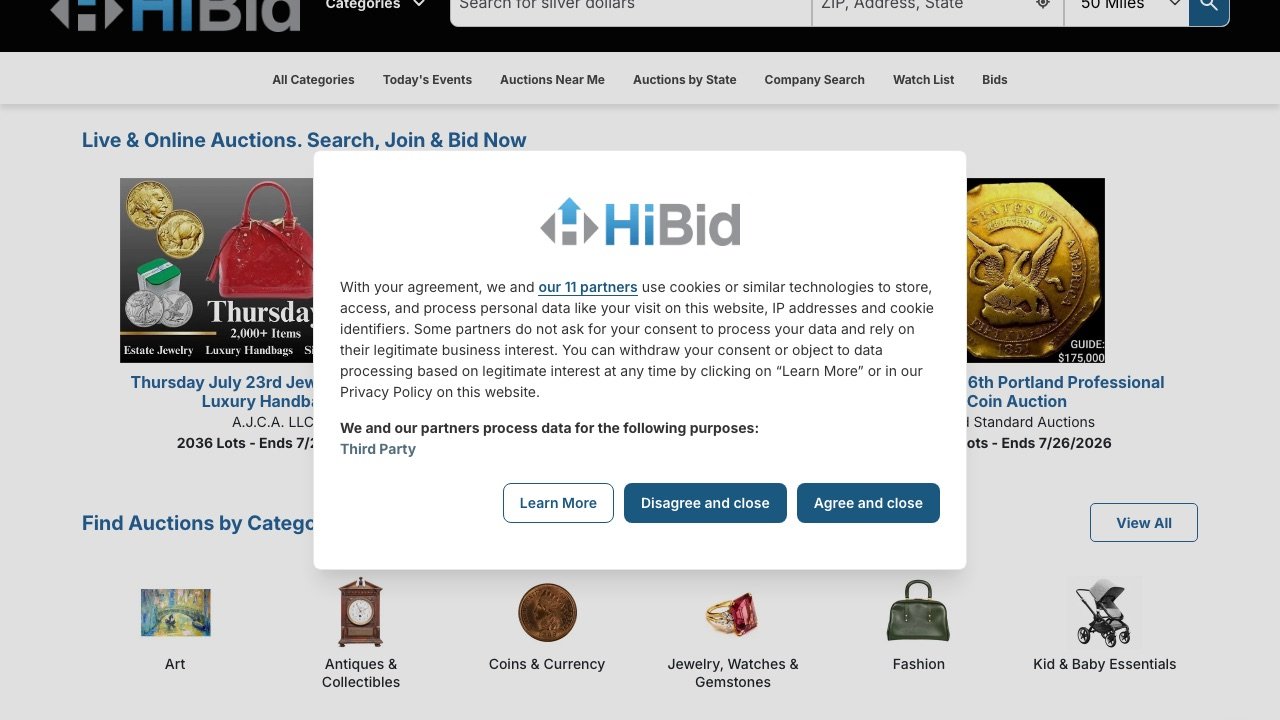
5. HiBid
Where a very large share of independent estate auctioneers list their sales. Filtering by location surfaces regional estate auctions that never appear on the specialist platforms — and because fewer buyers search this way, competition is thinner.
6. LiveAuctioneers
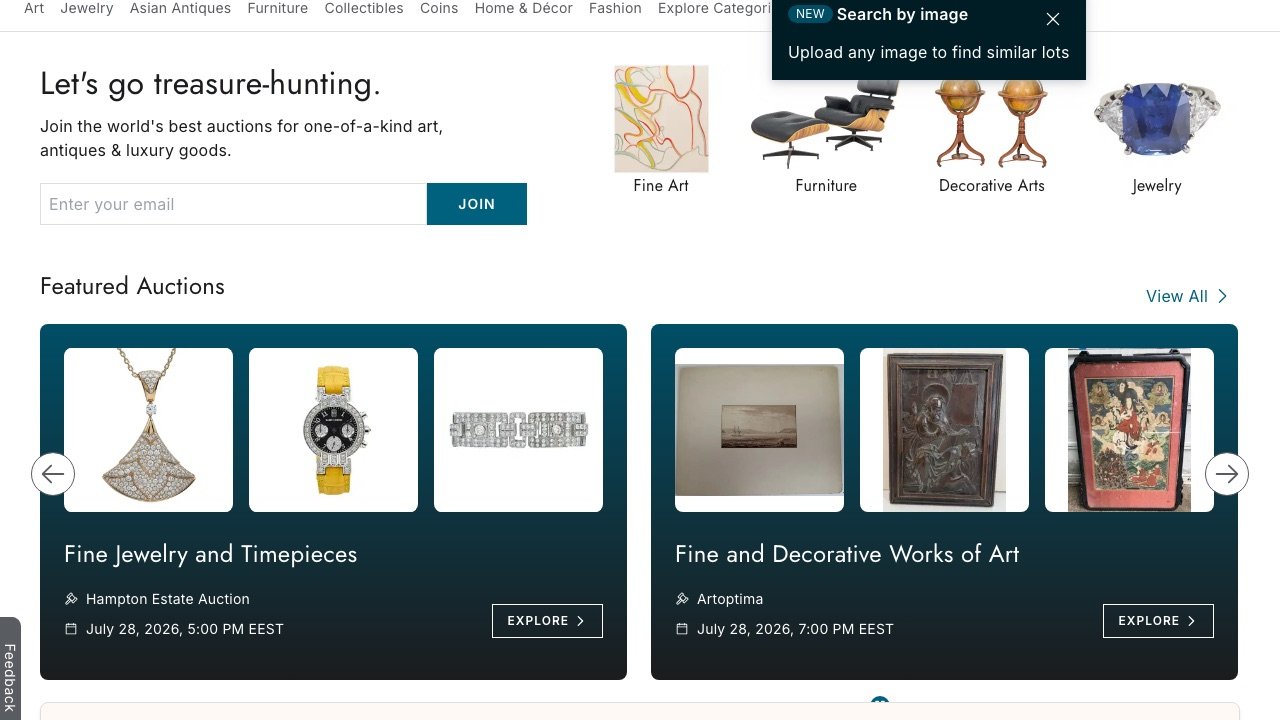
Estate material with genuine collectible value tends to be routed here by auction houses, since the audience is collectors rather than general buyers. Better prices for the consignor, worse bargains for the buyer.
Marketplace routes
7. eBay
Where a great many estate items eventually end up, listed by the dealers who bought them at the estate sale. Useful for research — checking what similar items have actually sold for before you bid at an estate auction.
8. Facebook Marketplace and local groups
Families increasingly sell furniture and household goods directly rather than engaging a company. No fees, no protection, and a lot of no-shows. Worth watching if you are local and patient.
9. Specialist consignment for high-value items
When an estate contains something genuinely significant — a painting, a watch collection, important furniture — it should be pulled out and consigned to a specialist rather than sold with the household. The value difference is frequently several multiples.
For buyers: where the value hides
- Categories the estate company does not understand. Tools, audio equipment, books, sewing and textile equipment, and technical instruments are routinely underdescribed and underpriced.
- Sales in inconvenient locations. Rural sales with poor access have fewer bidders. Fewer bidders means lower prices.
- Bulk and box lots. Where the good item is buried in a box of ordinary ones, priced as a box.
- Last day of an in-person sale. Discounts are steep because the company needs the house empty.
- Poor photography. Genuinely — items photographed badly attract fewer bids, and the item is not worse for it.
For families: what to know
If you are facing a house that needs emptying, a few practical points. Estate companies typically charge a commission of 30-50% for a full-service in-person sale — high, but it covers staffing, pricing, security and clearing. Online estate auction companies charge less but require you to accept no-reserve pricing.
Have anything potentially significant appraised before the sale, not after. And be realistic about ordinary furniture: brown furniture in particular has very little market value now, regardless of what it cost originally. The service you are buying is disposal, not maximisation.
For estate companies running their own sales
Companies handling regular volume increasingly run their own online bidding rather than paying a platform per sale. The requirements are specific to the category: rapid bulk lot creation, since an estate produces hundreds of lots in a day; photo-first cataloguing with minimal typing; scheduled pickup windows with time slots; and consignor settlement statements for the family.
That rapid lot creation is the critical one. A system that takes three minutes per lot is unusable when you have 400 lots and two days. See auctioneer software and auction management system for the workflow, and launching a local online auction business for the commercial model.
Frequently asked questions
Are estate sales cheaper than auctions?
In-person estate sales are priced by the company, so there is no bidding to drive prices up — but also no bargain if they priced it well. Auctions can go either way. The best value is usually a no-reserve online estate auction in a thin market.
How do I find estate sales near me?
EstateSales.net with location alerts, plus HiBid filtered by distance for auction-format sales. Both are free.
What commission do estate sale companies charge?
Commonly 30-50% for full service in-person sales, less for online-only auction formats. Get more than one quote; rates vary considerably by market.
