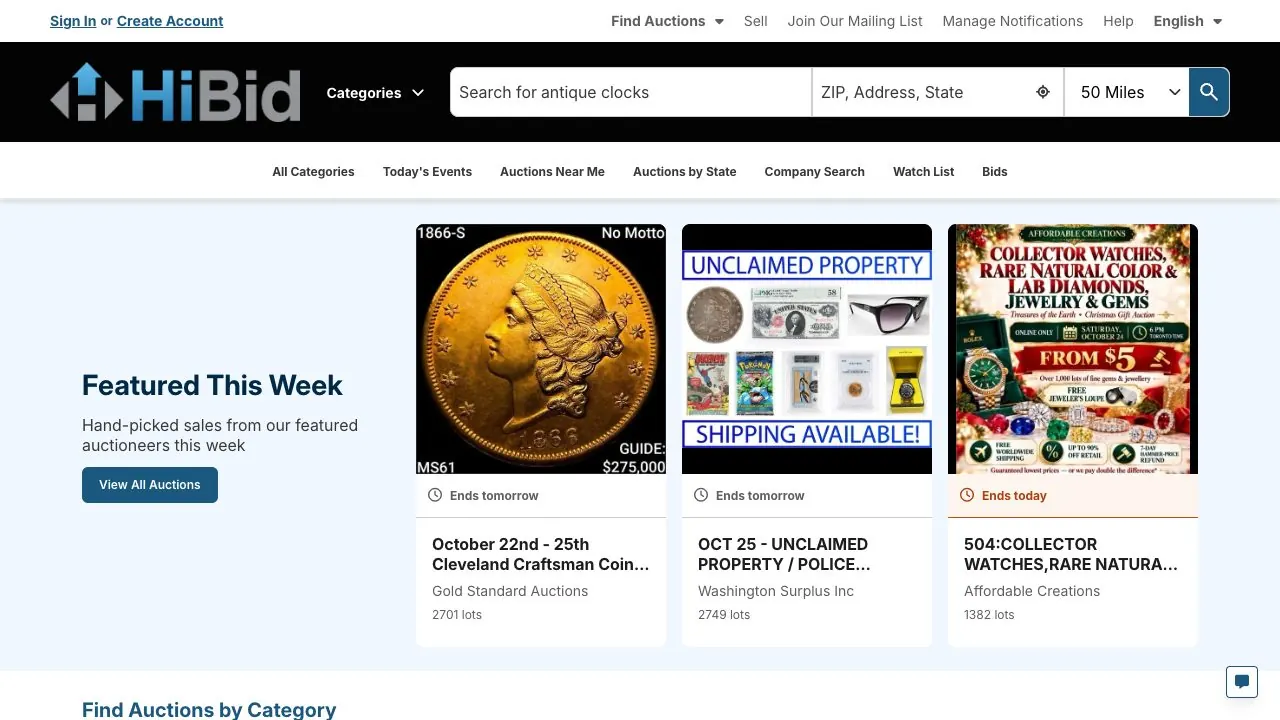
HiBid is where a huge share of North American online bidders already are, so most regional auction houses list there by default. The trouble shows up later. Your sale sits next to nine hundred others, the internet commission becomes a permanent line on every settlement, and the bidder who registers for your auction becomes HiBid’s customer rather than yours.
Below are eight alternatives, each fixing a different part of that, plus the hybrid setup most established houses end up running.
TL;DR: the short list
- Proxibid: the closest like-for-like swap for general-line auctioneers
- AuctionZip: estate and antiques audiences, strongest on the East Coast
- Maxanet: a white-label timed-auction tool rather than a marketplace
- LiveAuctioneers and Invaluable: art, antiques and jewellery
- EquipmentFacts: heavy equipment and farm machinery
- BidSpotter: industrial plant and business liquidations
- Your own branded bidding site: keep the commission and the bidder list
Running more than a sale a month? Auctioneer software you own starts at $899 one-time, with no per-lot or per-bidder fees.
HiBid alternatives compared
| Platform | Best for | Type | Who owns the bidder |
|---|---|---|---|
| Proxibid | General consignment, firearms, coins, equipment | Marketplace | Platform |
| AuctionZip | Estates, antiques | Listing directory + bidding | Platform |
| Maxanet | Timed online sales | Hosted software | Mostly you |
| LiveAuctioneers | Art, antiques, jewellery | Marketplace | Platform |
| Invaluable | Fine art, European reach | Marketplace | Platform |
| EquipmentFacts | Construction and farm machinery | Marketplace | Platform |
| BidSpotter | Industrial plant, closures | Marketplace | Platform |
| Your own platform | Any house with a repeat audience | Self-hosted software | You |
Direct aggregator alternatives
1. Proxibid
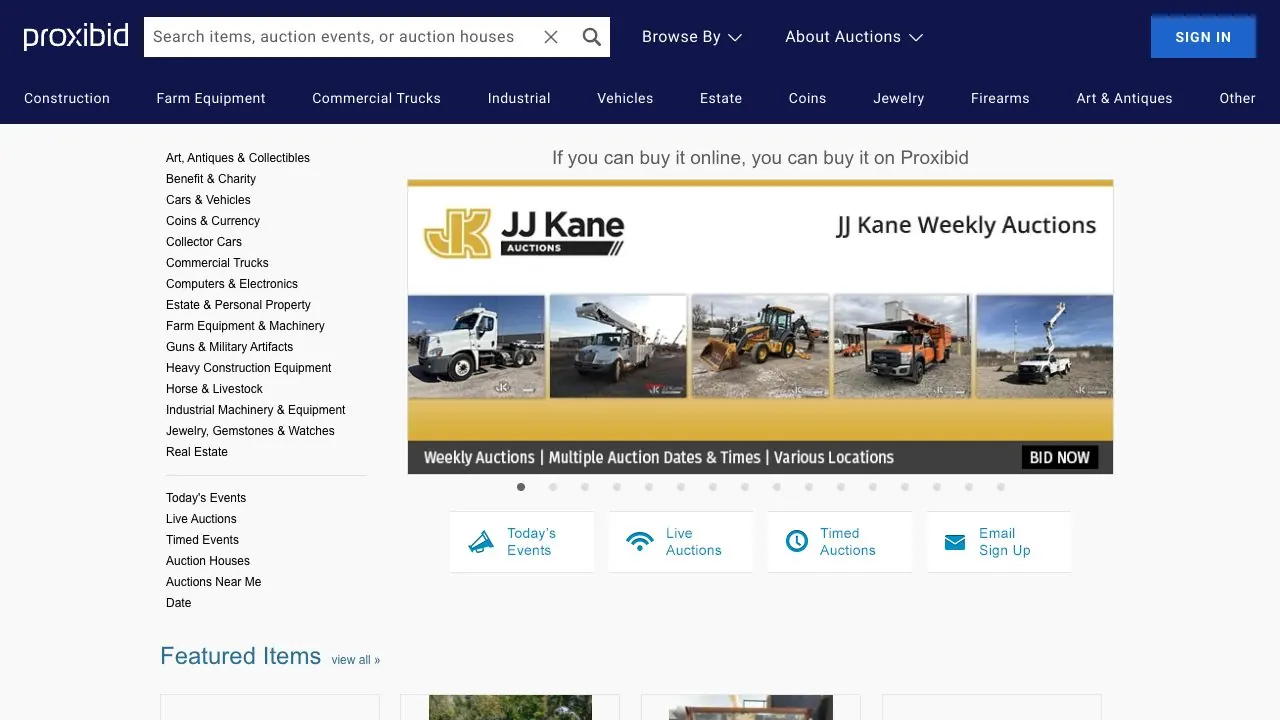
The most direct competitor for general-line houses. It’s strong in firearms, coins, equipment and estate material, and its bidders skew a little more serious than the general-consignment crowd. Commission is broadly comparable to HiBid’s. Proxibid now sits inside Auction Technology Group, the same company behind LiveAuctioneers and BidSpotter, so switching between those three changes the storefront more than the landlord. We compare it in detail in Proxibid alternatives.
2. AuctionZip
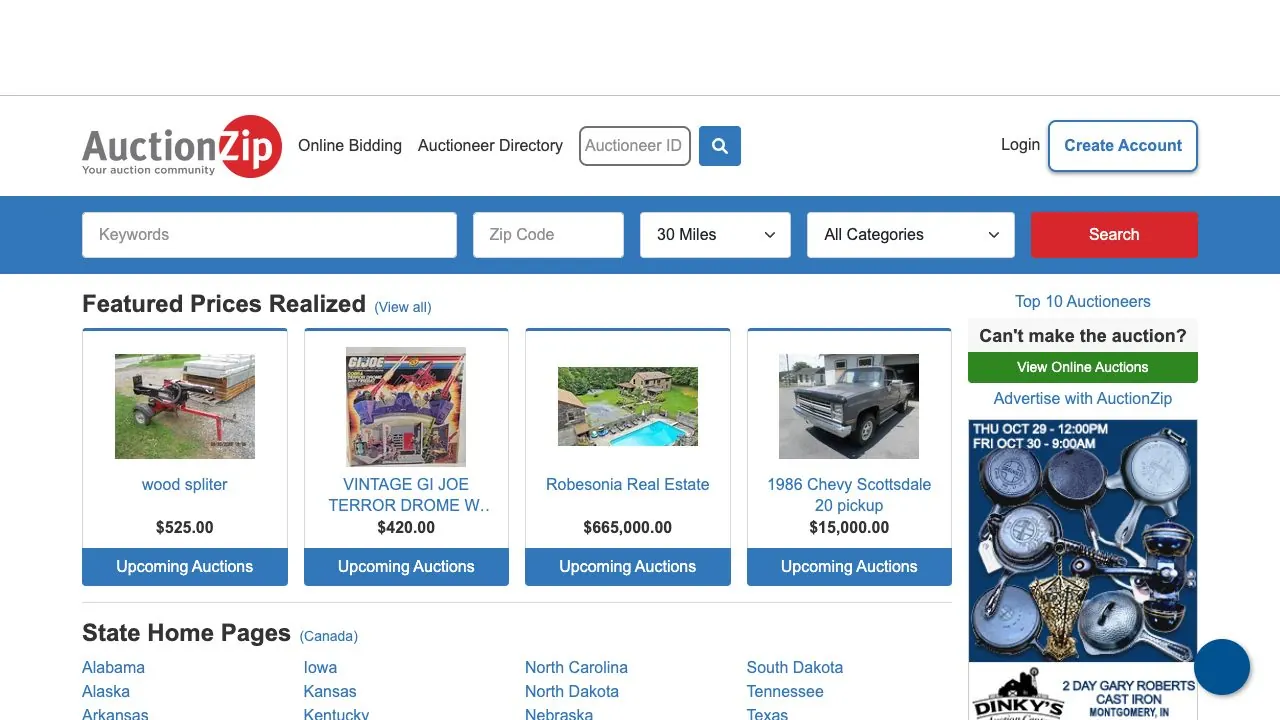
Deep roots in the estate and antiques community, particularly on the US East Coast. The interface shows its age. The audience, though, is specific and loyal in a way newer platforms haven’t copied, and plenty of buyers still browse it by ZIP code every week.
3. Maxanet
A long-running tool used by many independent auctioneers for timed online sales. It does less consumer marketing than HiBid and works more like software you rent: your branding, their hosting. That’s a step toward owning your bidders, but you’re still on a subscription.
Category specialists
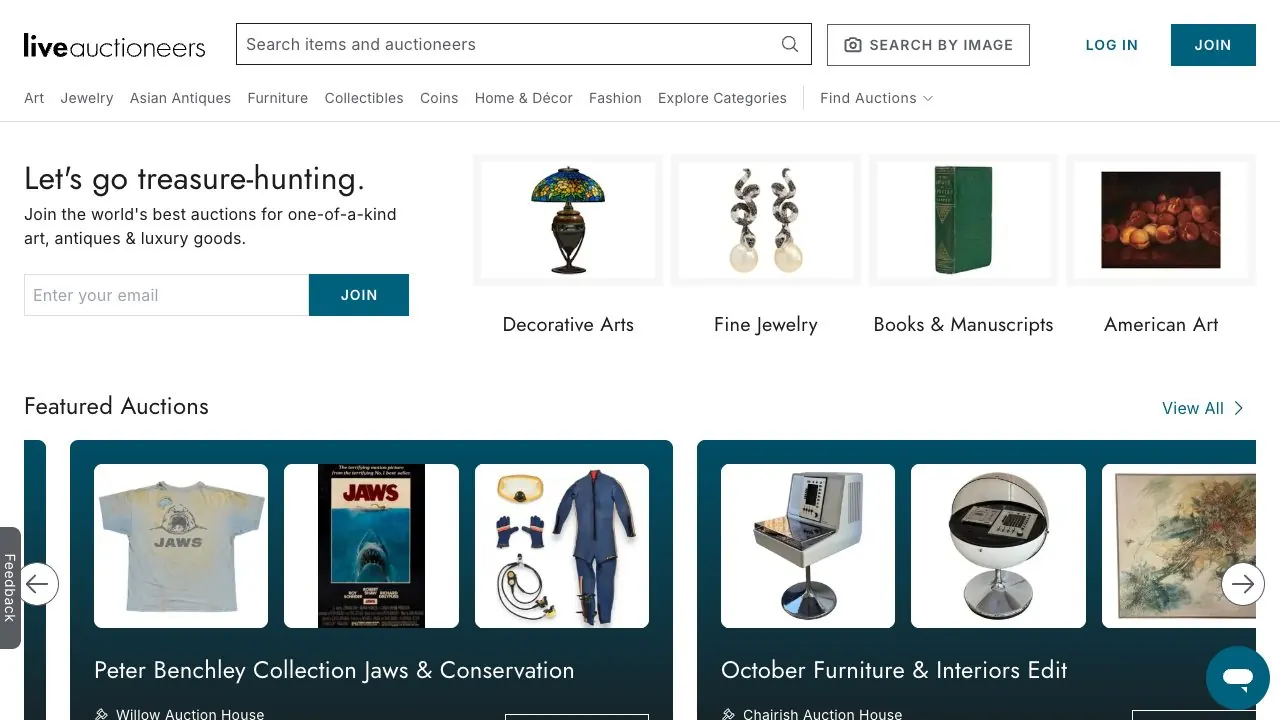
4. LiveAuctioneers
If your consignments are art, antiques, jewellery or decorative arts, this delivers collectors and dealers rather than bargain hunters. Buyer’s premiums stack (house premium plus an online surcharge) and can push total buyer cost past 28%, which affects how high people bid. On good material the results still justify it. More options in LiveAuctioneers alternatives.
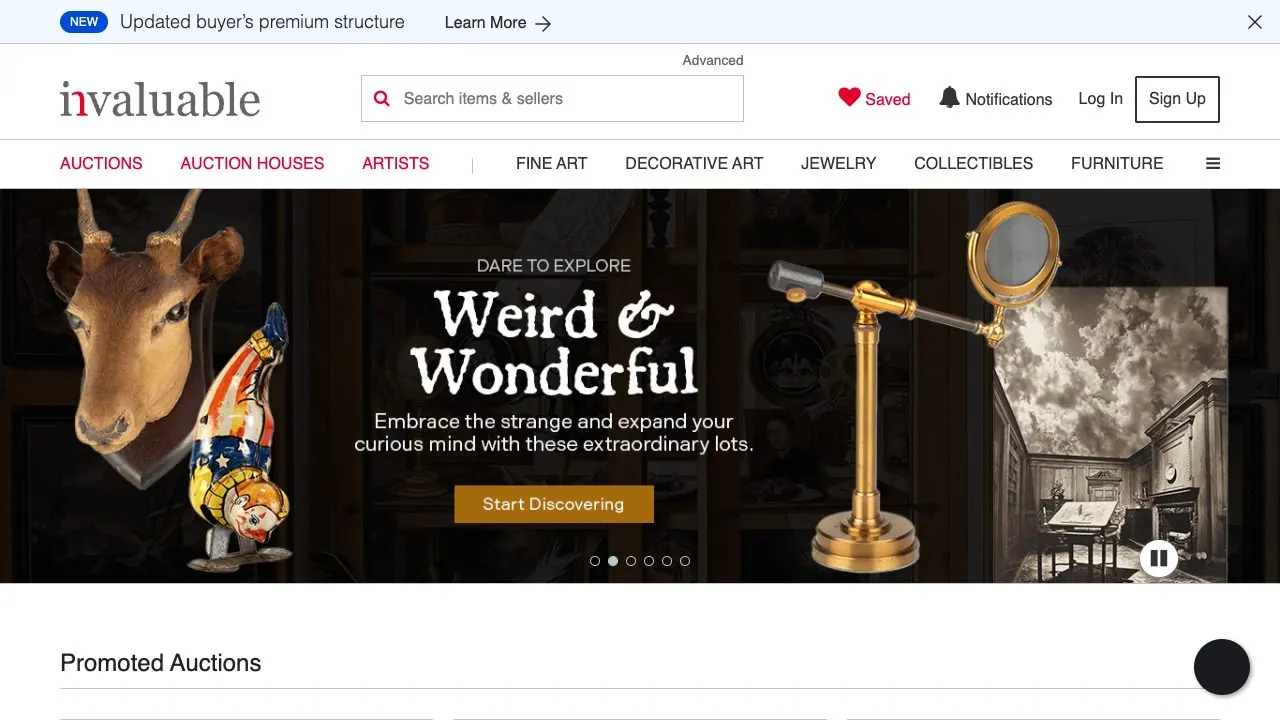
5. Invaluable
Overlaps heavily with LiveAuctioneers but has a stronger European saleroom presence. Houses with internationally appealing material often list on both and accept paying twice for the reach.
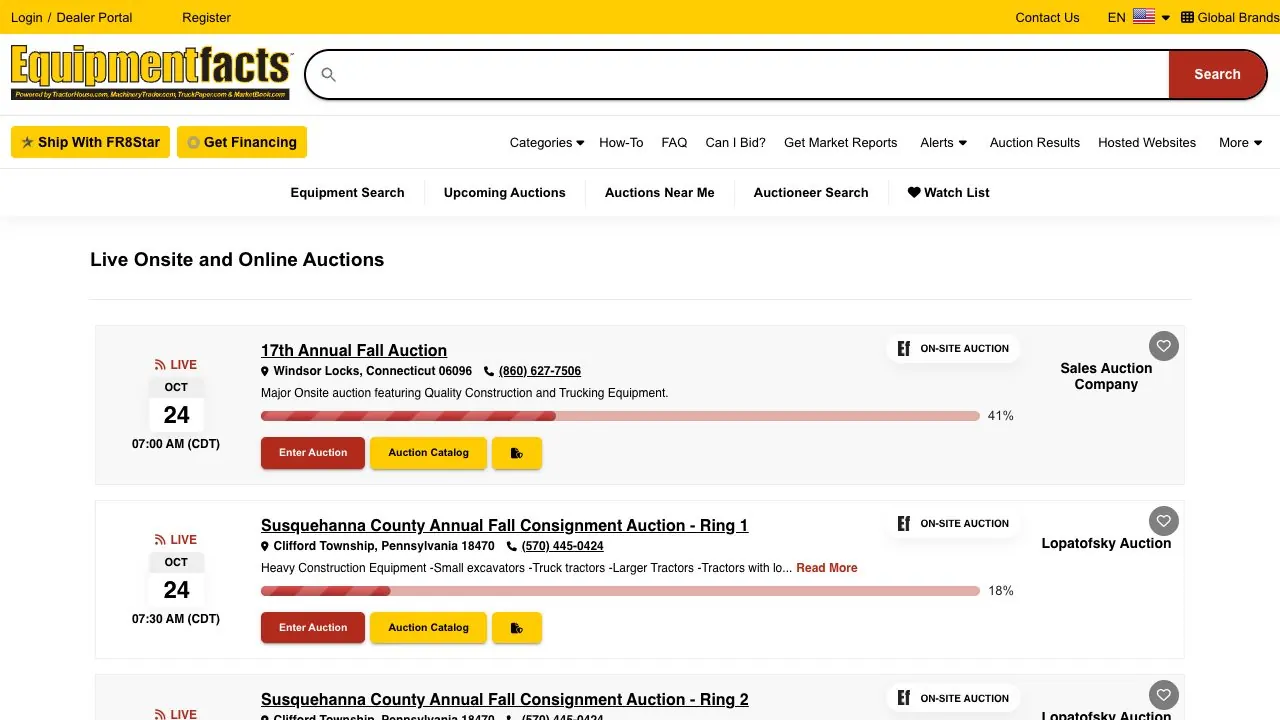
6. EquipmentFacts
The right home for heavy equipment and agricultural machinery. A general aggregator puts your excavator in front of people shopping for furniture. EquipmentFacts puts it in front of contractors and farmers who already know what a fair hour-meter reading looks like. See also the best farm equipment auction sites.
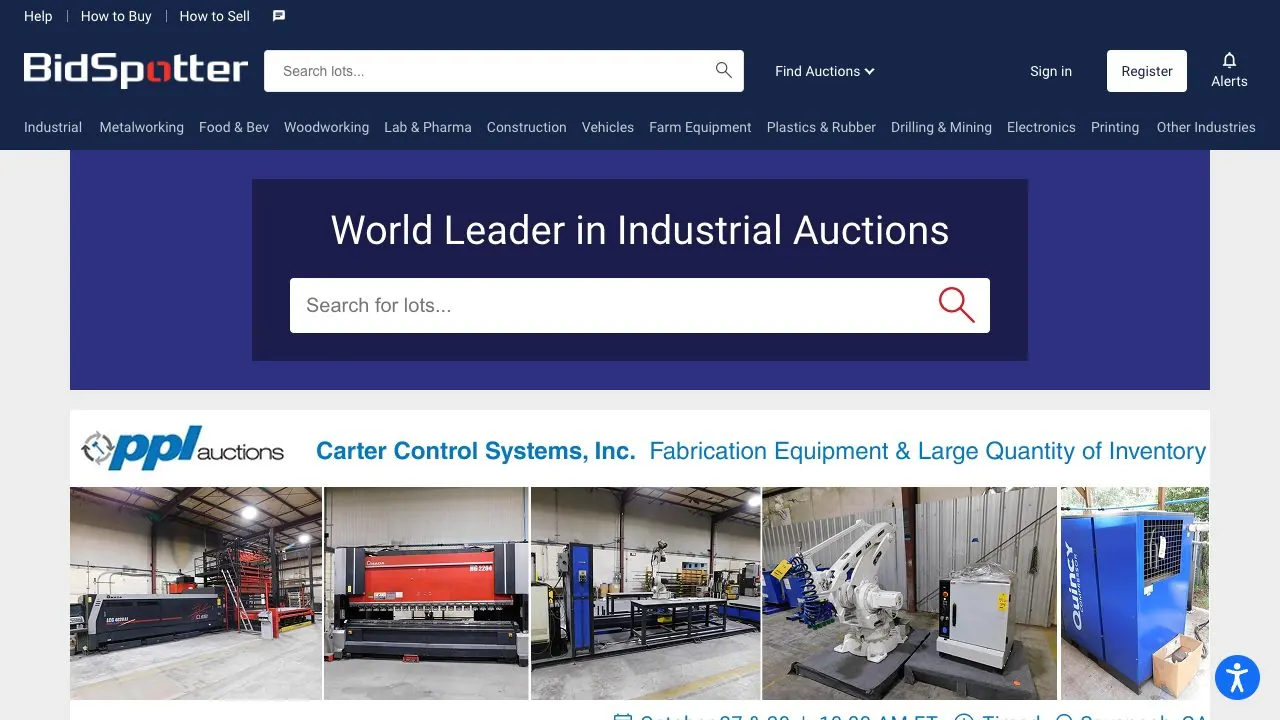
7. BidSpotter
Industrial plant, machine tools and manufacturing closures. Completely different bidders: plant managers and engineers, often buying for a company. If you handle business liquidations, this is where they look.
Looking for sites like HiBid as a buyer?
If you’re bidding rather than selling, the same list works in reverse: Proxibid and AuctionZip for the general estate and consignment mix, EquipmentFacts for machinery, LiveAuctioneers for antiques. For a wider net, our ranking of the best online auction sites covers fifteen more, and government auction sites are worth a look for surplus vehicles and equipment.
8. Your own white-label bidding platform
This is the alternative that changes the economics, and it’s becoming the default among established houses. Instead of renting an audience, you run bidding on your own branded site and use aggregators selectively, as a marketing channel for the lots that need extra reach.
Run the numbers on a typical regional house. Say $2 million a year in online hammer, with a 3% internet commission paid to the platform. That’s $60,000 a year, every year, and the platform also keeps the email address of every bidder you brought in. Your own platform turns that line into revenue you keep and a mailing list you control.
What changes when you do it:
- You keep the internet commission. For a house with real online volume, this is the biggest saving by far.
- Every registration becomes your customer record, emailable about your next sale.
- Your premium, your bid increments, your payment window.
- Data: which lots got watched, where bidders dropped out, what converts by category.
The functional list isn’t exotic: catalogue management, timed and live simulcast bidding, clerking, absentee and phone bids, invoicing with premium and tax logic, and consignor settlement. That’s the scope of our auctioneer software, with the back office covered in auction management. It ships with proxy bidding, soft close, bidder deposits and whitelisting, popcorn bidding and live simulcast (the full list is on the features page).
It runs on your own server, our team installs and sets it up at no extra cost, and you pay once: $899, $1,999 or $2,999 depending on how much custom development you want included. Against the $60,000 example above, it pays for itself inside the first sale.
See what your own bidding site would look like
Try the live demo, compare license options, or send us your current commission spend and we’ll show you the comparison.
The hybrid setup most houses land on
Very few auctioneers drop aggregators overnight, and they shouldn’t. This is the pattern that works:
- Run every sale on your own platform as the primary channel, and push your existing buyer list there
- Simulcast to one aggregator for reach, only on sales that genuinely need a national audience
- Track registration source and check what share of hammer really comes from the aggregator
- Cut aggregator dependence on purpose as your own list grows, instead of by accident
Most houses find the aggregator’s contribution is smaller than they assumed once they measure it. A lot of “internet bidders” turn out to be existing customers who simply registered through the platform. If you’re setting all this up from scratch, how to start an auction house covers the licensing and first 90 days, and how much an auction website costs covers the budget.
Frequently asked questions
What is the best alternative to HiBid?
For general consignment, Proxibid. For art and antiques, LiveAuctioneers. For machinery, EquipmentFacts. For a house with a loyal repeat audience, your own branded bidding site, with HiBid kept as an optional simulcast channel.
What are some websites like HiBid for buyers?
Proxibid, AuctionZip, LiveAuctioneers, EquipmentFacts and BidSpotter all list sales from independent auction houses. GovDeals and similar sites cover government surplus.
Will I lose bidders by leaving HiBid?
Some, at first. That’s why the hybrid approach exists: keep simulcasting while you build your own list, and measure the real contribution instead of guessing.
Can I run my own platform and HiBid at the same time?
Yes. Timed online sales are easy to run in parallel. Simulcasting a live sale to several platforms at once adds real clerking work, so most houses pick one aggregator for live sales.
How much does HiBid charge auctioneers?
HiBid’s fees depend on your contract and volume and aren’t published as a single rate, so ask for a written quote and compare it with your last twelve months of online hammer. That figure is what you’d keep on your own platform.
What does a white-label auction platform cost?
Ours is a one-time license from $899, plus hosting. For most regional houses that’s less than one month of internet commission. Talk to our team for a comparison against your actual numbers.
