Farm equipment auctions have a particular character. The seller is often retiring after forty years, the buyer is usually within 300 miles, and both of them care more about whether the hydraulics are tight than about the platform’s user interface. The sites that do well here understand that.
Here are nine that consistently move agricultural iron, and what distinguishes each.
1. BigIron
Unreserved online auctions with a heavy agricultural weighting. Two things make BigIron popular: everything sells with no minimum, and many sales carry no buyer’s premium — unusual enough in this industry to be a genuine differentiator. Strong relationships with retiring farmers across the Midwest give it consignment quality that is hard to replicate.
2. Purple Wave
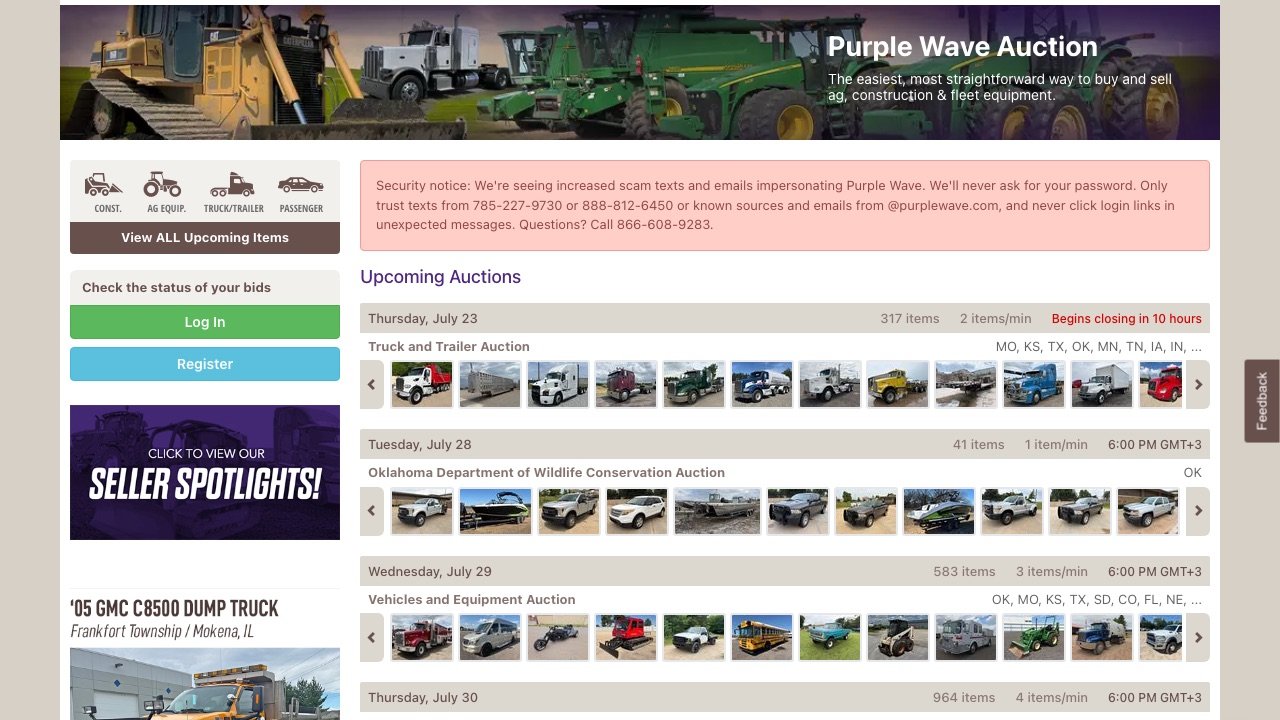
Fully online, fully unreserved, transparent published fees. Purple Wave built its position on removing ambiguity from the process, and agricultural sellers respond to that. Good coverage across tractors, tillage, harvesting and farm trucks.
3. TractorHouse
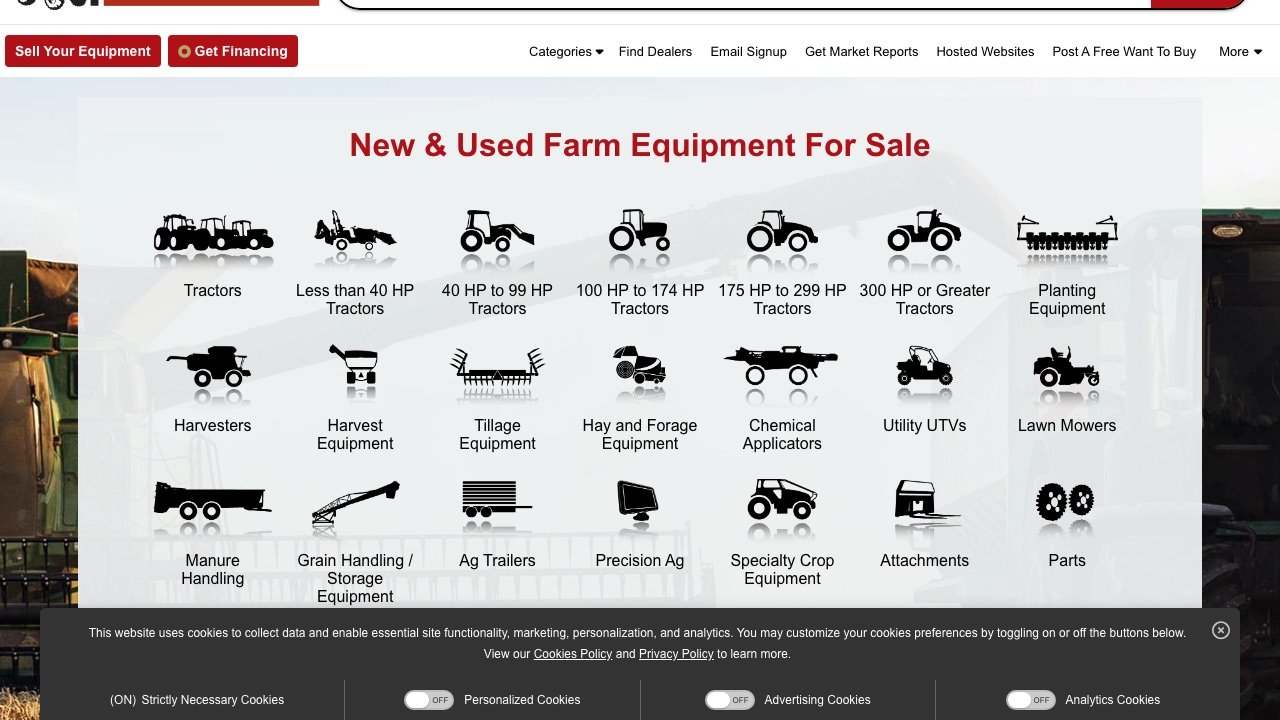
Less an auction house than the industry’s reference catalogue, with auction inventory integrated. Nobody in agricultural equipment should bid anywhere without checking TractorHouse comparables first. Its listings depth on tractors and combines is unmatched.
4. Machinery Trader
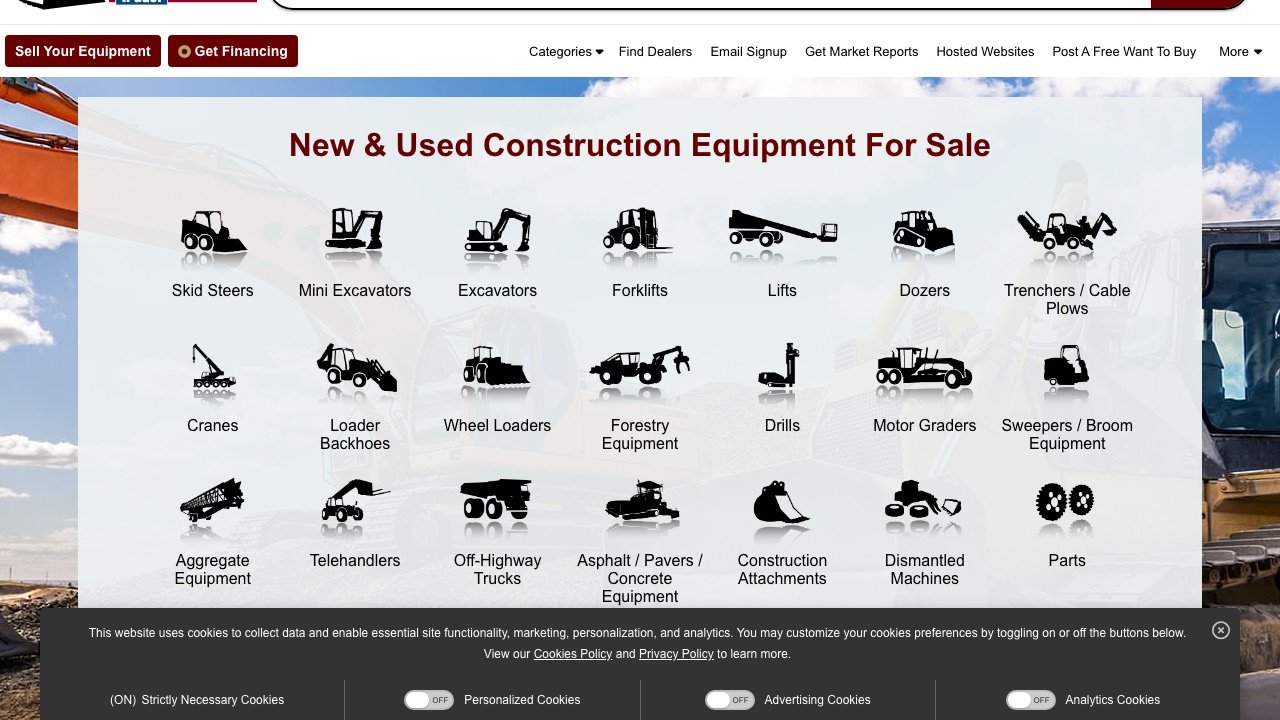
The construction-weighted sibling of TractorHouse, useful for the overlap categories — skid steers, telehandlers, loaders — that appear on both farms and job sites.
5. Ritchie Bros
Handles large agricultural dispersals alongside its construction business, particularly whole-farm retirement sales where the volume justifies a full marketing campaign. Unreserved policy and international buyer reach mean serious equipment finds serious money.
6. Sullivan Auctioneers and 7. Steffes Group
Regional specialists with deep roots in the American farm belt. What they offer that the nationals cannot is genuine local knowledge — the auctioneer knows the farm, knows the equipment and knows the neighbours who will bid on it. For a retirement sale, that relationship frequently produces better results than a bigger platform.
8. HiBid
The aggregation layer that many independent farm auctioneers use to put their sales online. If you want to find every farm auction happening within driving distance, this is the search to run.
9. GovDeals and municipal surplus
Underrated for agricultural-adjacent equipment. County highway departments and conservation districts dispose of mowers, tractors, trailers and utility vehicles with full maintenance records and no profit motive behind the sale.
What matters in agricultural auctions specifically
A few things behave differently in this category compared with general equipment:
- Seasonality is severe. Post-harvest and pre-planting windows carry vastly more activity. Timing a sale badly can cost more than choosing the wrong platform.
- Hours and condition beat age. A well-maintained twenty-year-old tractor with 3,000 hours outperforms a neglected ten-year-old one, and listings need to make that legible.
- Transport is often prohibitive. Which is why buyer pools stay regional and why local auctioneers remain competitive against national platforms.
- Retirement dispersals are relationship sales. The family is often selling a life’s work. Auctioneers who handle that well get the consignment.
Running your own farm auction platform
Regional auctioneers and equipment dealers increasingly run their own online bidding rather than paying an aggregator for the privilege of listing. The economics are favourable once you have a buyer list, and the buyer list is usually the thing a long-established local auctioneer already has.
The agriculture-specific requirements are well understood: hour meters, implement and attachment inventories, serial verification, multi-parcel land sale logic for the farm itself, and photo templates that force consistent angles across a hundred lots. Our farm equipment auction software page covers the module set, and auction management system covers the settlement and consignor payout side that a dispersal sale demands.
Frequently asked questions
When is the best time to sell farm equipment at auction?
Late winter through early spring, before planting, is traditionally strongest in North America. Post-harvest is the second window. Mid-season sales attract fewer bidders because everyone is working.
Do farm auctions charge a buyer’s premium?
Many do, typically 5-10% online, but BigIron and some regional auctioneers waive it. Always check the terms — see what a buyer’s premium is.
Should a retirement sale be unreserved?
Generally yes. Unreserved dispersals draw far larger crowds because bidders know the equipment is genuinely selling, and the aggregate result usually beats a reserved sale even if individual lots underperform.
