Reverse auction platforms range from enterprise source-to-pay suites costing six figures a year to focused tools you can deploy in a fortnight. The right choice depends far less on feature count than on how many suppliers you have, how complex your categories are, and whether you need procure-to-pay integration.
Here are nine, sorted by what they are actually for.
Enterprise source-to-pay
1. SAP Ariba
The most comprehensive, and the deepest integration if you run SAP. Its supplier network is both the strength and the friction — enormous reach, with fees suppliers price back into their quotes. Long implementations.
2. Coupa
Broad spend management with sourcing and auctions included. Generally faster to deploy than Ariba and with lower supplier friction. Strong analytics.
3. JAGGAER
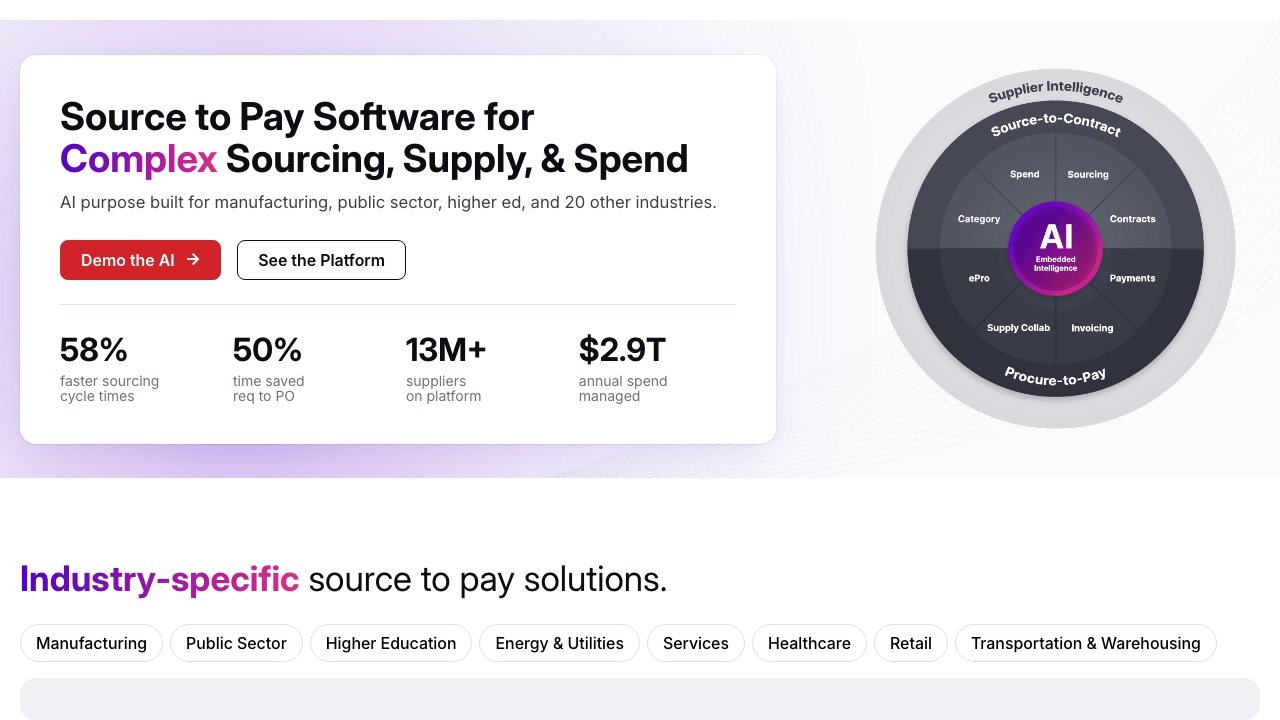
Particularly strong in higher education, healthcare, life sciences and manufacturing, where supplier qualification and compliance are complex. Genuinely capable auction functionality.
4. GEP SMART
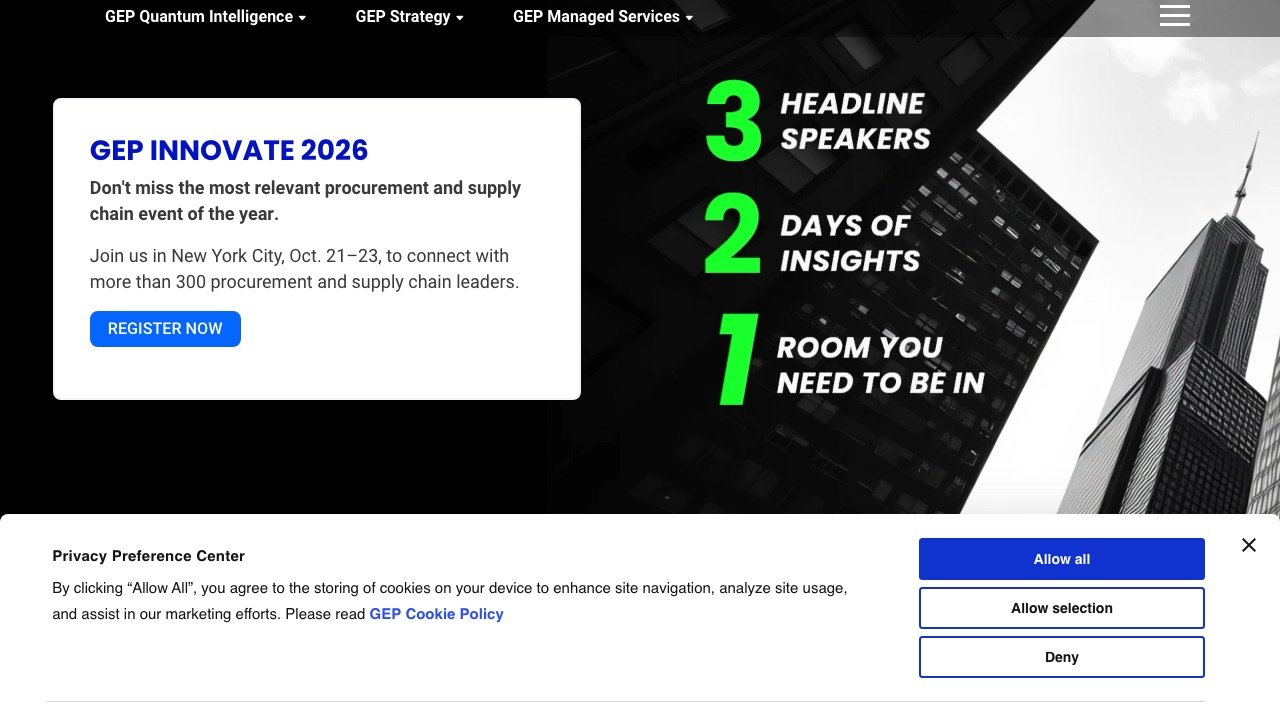
Unified source-to-pay with a managed services arm that will run events for you. Relevant for lean teams that need capability without headcount.
5. Ivalua
Highly configurable, chosen where standard suites cannot accommodate the process. Configurability lengthens implementation.
Focused eSourcing tools
6. Scanmarket
Purpose-built sourcing and auction tool. Deploys in weeks, costs a fraction of a suite, and handles auction formats properly — including the ones the big platforms treat as afterthoughts.
7. Market Dojo
Similar profile with straightforward pricing and a low barrier to running a first event. Good for teams testing whether reverse auctions suit their categories at all.
Public sector
8. Bonfire
Built around public procurement requirements — structured evaluation scoring, compliance workflows, transparency and audit. Much lighter than a full suite and appropriate for agencies whose main need is defensible, well-documented sourcing.
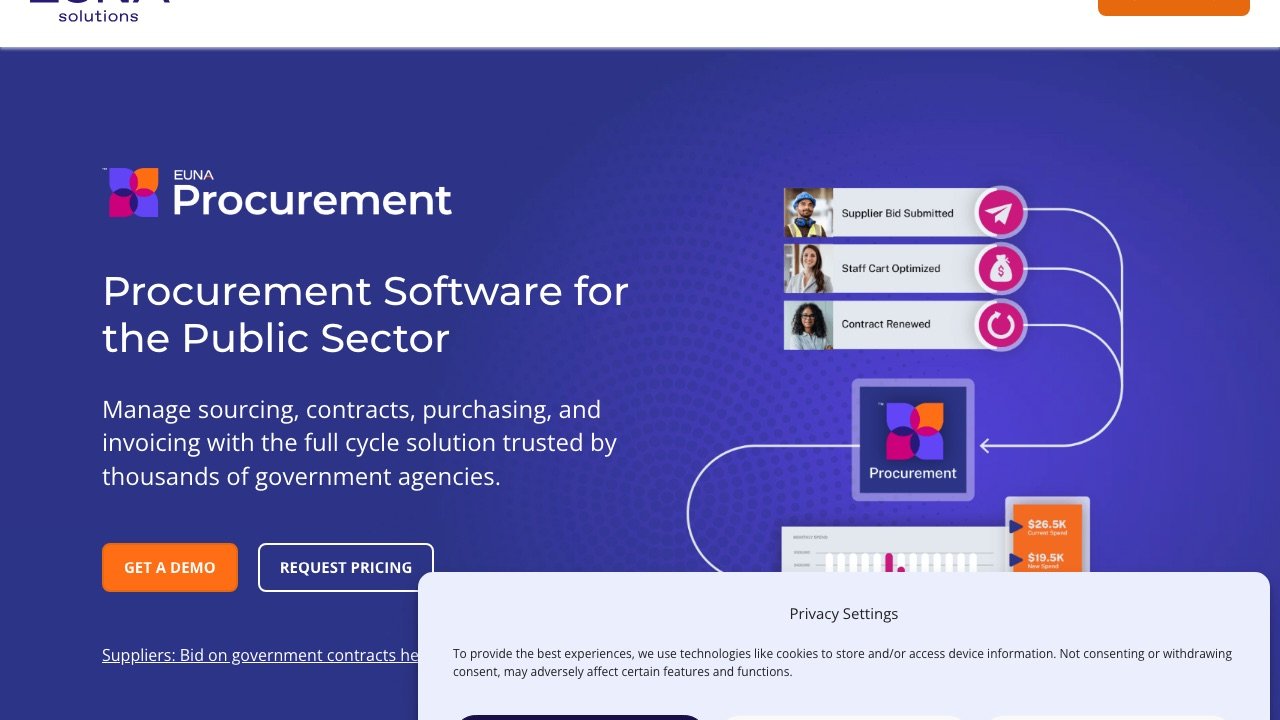
9. Unison Marketplace
Managed reverse auctions for government buyers, long established in US federal procurement. The managed model suits agencies without in-house auction expertise. Alternatives in commercial reverse auction platforms.

What actually distinguishes them
Ask for demonstrations, not descriptions:
- Which auction formats? English reverse is universal. Japanese, Dutch reverse, rank-only and multi-parameter scored auctions are not — and format choice materially affects both outcomes and supplier relationships. See what a reverse auction is.
- Can you weight non-price criteria? Price-only auctions on complex categories are how reverse auctions earn their reputation for destroying supplier relationships. Multi-parameter scoring is what makes them defensible.
- How does automatic extension work? Without it, suppliers bid in the last seconds and competitive pressure collapses.
- What do suppliers see? Rank only, or leading price? This changes bidding behaviour significantly, and rank-only reduces panic bidding that produces unsustainable quotes.
- How long does supplier onboarding take? Test with a real supplier. Friction here directly reduces participation.
- What do suppliers pay? Network fees get priced into quotes, making them your cost.
- Is the audit trail complete and exportable? Non-negotiable in the public sector.
The owned alternative
For organisations with a stable supplier panel or unusual category requirements, running sourcing on owned infrastructure is genuinely practical now. Suppliers pay nothing, onboarding is under your control, formats match your process, and ERP integration is built to your data model.
The clearest case is a buyer running the same categories repeatedly with a known supplier base — once onboarded, the marginal cost of each event approaches zero. See reverse auction software and building a private supplier portal.
Where reverse auctions do and do not work
Worth restating, because platform choice cannot fix a category mismatch. They work on commodities and well-specified services with at least four or five credible suppliers. They fail on complex or novel requirements, thin supplier markets, and relationship-critical categories.
And the failure mode to plan for: a supplier bidding below cost to win, then underperforming or seeking relief mid-contract. Qualify on capability before you run the event.
Related: SAP Ariba alternatives, Coupa alternatives, and forward vs. reverse auctions.
Frequently asked questions
What is the best reverse auction platform for a small team?
A focused eSourcing tool. Enterprise suites carry implementation overhead that a small team cannot absorb and will not recover.
Do reverse auctions damage supplier relationships?
Only when run badly — surprise events, price-only scoring on complex categories, or awarding on criteria other than those published. Run transparently, suppliers participate willingly.
Can we run reverse auctions in-house?
Yes, and many organisations do on owned platforms. Talk to our team about whether your supplier base suits it.
