Coupa is a capable spend management platform, and organisations using the full source-to-pay suite get real value from it. But a great many buyers licensed it primarily to run competitive sourcing events, and for that specific job it is a large and expensive tool.
These seven alternatives are judged on eAuction capability first, breadth second.
Enterprise suites
1. SAP Ariba
The other enterprise heavyweight, and the obvious comparison. Deeper if you run SAP; heavier to implement, with a supplier network model that charges suppliers to transact — a cost they price back into your quotes.
2. JAGGAER
Strong sourcing and supplier management, particularly in higher education, healthcare and life sciences where supplier qualification is complex and regulated. Genuinely good auction capability.
3. GEP SMART
Unified source-to-pay with a managed services arm that will run sourcing events on your behalf. Useful for lean teams that need capability without adding headcount.
4. Ivalua
Highly configurable, favoured where processes do not fit standard suites. The configurability that makes it flexible also makes implementation longer.
Focused eSourcing tools
5. Scanmarket and Market Dojo
Purpose-built sourcing and eAuction tools without source-to-pay overhead. Deploy in weeks rather than quarters, cost a fraction, and run auctions properly — including the formats the big suites often handle poorly.
If your genuine requirement is “run good competitive events”, this tier is frequently the correct answer and the enterprise suite is overspecified.
6. Bonfire
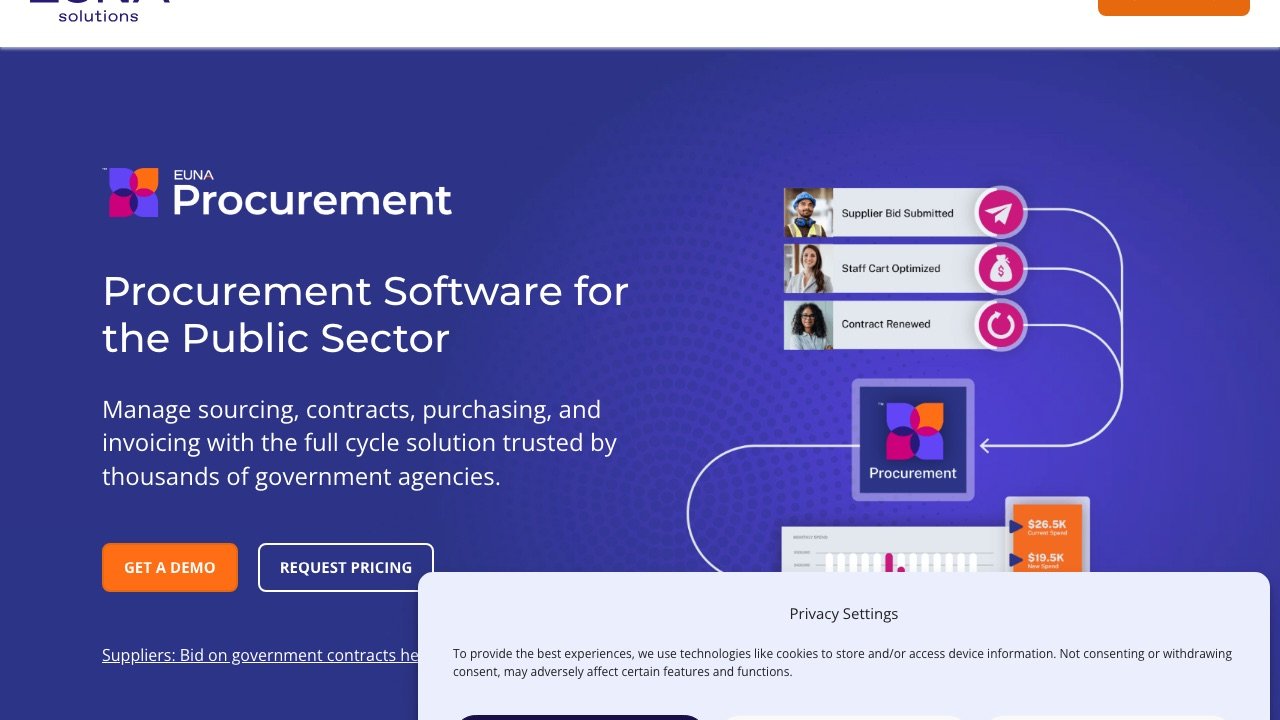
Public sector focused, with evaluation scoring, compliance workflows and transparency features that procurement regulation requires. Much lighter than a full suite.
7. Unison Marketplace
Managed reverse auctions for government buyers, long established in US federal procurement. Covered in more depth in commercial reverse auction platforms.

The owned platform option
For organisations with a stable supplier base or unusual category requirements, running sourcing on owned infrastructure has become genuinely practical. You control onboarding, suppliers pay nothing to participate, auction formats match your actual process, and ERP integration is built to your data model.
The clearest case is a buyer with a defined supplier panel who runs the same categories repeatedly. Once suppliers are onboarded, the marginal cost of each event is close to zero. See reverse auction software and building a private supplier portal.
Judging eAuction capability specifically
Ask vendors to demonstrate, not describe:
- Which formats are supported? English reverse is universal. Japanese, Dutch reverse, rank-only and multi-parameter scored auctions are not, and the format materially affects outcomes. See what a reverse auction is.
- Can you weight non-price criteria? Price-only auctions on complex categories are how reverse auctions earn their bad reputation. Multi-parameter scoring is what makes them defensible.
- How does automatic extension work? Without it, suppliers bid in the last five seconds and the competitive dynamic collapses.
- What does the supplier see? Rank only, or leading price? This choice changes bidding behaviour substantially.
- How long does supplier onboarding take? Test it with a real supplier, not a demo account.
- Is the audit trail complete and exportable? Non-negotiable for public sector and regulated buyers.
The honest recommendation
Buy an enterprise suite if you genuinely need integrated source-to-pay across a large organisation and have the appetite for a long implementation. Buy a focused tool if you need to run good sourcing events. Build your own if you have a stable supplier panel and requirements that do not fit a vendor’s assumptions.
Most organisations overbuy at this decision, then use a fraction of what they licensed.
Related: SAP Ariba alternatives, the best reverse auction platforms, and running a reverse auction for services.
Frequently asked questions
Can I run eAuctions without a full procurement suite?
Yes. Focused eSourcing tools and owned platforms both handle auctions well. The suite buys integrated source-to-pay, which is a separate decision.
What do suppliers pay to participate?
Varies substantially. Some platforms charge suppliers network or transaction fees; others do not. Suppliers price those costs into their quotes, so it is your cost too.
How many suppliers do I need for an auction to work?
Four or five credible bidders is a reasonable minimum. Below three you have a negotiation, not an auction. Talk to our team about category suitability.