TL;DR: software for antique and fine art auction houses
- Auction Flex: desktop cataloguing and clerking, $85 a month per workstation.
- Wavebid: cataloguing and accounting built by auctioneers.
- Circuit Auction: all-in-one house management with live bidding on your own website.
- Auction Mobility: branded apps and live simulcast for established houses.
- Auction Experts: European bid engine for live, timed and sealed sales.
- LiveAuctioneers and Invaluable: marketplaces for reaching collectors worldwide.
- Premium Auction Software: your own branded bidding site on a one-time license.
Want collectors bidding on your own website instead of a marketplace? Our auctioneer software runs live and timed sales under your brand, with no commission.
Antique and fine art auction houses need two kinds of software, and most buy them from different vendors. One runs the house: consignment intake, cataloguing, condition reports, clerking on sale day and settlement statements for consignors. The other gets bids in from collectors who aren’t in the room, through a marketplace, a branded website or both.
A general auction platform built for equipment or estate clear-outs will cover the second job well enough. It’s the first job that separates software built for this trade from everything else.
What antique and fine art sales need
- Catalogue entries with low and high estimates, dimensions, condition reports and provenance, often written by a specialist, not typed in a hurry.
- Absentee (commission) bids and phone bidders handled alongside the room and online bidders.
- Live simulcast so online bidders compete with the room in real time.
- Reserves that stay confidential, and a buyer’s premium that can vary by price band.
- Consignor contracts, commission rates and settlement statements.
- Tax handling for your market, for example margin schemes or artist’s resale right in the UK and EU.
Check each vendor against that list. Few cover all of it out of the box.
Auction house management software
1. Auction Flex
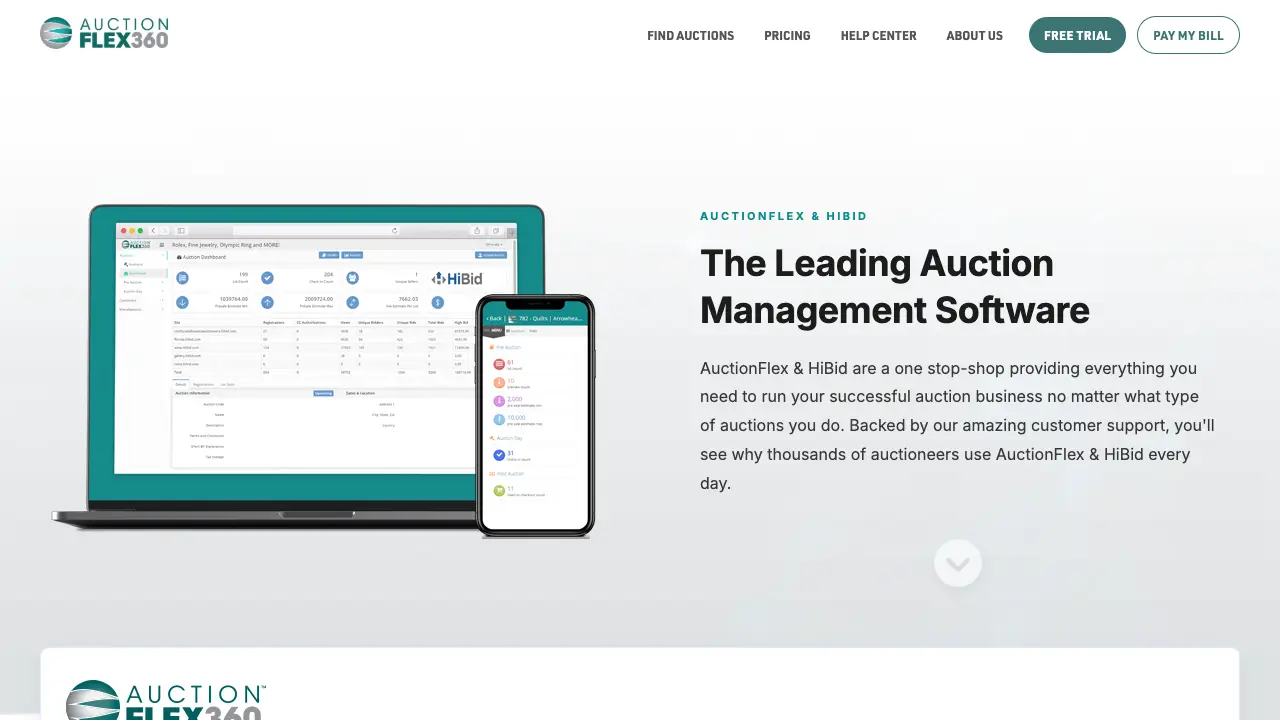
Auction Flex is long-established desktop software for cataloguing, clerking and running auctions on-site or online. Its own pricing starts at $85 a month for one workstation, with more workstations priced in steps. Online bidding comes through its partner HiBid, priced separately. It’s thorough and familiar to many US auctioneers, with a learning curve to match.
2. Wavebid
Wavebid describes itself as an auction management solution designed by auctioneers, specializing in cataloguing and accounting. It’s a fit for houses that want the back office sorted first and will add online bidding around it. Ask for a demo of a fine art catalogue with estimates and condition notes before committing.
3. Circuit Auction
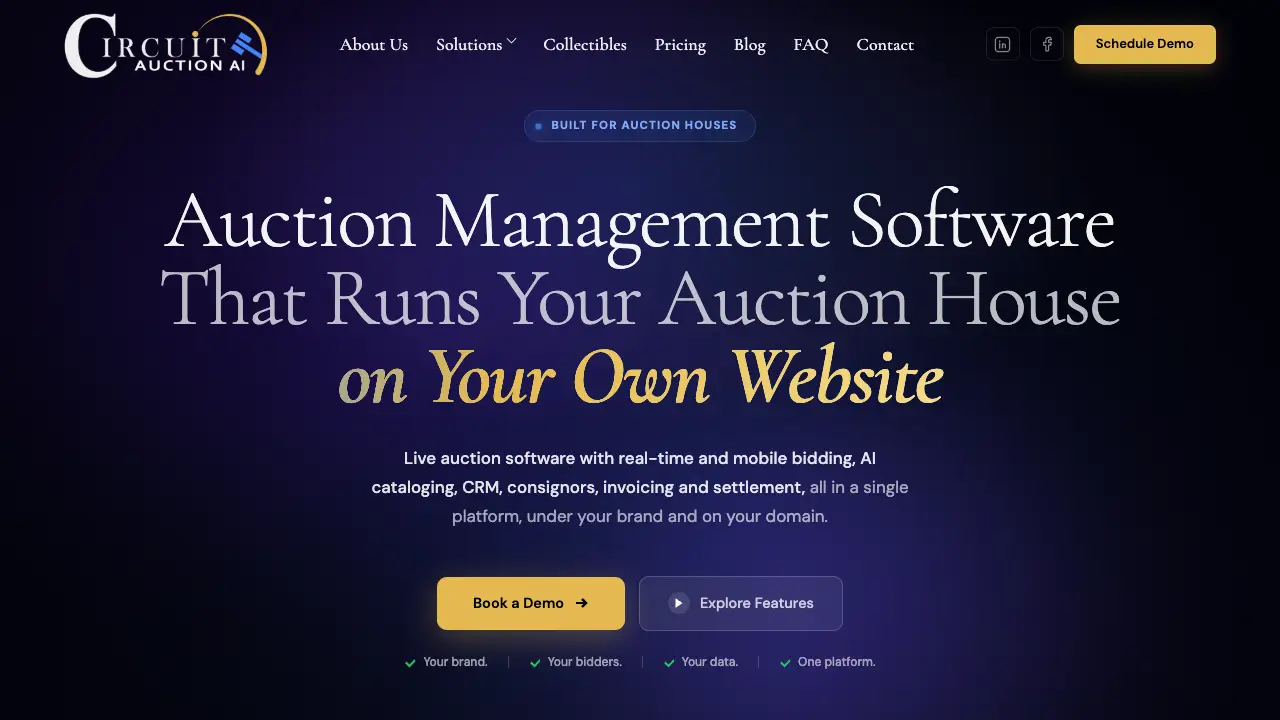
Circuit Auction pitches itself as complete auction house management, from consignment intake to settlement: AI-assisted cataloguing, a CRM, consignors, invoicing, and live and mobile bidding that runs on your existing website under your brand. It’s one of the few tools built specifically around how auction houses work rather than adapted from general auction software.
Branded bidding platforms
4. Auction Mobility
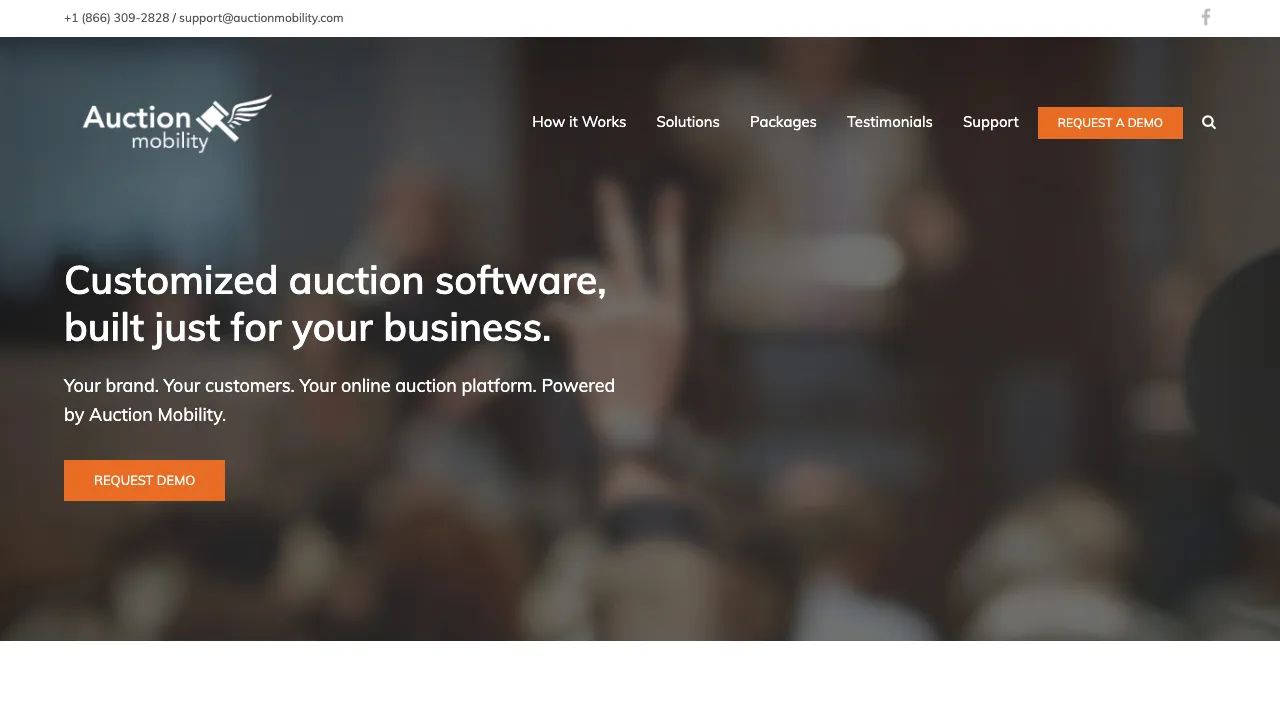
Auction Mobility builds branded bidding platforms with native iOS and Android apps and live simulcast. Its pitch to established houses is that clients own their bidder data rather than sharing it with a marketplace. Pricing is quoted by package and sits at the higher end of this list.
5. Auction Experts
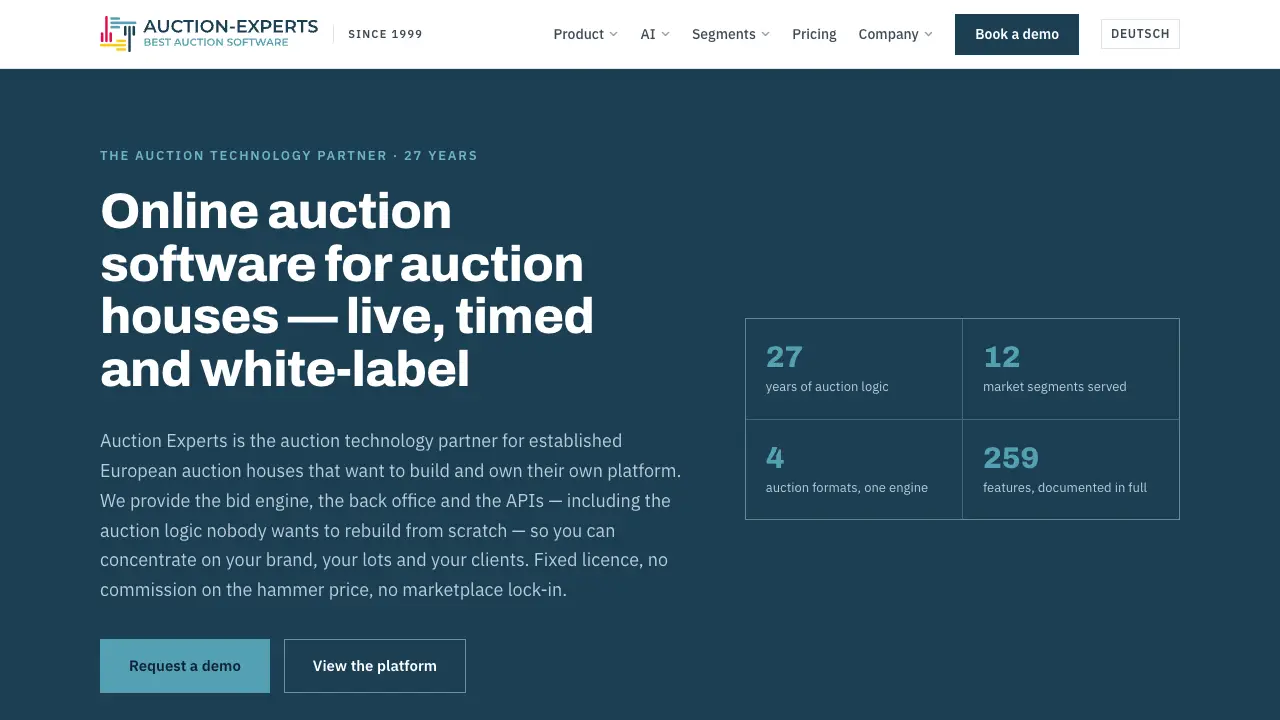
Auction Experts, based in Amsterdam, supplies a white-label bid engine, back office and APIs to European auction houses. It runs timed, live (with a remote bidding console), sealed-bid and Dutch auctions from one system. Its Professional plan is listed at €720 a month plus implementation from €2,450, excluding VAT.
6. Premium Auction Software
Our own platform gives you a branded bidding website on your own domain and server, paid for once: $899, $1,999 or $2,999, with no commission. It covers timed and live online auctions, live simulcast, proxy bidding (online absentee bids), soft close, sealed bids, private or invitation-only sales and bidder deposits or approval.
It’s a bidding platform, not a full house-management system. Many houses pair it with their existing cataloguing tool. The Professional and Enterprise licenses include 10 and 30 hours of custom development, which is where something like a consignor statement export or estimate fields would go.
Marketplaces for reach
7. LiveAuctioneers
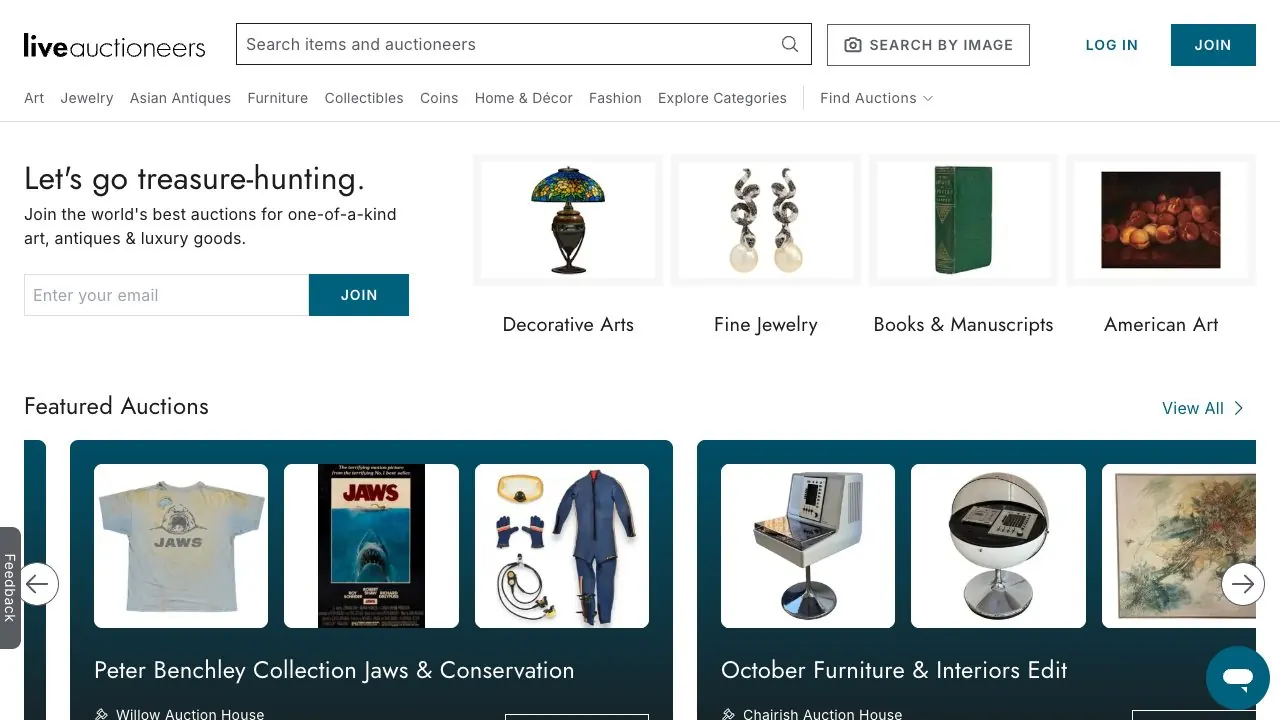
LiveAuctioneers is where many antique and fine art houses list catalogues to reach collectors worldwide, with live bidding into the saleroom. The audience is the draw. The trade-off is that bidders become the marketplace’s customers too, and buyer-side fees can affect what they’ll pay. We compare it with similar platforms in LiveAuctioneers alternatives.
8. Invaluable
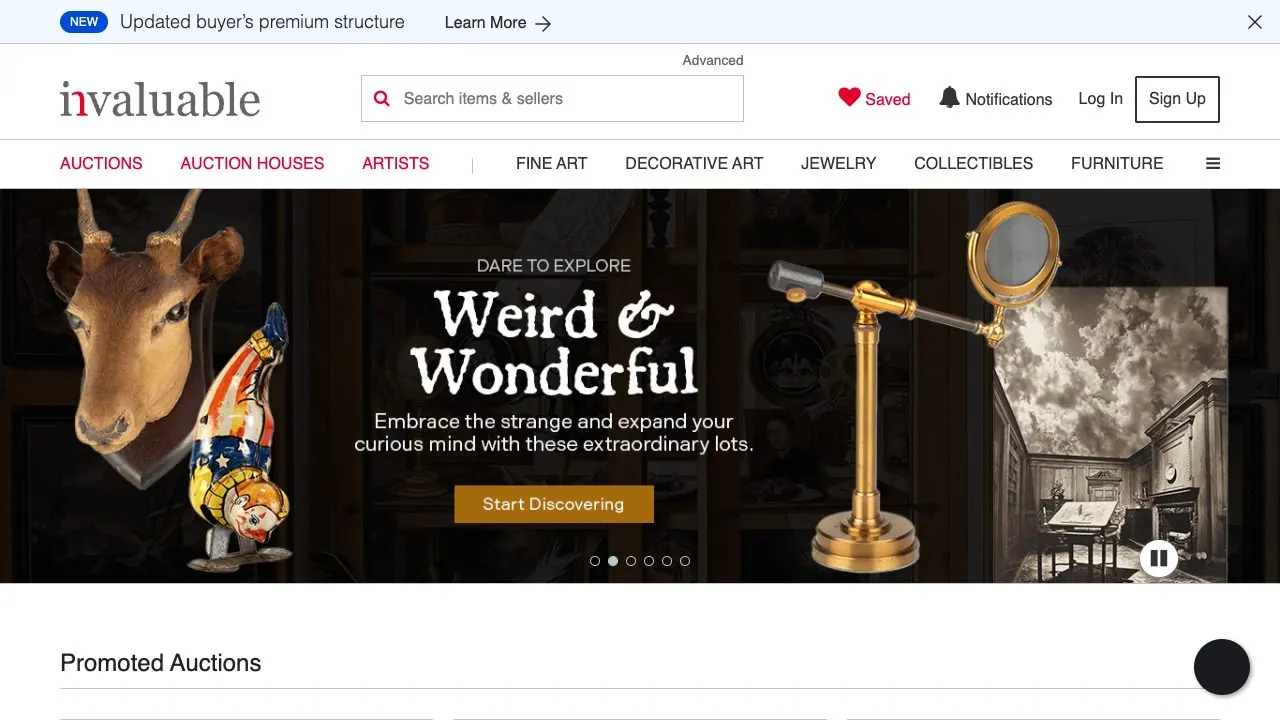
Invaluable plays the same role, with a strong fine art and decorative arts audience. Many houses list on both marketplaces and run their own site as well. See Invaluable alternatives for the wider picture.
Marketplace, own site, or both?
Most houses end up with a mix. Marketplaces bring new collectors, and your own site keeps the regulars, the data and the margin. A sensible pattern is to list headline sales on a marketplace for reach while running timed online sales and regular bidders through your own branded site. Over a few years, more of your audience moves to the channel you own.
For the business side of a new house, read how to start an auction house. For more on the trade’s buyers, see our list of art auction sites.
Put collectors on your own bidding site
Try the live demo, see the auctioneer software features, or tell us about your sales calendar.
Frequently asked questions
What software do antique auction houses use?
Usually a house management tool for cataloguing, clerking and settlement (such as Auction Flex, Wavebid or Circuit Auction), plus online bidding through marketplaces like LiveAuctioneers and Invaluable, their own branded site, or both.
What is the best software for a fine art auction house?
For running the house end to end, Circuit Auction. For a branded app, Auction Mobility. For your own bidding site without a monthly fee, a self-hosted platform like Premium Auction Software.
Do I still need LiveAuctioneers or Invaluable if I have my own site?
For reach, often yes, at least at first. Many houses use marketplaces for big sales and their own site for regular timed sales and repeat bidders.
Can online bidders compete with the room live?
Yes, with live simulcast. Online bidders see and hear the sale and bid in real time alongside the room, phone and absentee bids.
