The online art market splits cleanly by price. Below about $5,000 the buyer is decorating a home; above $500,000 they are making an investment with a advisor involved. Platforms that try to serve both ends serve neither well, and the list below is organised accordingly.
The international houses
1. Sotheby’s
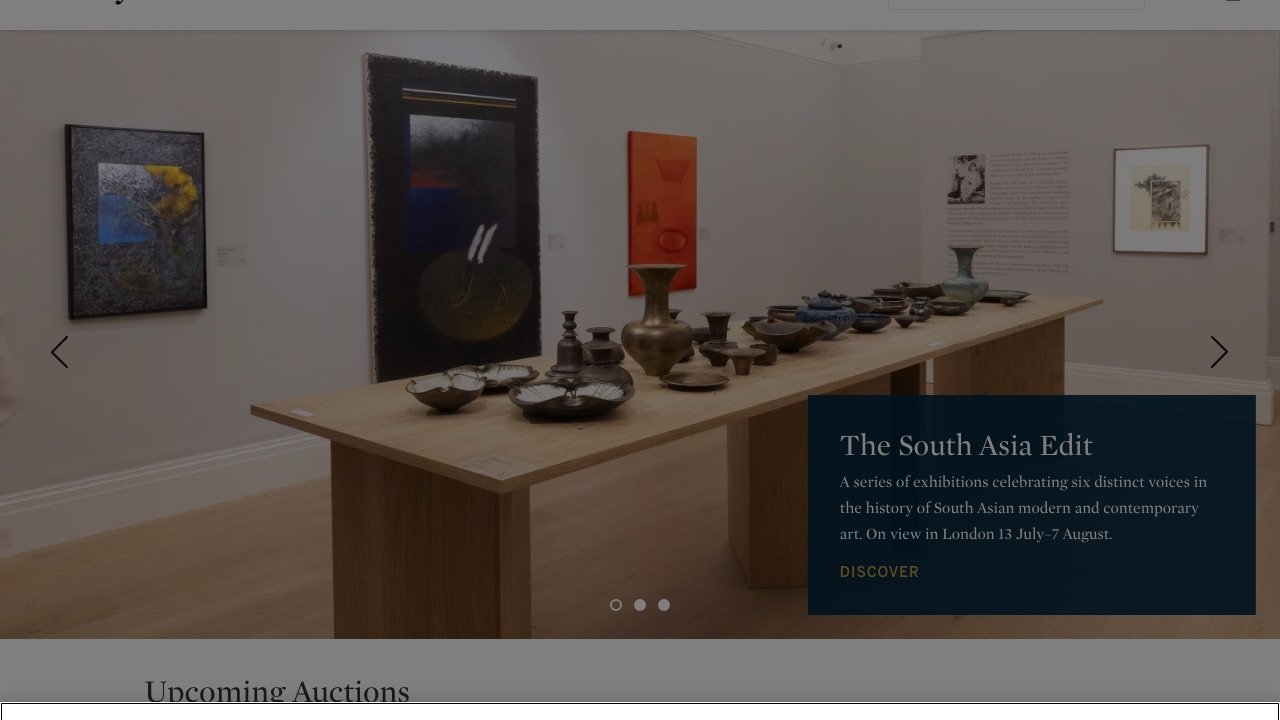
Runs a substantial programme of online-only sales alongside its flagship evening auctions, at price points far more accessible than most people assume. The institutional name adds genuine value to provenance, and the condition reporting is thorough. Buyer’s premiums are high and tiered.
2. Christie’s
The direct equivalent, with comparable online activity. Historically stronger in some collecting categories than Sotheby’s and weaker in others, which matters more than any general ranking. For a specific artist or period, check recent results at both.

3. Phillips
Smaller than the other two and deliberately focused on contemporary and twentieth-century art, design and photography. For work from the last fifty years, Phillips frequently outperforms its size.
4. Bonhams
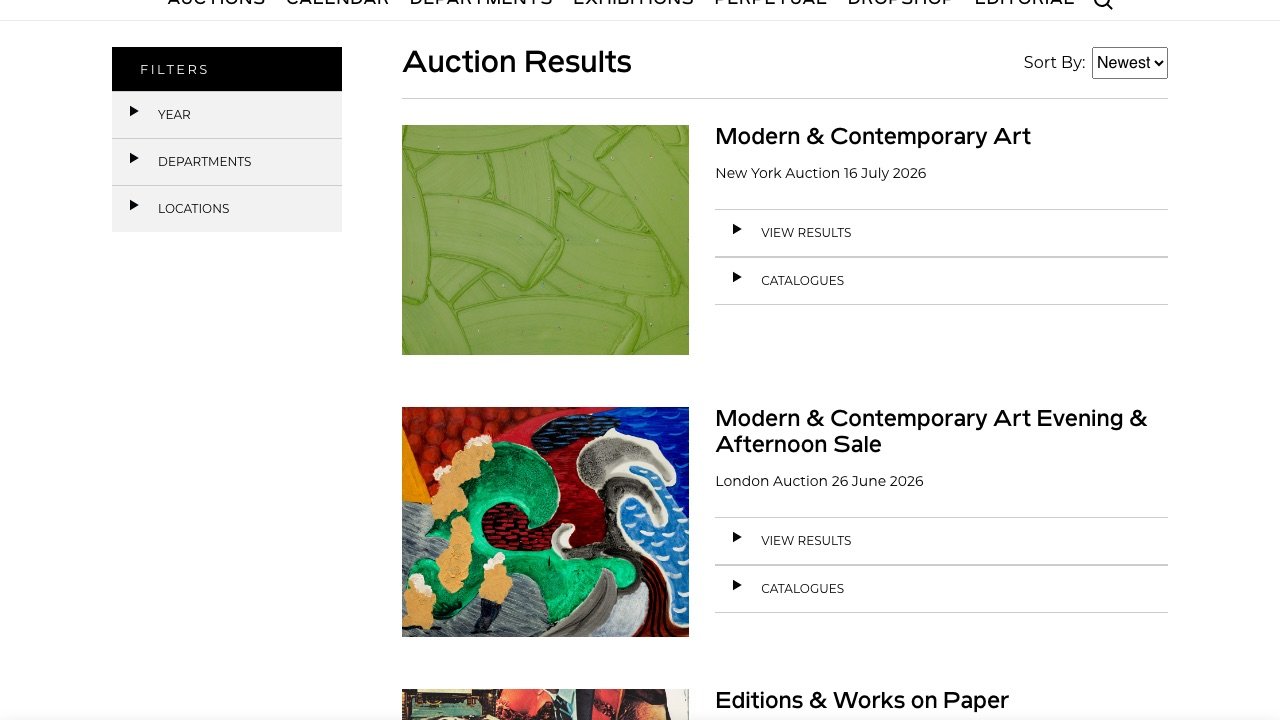
Broader in scope, with strong departments in areas the top two treat as secondary — motoring art, Asian works, decorative arts. Often the right choice for material that would be a minor lot elsewhere.
Platforms and aggregators
5. Artsy
The most important online-native platform for contemporary art, connecting galleries, fairs and auction houses with collectors. Runs its own benefit and curated auctions alongside gallery listings. For contemporary work, this is where the audience genuinely lives.
6. Invaluable
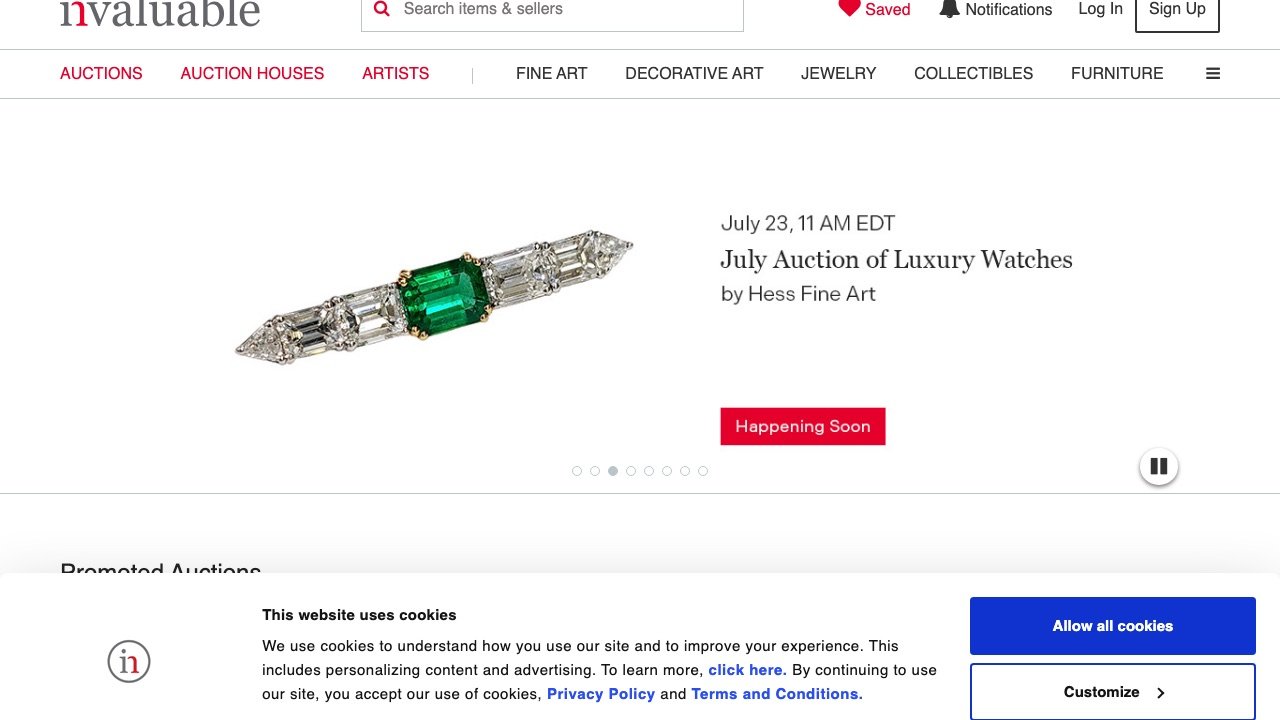
Aggregates salerooms worldwide, with strong European coverage. Better for traditional and decorative art than for contemporary. Premium stacking pushes total buyer cost high, so bid accordingly.
7. LiveAuctioneers
Broad coverage of regional salerooms. The best place to find work by listed but not famous artists at prices the major houses would not bother cataloguing.
Accessible and emerging
8. Saatchi Art
Primarily a fixed-price marketplace for emerging artists rather than an auction house, and an excellent entry point for new collectors. Prices from a few hundred dollars, with the artist selling directly.
9. Artnet Auctions
Online-only sales attached to the industry’s most-used price database. That database is the real product — being able to check an artist’s auction history before bidding is worth more than any platform feature.
10. Heritage Auctions
Strong in illustration art, comic art, posters and Americana — categories the fine art houses handle inconsistently.
11. Catawiki
Expert-vetted lots with direct private consignment, at the accessible end of the market. Good for prints, photography and decorative works where the vetting adds confidence without a full saleroom process.
What actually matters when buying art at auction
- Condition reports are not optional. Request one for anything meaningful. A restored canvas and an untouched one are different objects at different prices.
- Provenance drives value disproportionately. A documented ownership chain can double a price. An ambiguous one can make a work unsaleable later.
- Premiums stack. House premium plus online surcharge plus any local tax. Know the total before you bid — see what a buyer’s premium is.
- Check comparables. Artnet and the houses’ own results archives will tell you what similar work has actually fetched, which is different from what estimates suggest.
- Shipping art is expensive and specialised. Budget for crating and insured freight on anything large.
For galleries and regional houses
The economics of the aggregator model are the same in art as everywhere else: the platform takes a commission and owns the collector relationship. Galleries with an established mailing list frequently do better running their own timed online sales and using aggregators selectively for reach.
Art-specific requirements are real though — high-resolution zoomable imagery, structured condition reporting, provenance and exhibition history fields, artist and medium taxonomies, and careful handling of resale rights where they apply. Our custom auction software covers building those onto a proven bidding engine, and auctioneer software covers the catalogue and clerking side.
Frequently asked questions
Is it safe to buy art online without seeing it?
With a proper condition report and a returns policy for misdescription, generally yes. Established houses stand behind their cataloguing. Unvetted marketplaces are a different proposition.
What is the cheapest way to start collecting?
Regional saleroom sales through aggregators, and emerging-artist marketplaces like Saatchi Art. Both offer genuine work well below major-house price points.
Do online-only art sales achieve lower prices?
Not any more. Online-only sales at established houses routinely match saleroom results, and for mid-market work they often exceed them because the bidding audience is larger.
