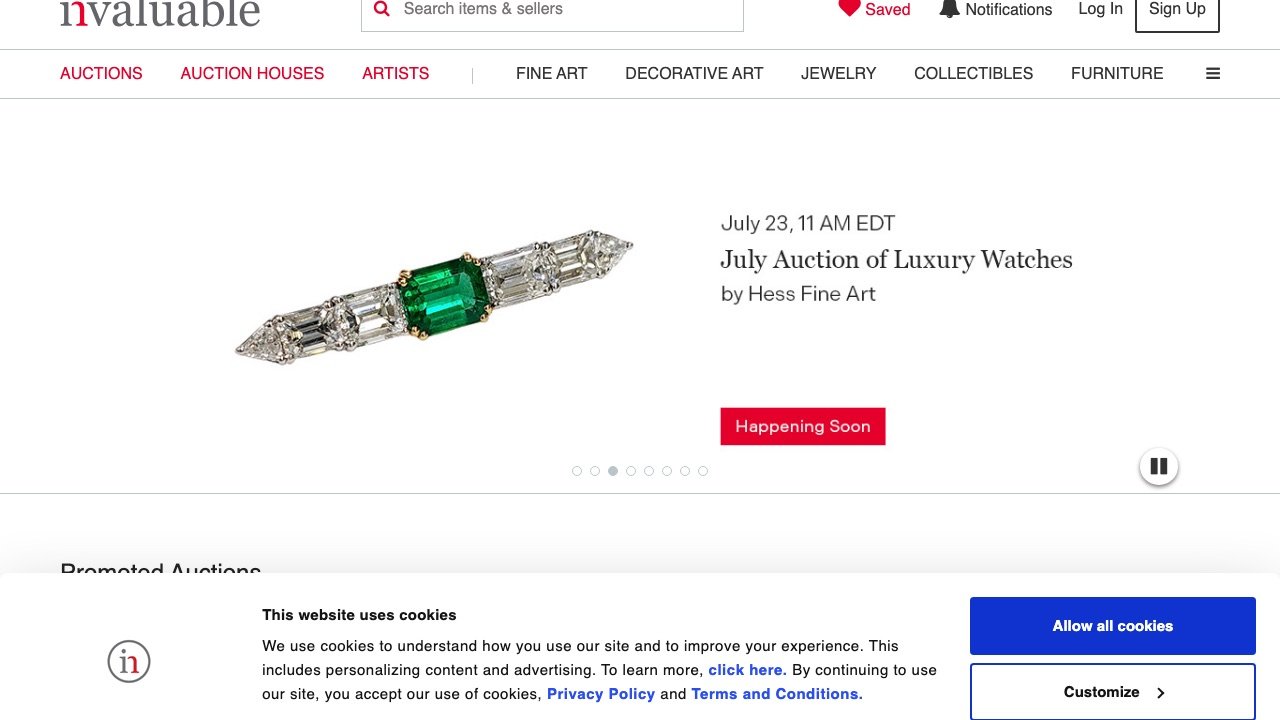
Invaluable does one thing extremely well: it puts thousands of salerooms in front of a global bidding audience. The costs are the usual ones for an aggregator — a commission on internet sales, stacked buyer’s premiums that suppress bidding, and a bidder relationship that belongs to the platform.
Here are eight alternatives, and an honest look at when each is the better venue.
Aggregator alternatives
1. LiveAuctioneers
The main structural competitor, with a stronger US saleroom base where Invaluable leans European. For American regional material — country furniture, folk art, Americana — LiveAuctioneers generally delivers the better audience.
2. The Saleroom
The deepest coverage of UK and European auction houses. If your material is British or continental, this is where those specialist buyers look first, and the difference in realised prices on the right object can be substantial.
3. Bidsquare
Founded by a group of established houses with deliberately tighter admission standards. A smaller catalogue with better average quality, and buyers who understand that distinction. Good for houses that do not want their material sitting next to garage-sale consignments.
The international houses
4. Sotheby’s and 5. Christie’s
For material above a certain quality threshold, consigning to a major house rather than listing on an aggregator is a different proposition entirely. You get expert cataloguing, institutional provenance credibility and access to a collector base no platform can assemble. The commission is higher and the selectivity is real.

6. Phillips
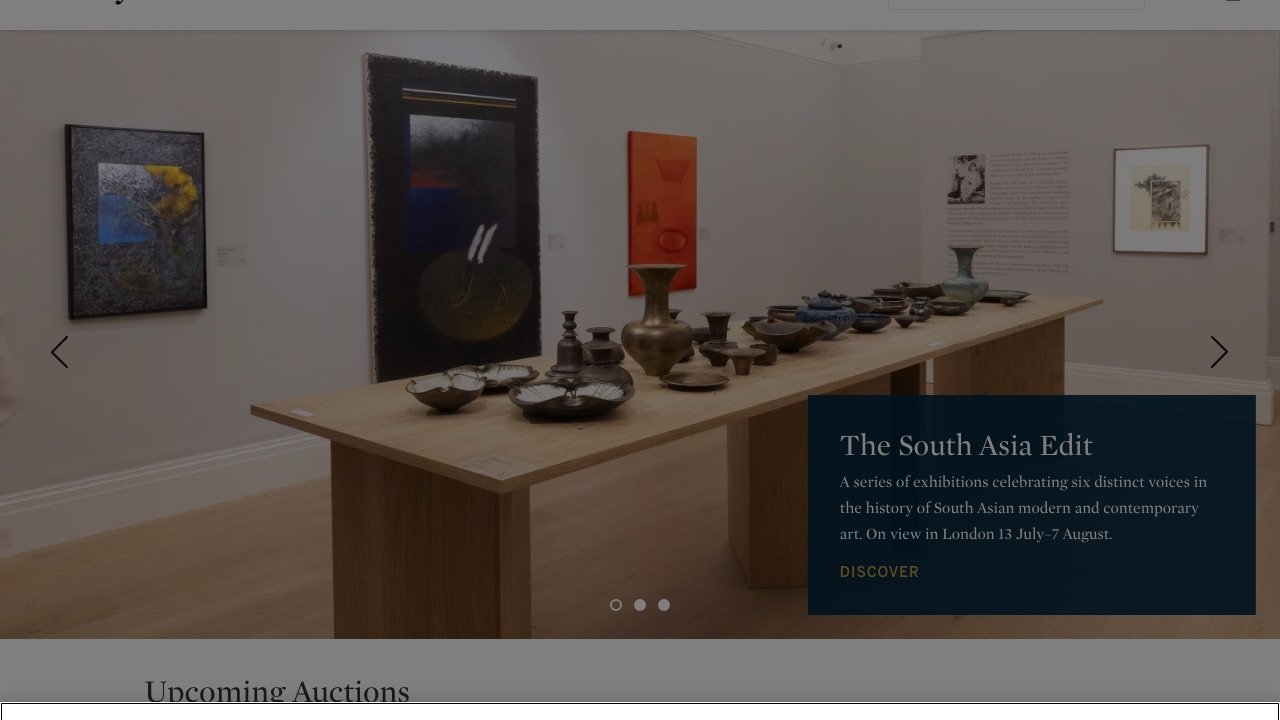
Narrower focus on contemporary and twentieth-century art, design and photography. For work in those areas, Phillips frequently achieves results disproportionate to its size, because its audience is precisely targeted.

Direct-consignment marketplaces
7. Catawiki
Expert-vetted, with private sellers able to consign directly. For an individual with one good object and no saleroom relationship, this is frequently the most practical route to a properly presented sale.
8. 1stDibs
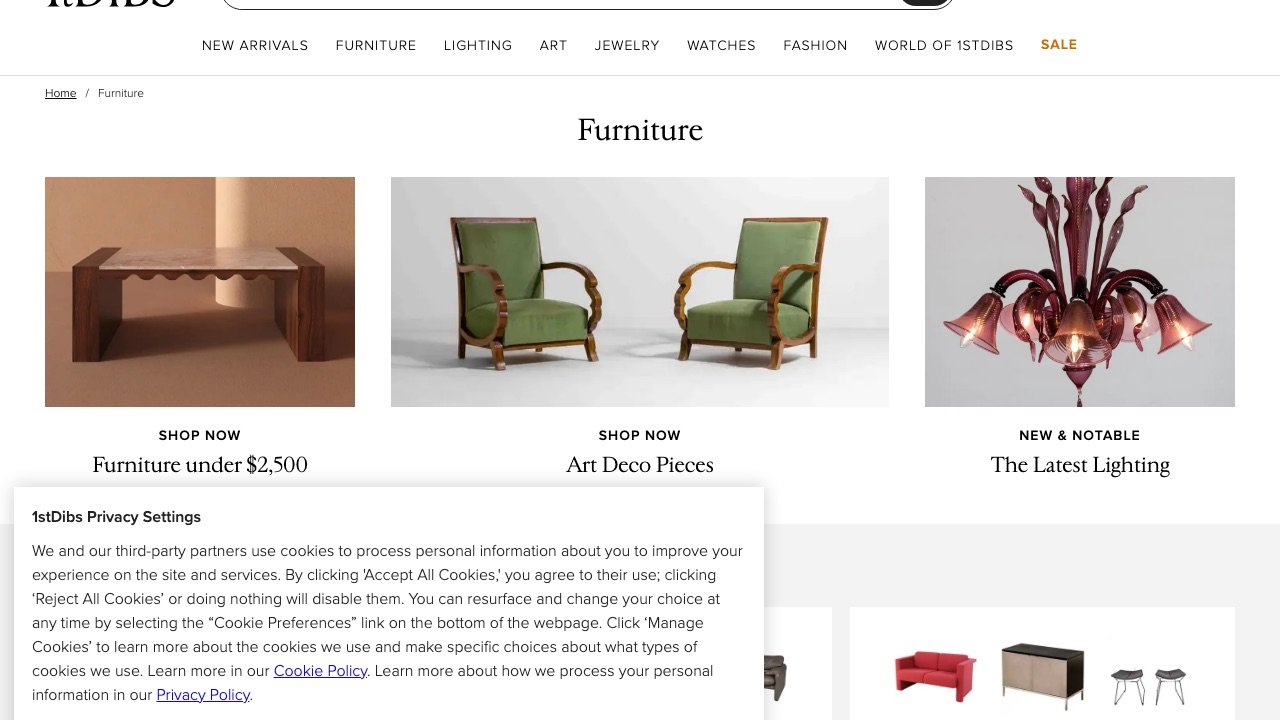
Predominantly fixed-price, aimed at interior designers and collectors, with some auction activity. Slower than an auction but often higher realised prices on decorative arts, furniture and design — because the buyer is furnishing a specific room rather than hunting a bargain.
Choosing the right venue
The single most useful discipline is checking where comparable objects have actually sold, not where similar objects are currently listed. Auction result archives are public and they will tell you within twenty minutes whether a category performs better in London or New York, at a major house or a regional saleroom.
Second: total buyer cost affects your hammer price. A platform where buyers pay 28% all-in will see lower bidding than one at 20%, and that difference comes out of the consignor’s pocket, not the buyer’s. Consignors routinely ignore this.
The direction established houses are moving
A growing number of mid-tier auction houses now run their own branded online bidding as the primary channel and simulcast selectively to one aggregator for lots that genuinely need international exposure.
The logic is straightforward. Most of a regional house’s online bidders are its own existing customers who happened to register through a platform. Once you measure registration source properly, the aggregator’s genuine incremental contribution is usually smaller than assumed — and everything else is commission paid for nothing.
What running your own requires: catalogue management with high-resolution imagery, condition report handling, timed and live simulcast bidding, absentee and phone bid capture, invoicing with premium and tax logic, and consignor settlement. That is the scope of auctioneer software and auction management system.
Related reading: alternatives to LiveAuctioneers and alternatives to Proxibid.
Frequently asked questions
Which platform gets the highest prices for antiques?
It depends entirely on the object’s origin and market. European material generally does better on European platforms, American material on US ones. Check comparable results before consigning.
Can I consign directly without an auction house?
Yes, through Catawiki or 1stDibs, subject to their vetting. Most aggregators require you to go through a member saleroom.
Is the buyer’s premium negotiable?
Not for buyers. Consignors, however, can often negotiate seller commission — particularly on good material, where houses compete for the consignment.