AuctionMethod’s entry plan costs $100 a month, but the plan most growing auction companies end up on is $750 a month plus a $2,500 activation fee. Over three years that’s $29,500, before paid add-ons like pickup scheduling. That number, more than any missing feature, is why auctioneers start looking around.
Below are eight alternatives, from other hosted platforms to software you own outright, with what each one costs and who it suits.
TL;DR: AuctionMethod alternatives
- BidWrangler and Maxanet: other hosted, white-label options for auctioneers.
- Wavebid and Auction Flex: stronger on clerking and the back office.
- Auction Mobility and Auction Experts: for established houses with a bigger budget.
- AuctionWorx and Premium Auction Software: licenses you buy once instead of renting.
Tired of monthly fees? Our license is $899 to $2,999 one time, installed on your own server at no extra cost.
AuctionMethod pricing
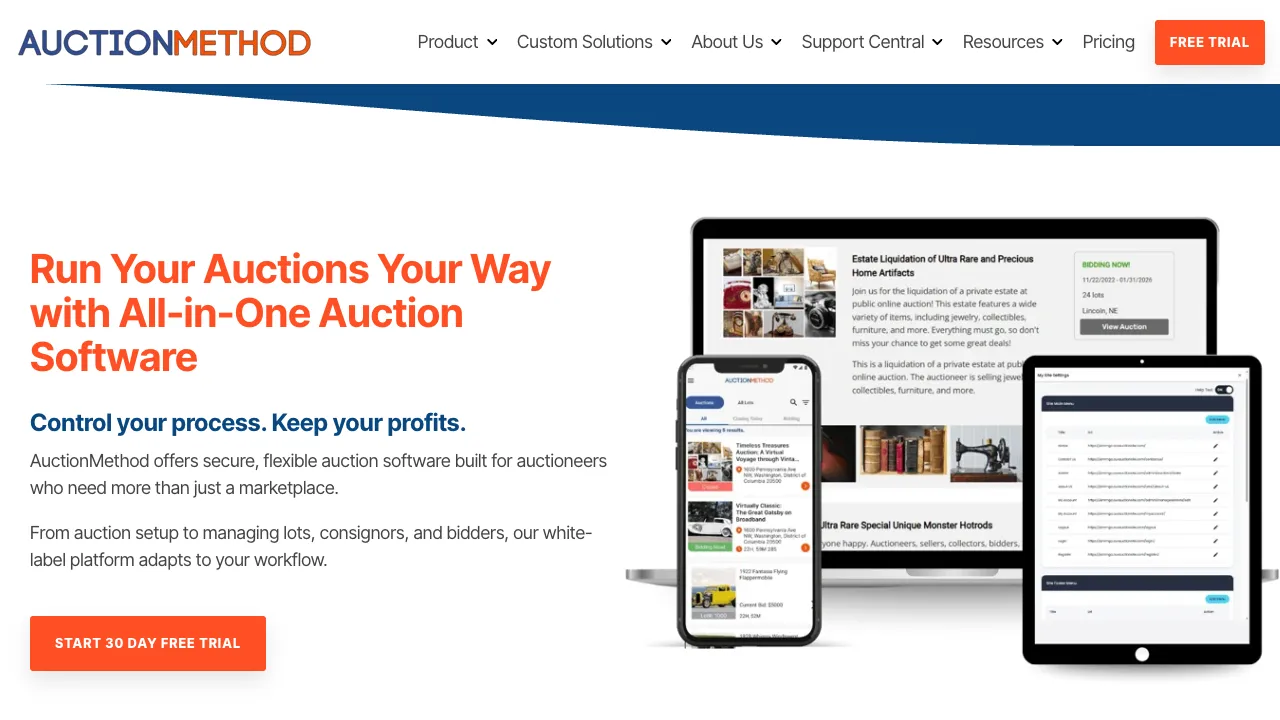
AuctionMethod publishes its prices, which is more than most of its competitors do. There are three tiers:
| Plan level | Monthly | One-time activation | 3-year total |
|---|---|---|---|
| Entry | $100 | $250 | $3,850 |
| Automation and premium features | $750 | $2,500 | $29,500 |
| Custom workflows | $1,500 and up | $5,000 | $59,000+ |
Some modules, such as pickup scheduling, are priced monthly on top. The company says it charges no commission or per-lot fees, and there’s a free trial. In 2026 it also launched ClerkBid, a free clerking tool for auctioneers who still run sales in person.
Why auctioneers look for an AuctionMethod alternative
Mostly it’s the jump between tiers. The entry plan is cheap, but the features a busy auction company wants tend to sit in the $750 plan, and that’s $9,000 a year. A reviewer on Capterra put it plainly: the subscription is fair, but customization costs extra.
The other reason is ownership. On any hosted platform your site lives on the vendor’s servers, so leaving means rebuilding your website and moving your bidder list. That’s not a flaw in AuctionMethod in particular. It’s how rented software works.
If neither of those bothers you, AuctionMethod is a solid choice and you may not need to switch.
AuctionMethod alternatives compared
| Software | Model | Published price | Best for |
|---|---|---|---|
| BidWrangler | Hosted, white-label | Flat monthly fee, not published | Branded web and app bidding |
| Maxanet | Hosted, white-label | Not published | Timed online sales |
| Wavebid | Cloud (SaaS) | Not published | Cataloguing and clerking |
| Auction Flex | Desktop, per workstation | From $85 a month | Live sales with on-site clerks |
| Auction Mobility | Hosted, branded apps | Quoted by package | Established houses wanting native apps |
| Auction Experts | Subscription plus implementation | €720 a month + from €2,450 setup | Houses building their own front end |
| AuctionWorx | Licensed | Quoted | Single-seller or multi-seller sites |
| Premium Auction Software | Licensed, self-hosted | $899 to $2,999 one time | Owning the software, no monthly fee |
Hosted platforms like AuctionMethod
1. BidWrangler
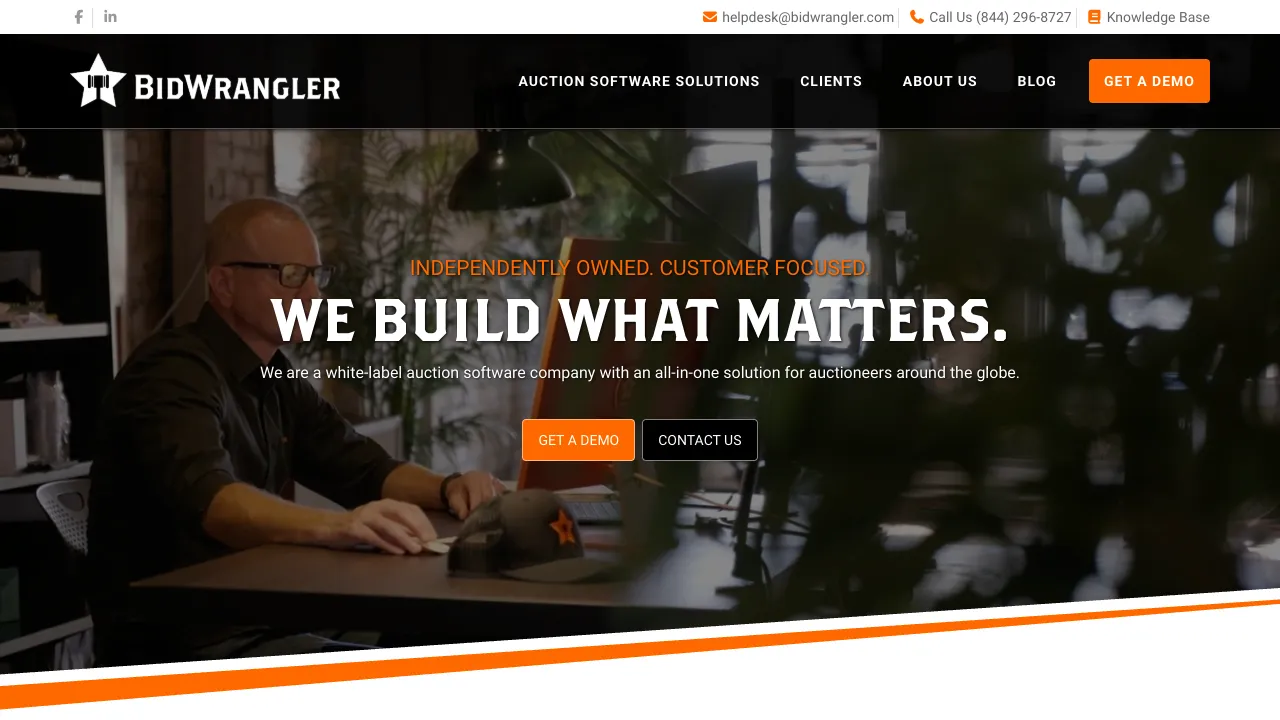
The closest like-for-like swap. BidWrangler calls itself a true white-label company and keeps its own name off your web and app bidding, so bidders see only your brand. It charges a flat monthly service fee rather than a percentage of each sale. The rate isn’t published, so ask for a quote and compare it with the AuctionMethod tier you’re on now.
2. Maxanet
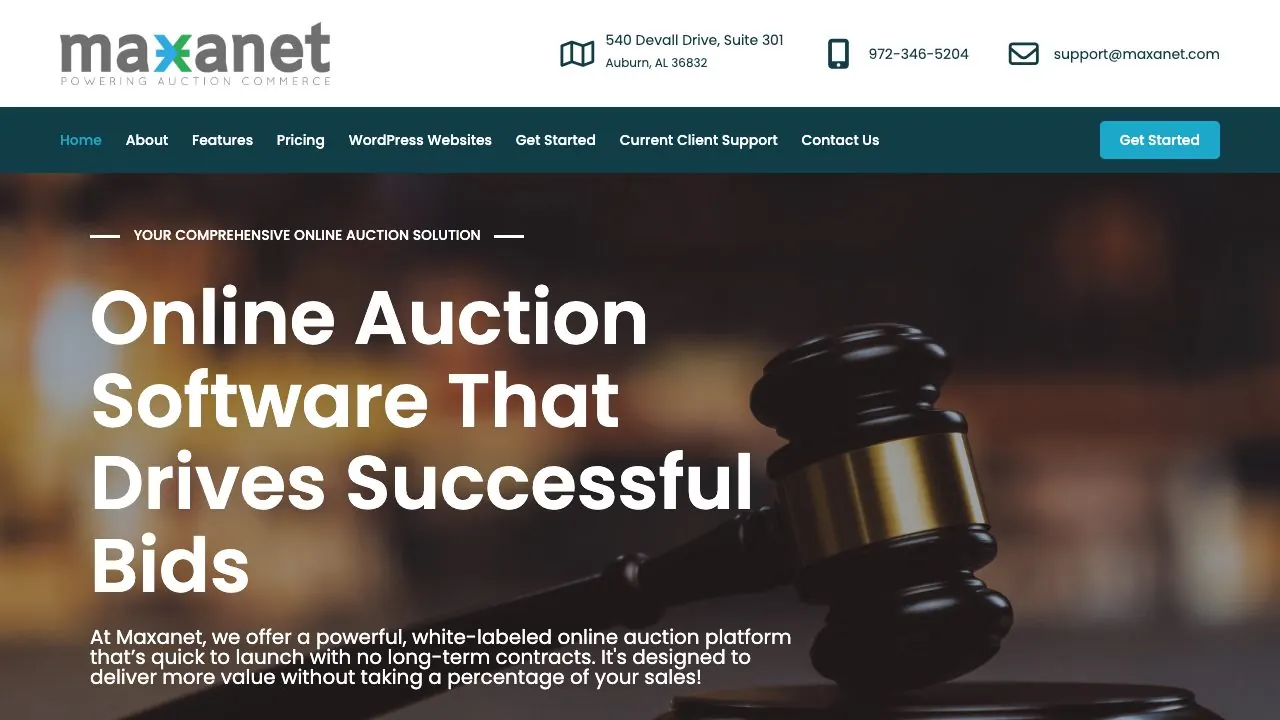
Maxanet has run white-labeled online bidding for auctioneers for a long time, often alongside the auction company’s website. It’s practical rather than flashy, and it suits companies that mostly run timed online sales. Pricing is quote-based. Ask how the fee changes as your number of auctions grows, because that’s where hosted plans usually get expensive.
Back-office and clerking tools
3. Wavebid
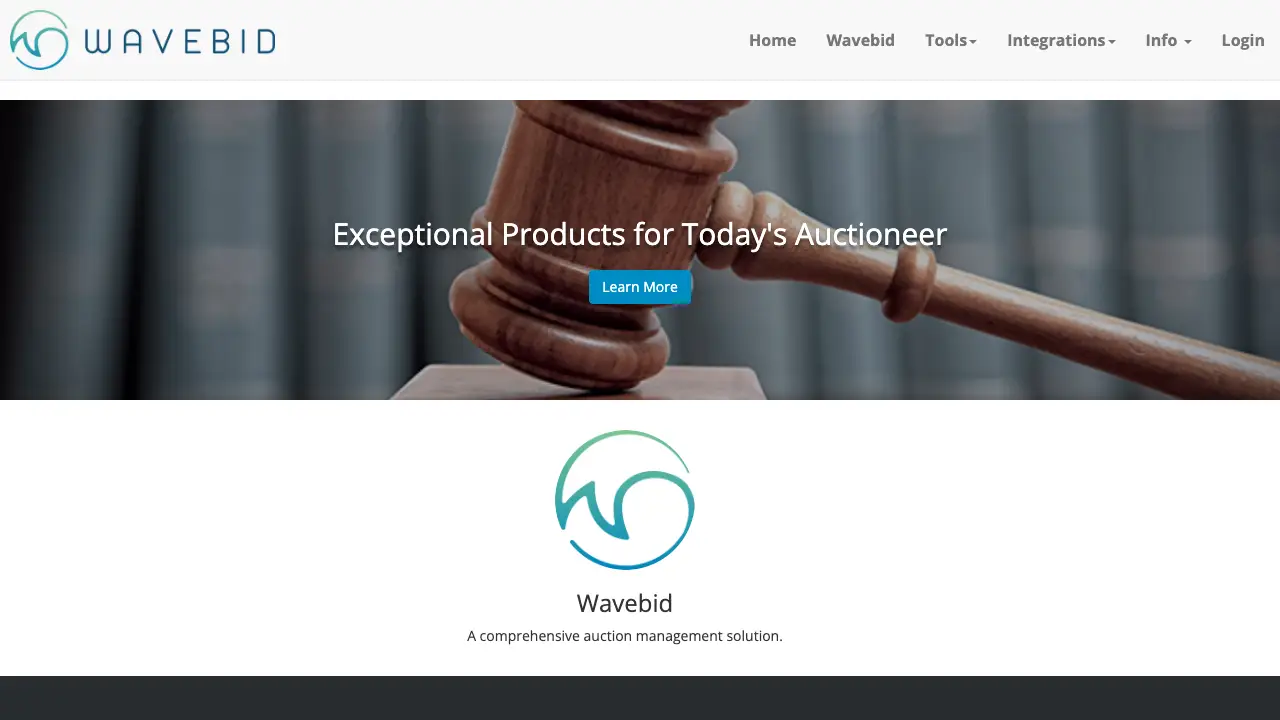
Wavebid is cloud-based auction management software with cataloguing, clerking and accounting, and it’s been owned by Proxibid since 2019. If your frustration with AuctionMethod is on the back-office side, Wavebid is the one to trial. It doesn’t publish prices, so you’ll be talking to sales.
4. Auction Flex
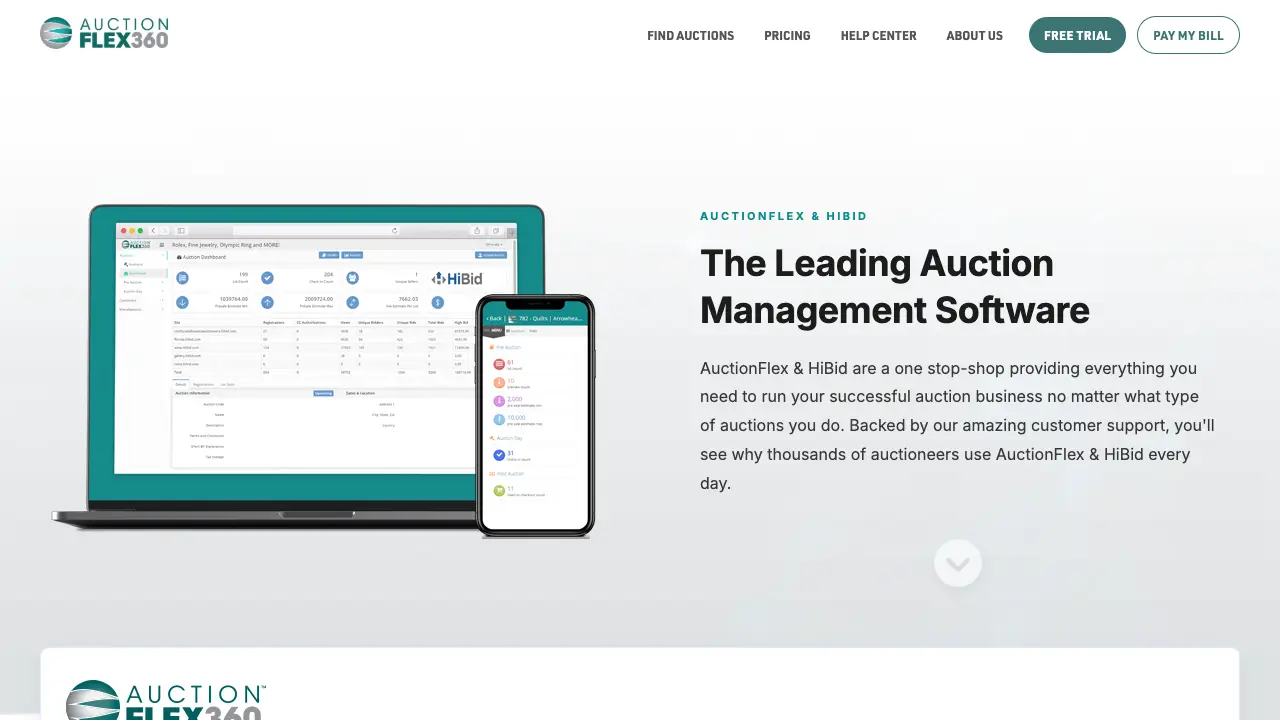
The old standard for live auction companies in North America. Auction Flex is desktop software rented per workstation: $85 a month for one, $550 for unlimited. It pairs with HiBid for online bidding, which carries its own fees. Pick it if most of your sales are live with clerks and cashiers on site. Skip it if you mainly run timed online sales, where it adds cost without adding much.
Higher-end platforms
5. Auction Mobility
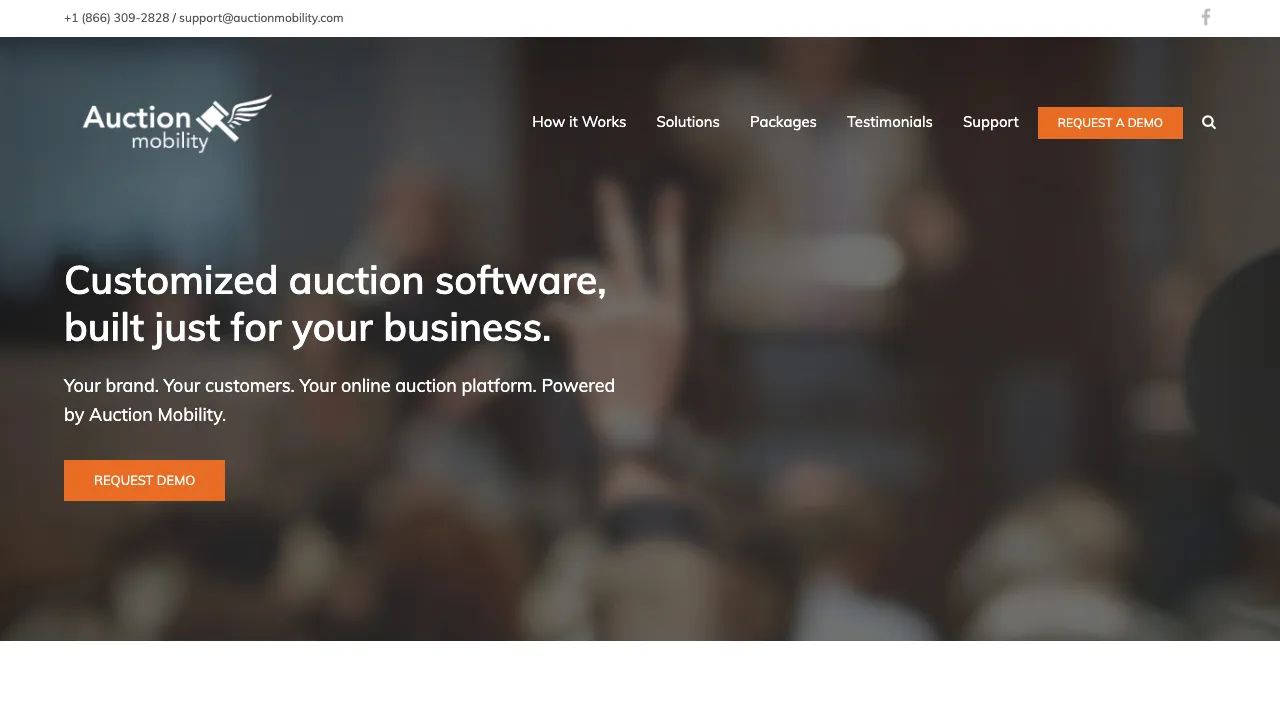
Auction Mobility builds branded bidding platforms with native iOS and Android apps, live simulcast and timed sales, and it stresses that clients own their bidder data. It’s aimed at established auction houses and priced by package. Expect it to cost more than AuctionMethod’s top tier, and expect a more polished app in return.
6. Auction Experts
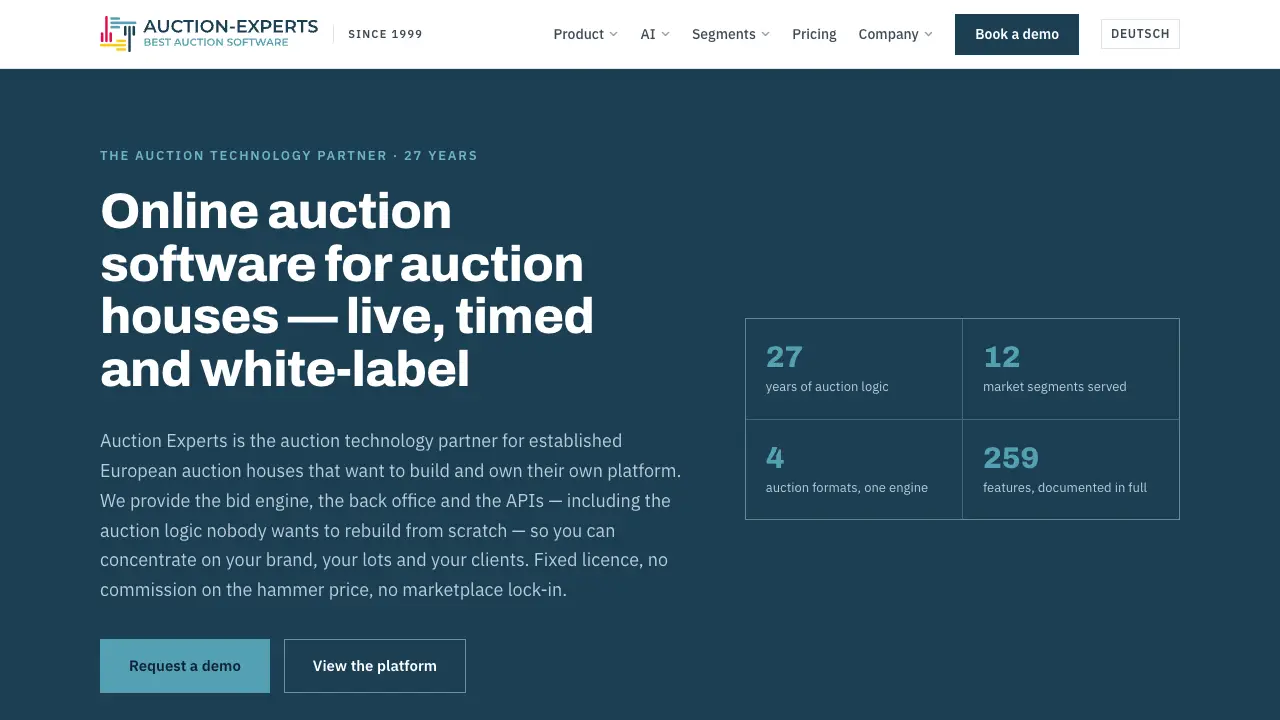
An Amsterdam-based bid engine with APIs, for auction houses that want to build their own front end and plug bidding into it. The Professional plan is listed at €720 a month, with implementation from €2,450, excluding VAT. Good for a house with developers on hand. Too much for a small auction company.
Software you buy once
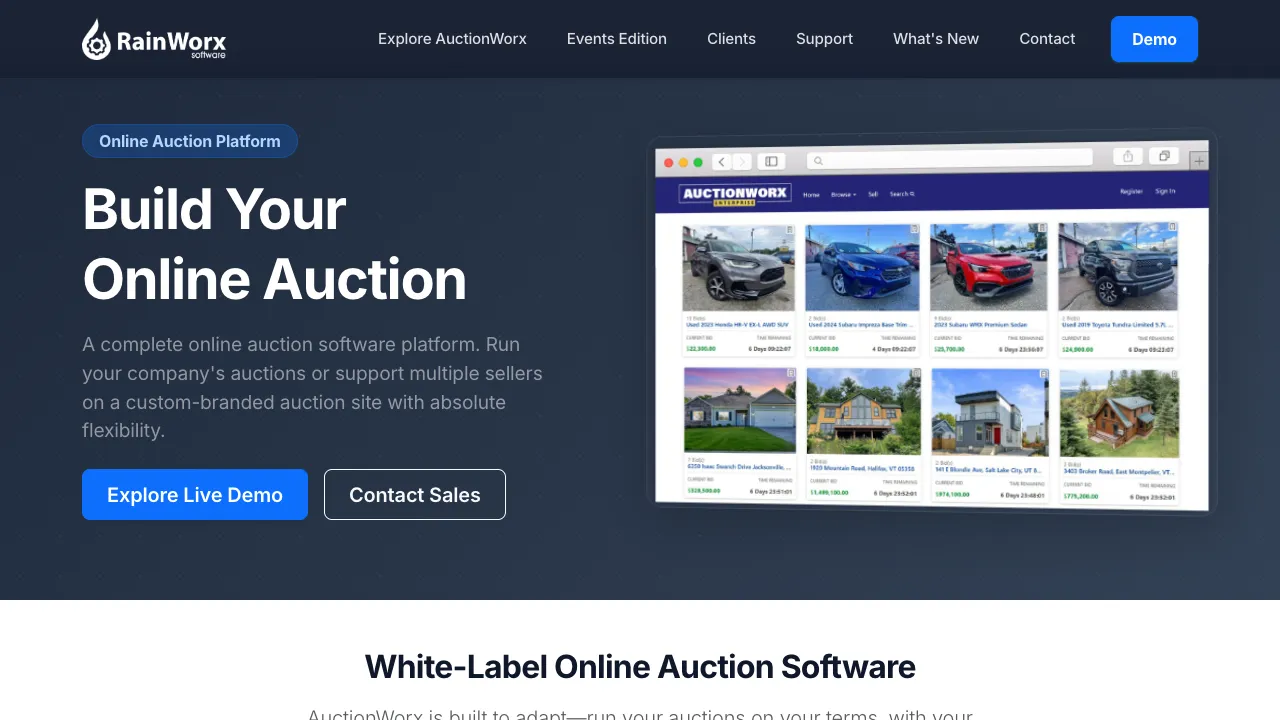
7. AuctionWorx (RainWorx)
AuctionWorx is sold as a license rather than a subscription, and it can run as a single-seller auction site or a multi-seller marketplace. RainWorx also offers hosting and managed services. Software directories describe a one-time license with no commission, but confirm what the base license includes before you compare it with a hosted plan.
8. Premium Auction Software
This is ours, so weigh that. It’s a white-label auction platform that runs on your own server, and you pay once: $899, $1,999 or $2,999. Our team installs and sets it up at no extra cost. There’s no monthly fee, no commission and no per-lot charge.
It covers timed and live simulcast auctions, proxy bidding, soft close, sealed bids, Buy It Now, bidder approval and deposits, consignor settlements and invoicing. The Professional license includes 10 hours of custom development and Enterprise includes 30. Other custom features are typically $1,000 to $10,000 one time, and we can build and publish your own iOS and Android app.
Against AuctionMethod’s $750 plan, the Professional license pays for itself in about three months. The trade-off: you pay for your own hosting, and you’re responsible for a server, even if we set it up.
Which one should you pick?
If you’re on AuctionMethod’s entry plan and happy, stay. At $100 a month it’s hard to beat on price, and moving costs time.
If you’re on the $750 plan or above, run the three-year numbers before your next renewal. A hosted competitor like BidWrangler only helps if its quote is clearly lower. Owning the software helps every year after the first. Our online auction software pricing guide has the full three-year comparison, and white label auction software explains the difference between renting a branded site and owning one.
Whichever you choose, ask for a full export of your bidder list and auction history before you cancel anything.
Swap the monthly fee for a one-time license
Try the live demo, see license pricing, or tell us how you run your sales.
Frequently asked questions
How much does AuctionMethod cost?
AuctionMethod publishes three tiers: $100, $750 and $1,500+ a month, with one-time activation fees of $250, $2,500 and $5,000. Some modules, such as pickup scheduling, cost extra each month.
What is the cheapest alternative to AuctionMethod?
In the first year, AuctionMethod’s entry plan ($1,450 with activation) and our $899 license plus hosting cost about the same. Over three years, a one-time license usually costs less than any monthly plan, and much less than the tiers above entry.
Is there a free alternative to AuctionMethod?
For clerking in-person sales, AuctionMethod’s own ClerkBid tool is free. For running online auctions, free options generally take a cut of sales or add buyer fees instead.
Can I move my bidders from AuctionMethod to another platform?
Ask AuctionMethod for an export of your bidder and sales data before you cancel, then import it into the new system. Ask the new vendor whether the import is included in setup.
