TL;DR: the best marketplace software by use case
- Sharetribe: fastest no-code launch for service and rental marketplaces.
- CS-Cart Multi-Vendor: self-hosted product marketplace on a one-time license.
- Dokan: cheapest start if you already run WordPress and WooCommerce.
- Mercur: open-source, developer-led build on Medusa.
- Yo!Kart: packaged self-hosted marketplace with optional mobile apps.
- Arcadier: hosted platform for several marketplace models.
- Mirakl and Marketplacer: enterprise retailers adding third-party sellers.
- Premium Auction Software: marketplaces where sellers list by auction as well as Buy It Now.
Building a multi-vendor marketplace where items sell by bidding? Our multi-vendor auction marketplace software is a one-time license you host yourself, with no commission on sales.
Marketplace software is the platform that runs a multi-vendor website: seller sign-up and storefronts, listings, checkout, commission and seller payouts. The right one depends less on features (they all cover the basics) and more on three questions. Do you want to rent it or own it? Are you selling products, services or rentals? And do you have developers?
Pick wrong and you’ll find out about a year in, usually when transaction fees outgrow your margin or you need a feature the hosted platform won’t let you build.
How we picked
We looked at platforms people actually launch marketplaces on in 2026 and grouped them by hosting model, because that decides cost and control more than anything else. Prices below come from each vendor’s own pages or documentation where published. Several vendors quote only on request, and a few changed pricing this year, so check before you budget.
Marketplace software compared
| Platform | Hosting | Pricing model | Best for |
|---|---|---|---|
| Sharetribe | Hosted | Monthly subscription | Service and rental marketplaces, MVPs |
| CS-Cart Multi-Vendor | Self-hosted or cloud | One-time license (cloud yearly) | Product marketplaces |
| Dokan | WordPress plugin | Free core, paid yearly tiers | WooCommerce stores adding vendors |
| Mercur | Self-hosted | Open source (MIT core) | Teams with developers |
| Yo!Kart | Self-hosted | One-time license | Packaged product marketplace |
| Arcadier | Hosted | Subscription | Mixed models: goods, services, B2B |
| Mirakl | Hosted (enterprise) | Quote | Large retailers and B2B distributors |
| Marketplacer | Hosted (enterprise) | Quote | Retailers adding third-party ranges |
| Premium Auction Software | Self-hosted | One-time license | Auction and Buy It Now marketplaces |
Hosted, no-code platforms
1. Sharetribe
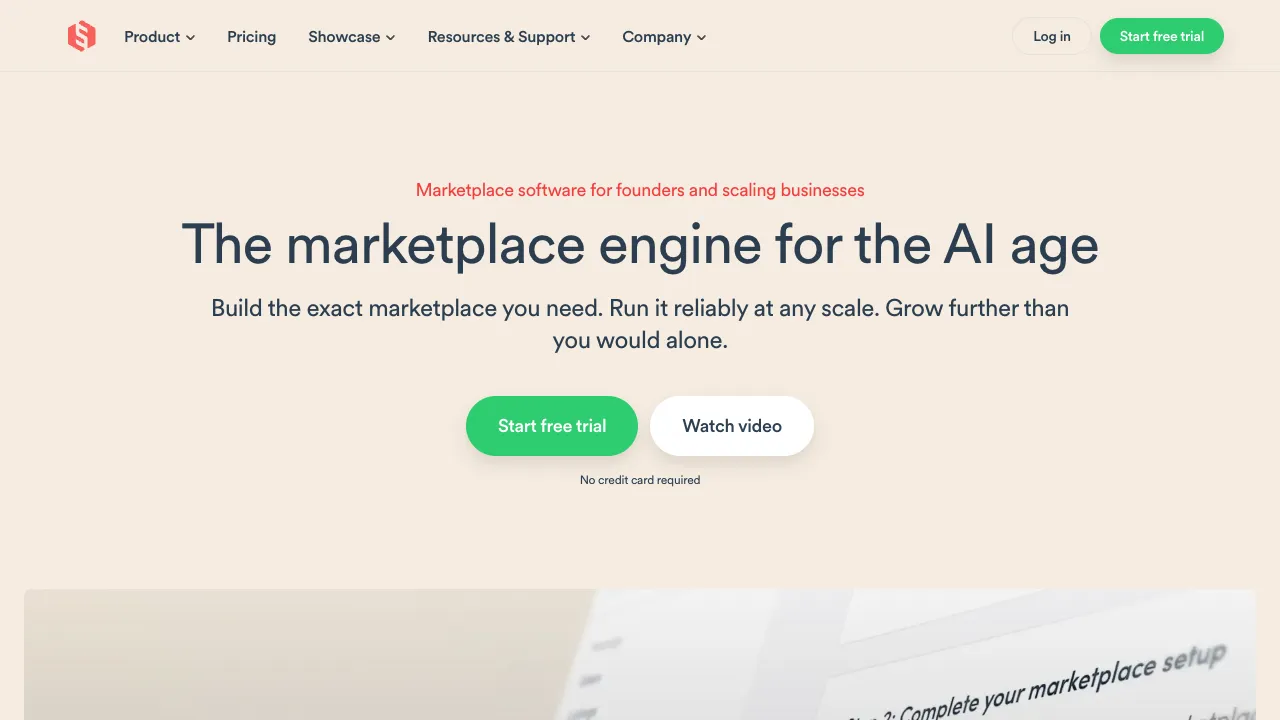
Sharetribe is the default answer for founders who want a marketplace live in weeks without hiring developers. It’s strongest for bookings and services (tutors, rentals, coworking space) where the transaction is a time slot rather than a shipped product. A developer can extend it later through its APIs.
It’s a subscription. The entry Build plan is $39 a month, and launching publicly needs a higher plan. Sharetribe moved to usage-based pricing in 2026, so check the current pricing page. The downside is the usual one with hosted software: you rent it forever and can only change the transaction flow as far as Sharetribe allows. We cover other options in Sharetribe alternatives.
2. Arcadier
Arcadier is a hosted platform that supports several marketplace types (retail, services, rentals and B2B) from one product, with a plugin layer for custom features. It suits businesses testing a marketplace alongside an existing operation. Pricing is a subscription, quoted on its “How We Price” page. Expect a learning curve if you go beyond the standard templates.
Self-hosted and open source
3. CS-Cart Multi-Vendor
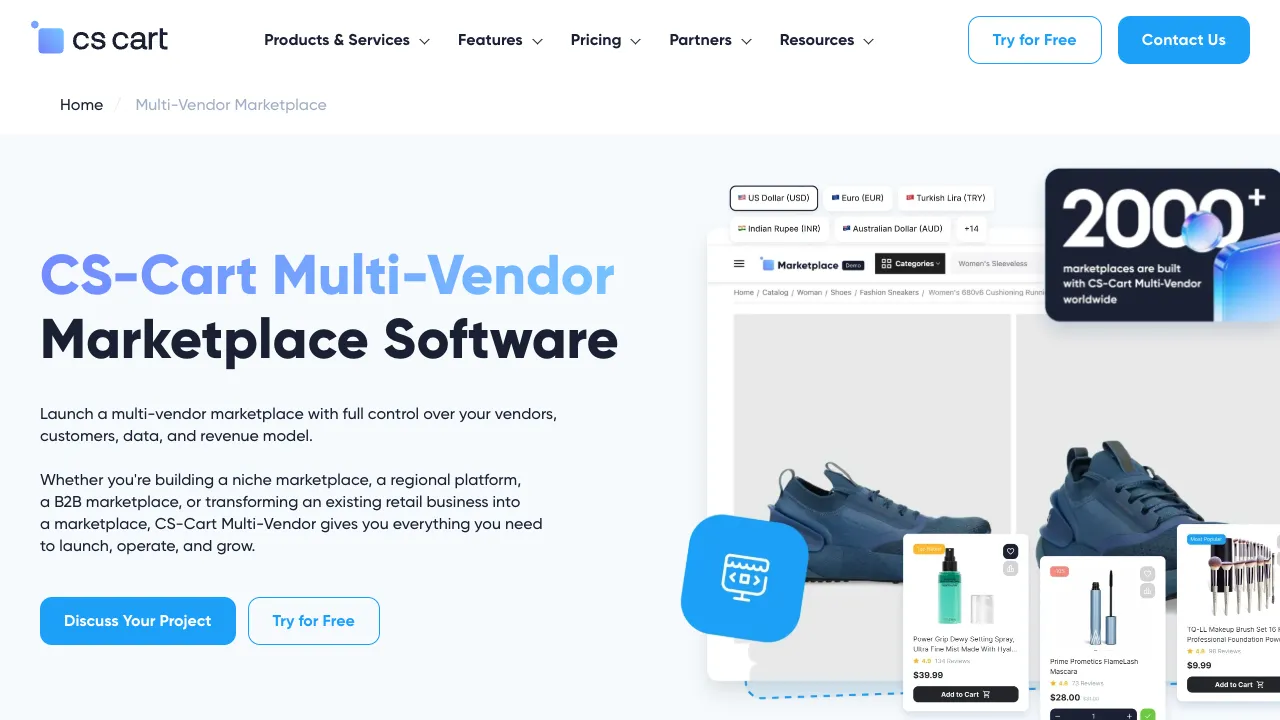
CS-Cart Multi-Vendor is one of the most established self-hosted options for product marketplaces: vendor panels, commission plans, split payments and a large add-on catalog. CS-Cart’s documentation lists lifetime licenses starting with Multi-Vendor Plus at $3,590, with higher tiers above that and a yearly cloud option. You’ll need a PHP developer for anything beyond configuration, and add-ons from third parties vary in quality.
4. Dokan
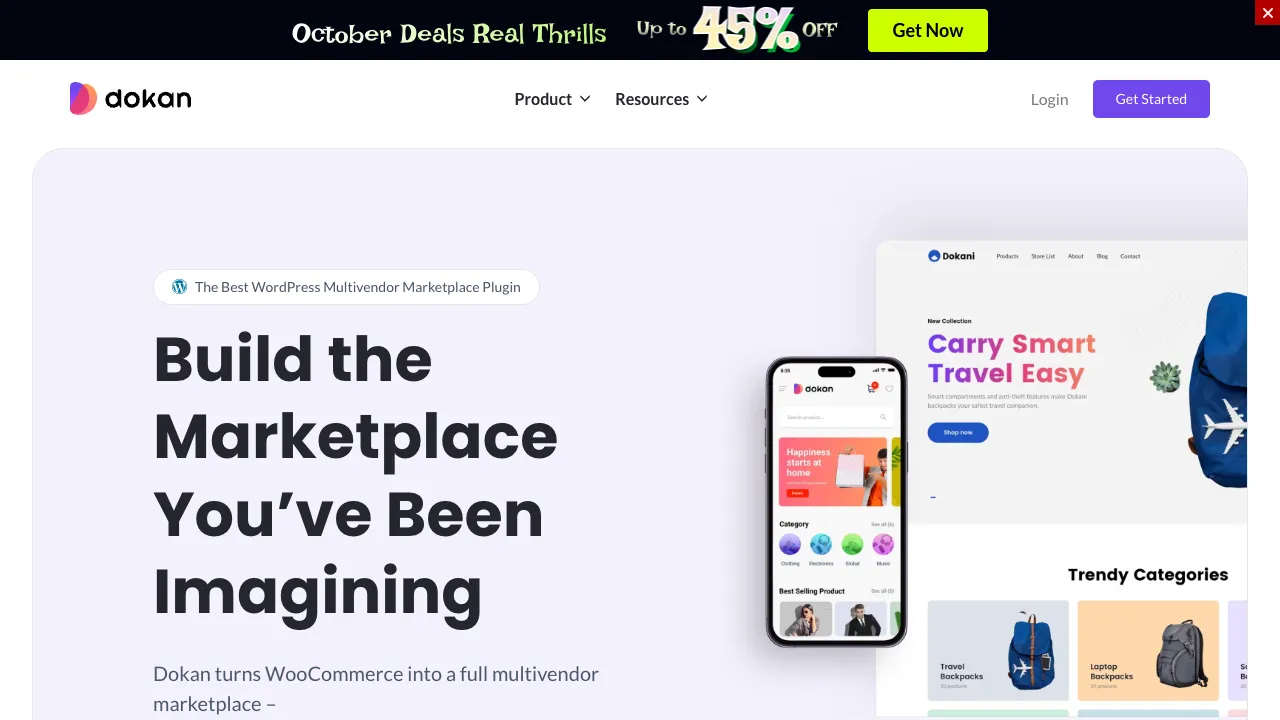
Dokan turns a WooCommerce store into a multi-vendor marketplace. The free plugin is enough to test the idea. Paid tiers (yearly, from $149 for one site) add things most real marketplaces need, such as split payments through Stripe or PayPal, seller verification and subscriptions.
It’s the cheapest way in if you already run WordPress. It’s also where performance and plugin conflicts start to bite once you have thousands of products and dozens of active sellers. Budget for good hosting.
5. Mercur
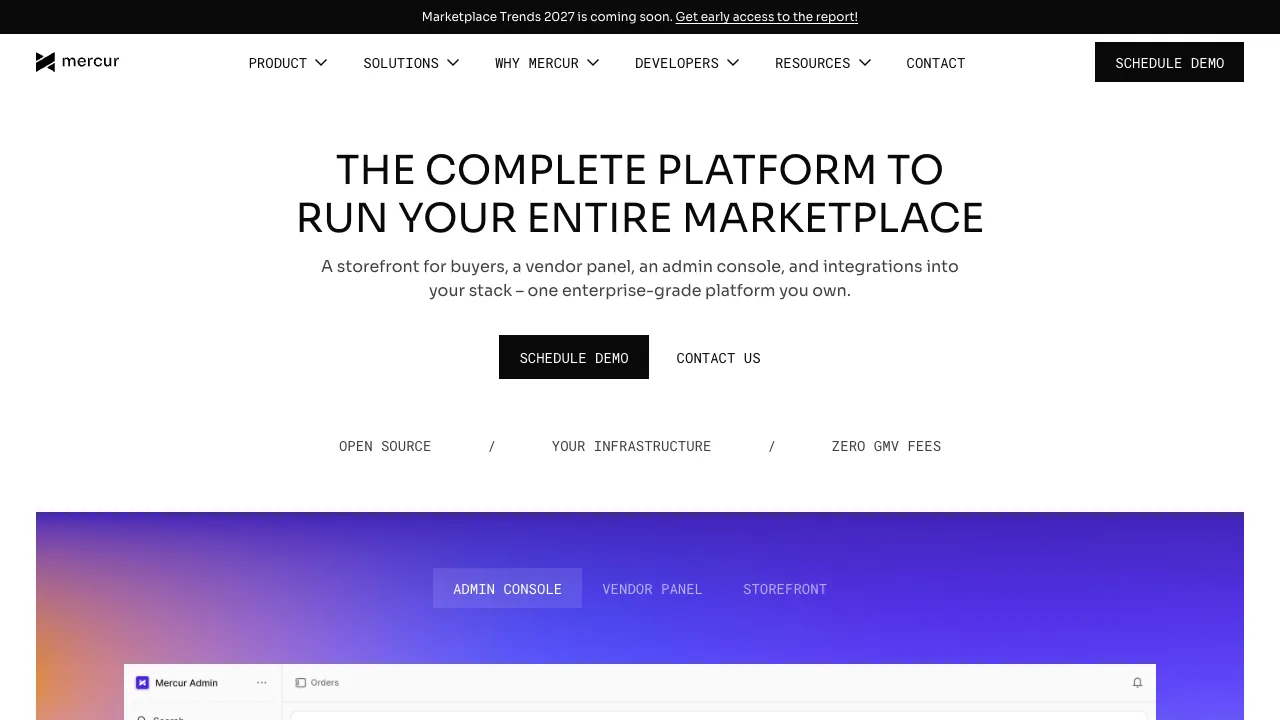
Mercur is an open-source marketplace layer built on the Medusa commerce framework. It adds seller onboarding, a vendor panel, commissions, order splitting and payouts, and ships with an admin console and a Next.js storefront. The core is MIT-licensed, with a separately licensed enterprise edition.
No license fee, then, but this is a developer’s tool. If nobody on your team writes TypeScript, the “free” option will cost more than any of the paid ones.
6. Yo!Kart
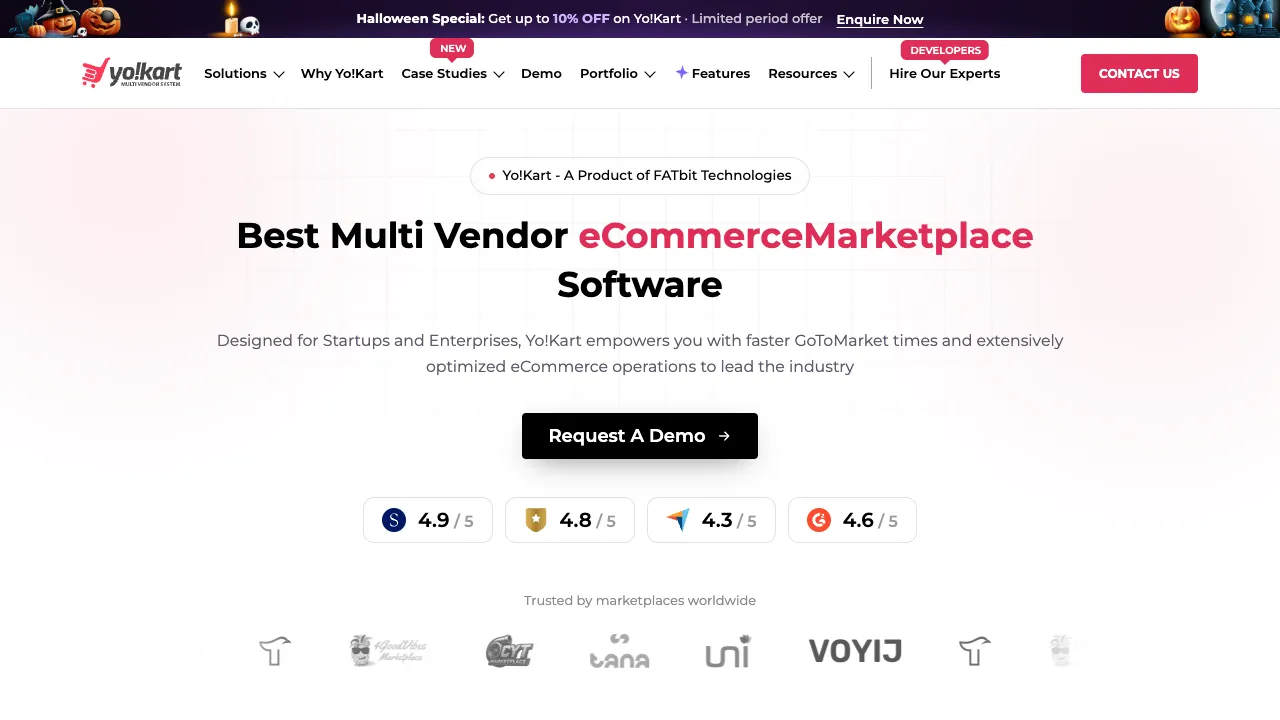
Yo!Kart is a packaged multi-vendor product marketplace sold on a one-time license per installation, in several tiers. Native buyer and seller apps are sold separately. It’s a reasonable middle ground for a startup that wants to own its software without starting from an open-source framework. Check what each tier includes in support months and customization hours, because extra development is billed on top.
7. Premium Auction Software
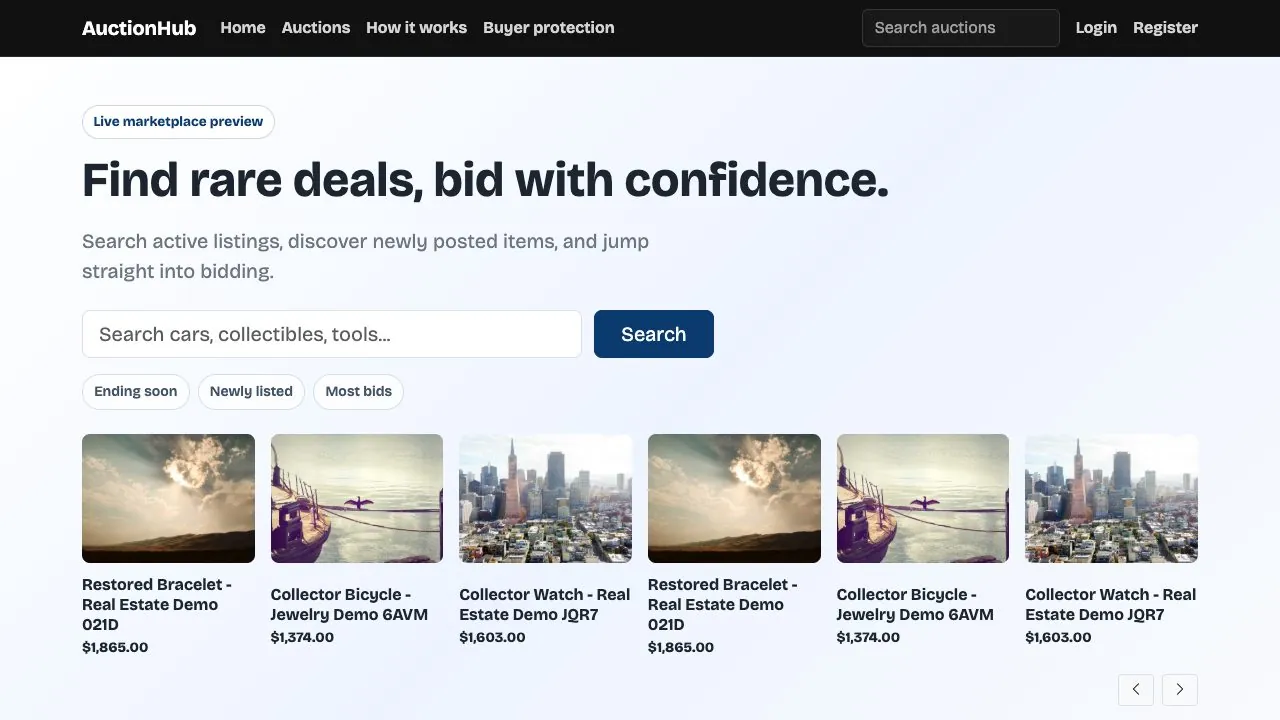
Our own product, and only the right pick for one kind of marketplace: one where sellers list items for auction, Buy It Now or both. Think regional equipment marketplaces, collector sites or an eBay-style platform for one niche. The Enterprise license ($2,999, one-time) includes multi-vendor selling, API access and 30 hours of custom development. You host it yourself and pay no commission on what sells.
If your marketplace is about services or bookings, use Sharetribe or Arcadier instead. Auctions are what we’re built for.
Enterprise marketplace platforms
8. Mirakl
Mirakl is what large retailers and B2B distributors use to open their sites to third-party sellers and dropship suppliers. It handles seller onboarding at scale, catalog quality and operations across many sellers. Pricing is quote-only and implementation is a project measured in months. For a startup, it’s the wrong tool.

9. Marketplacer
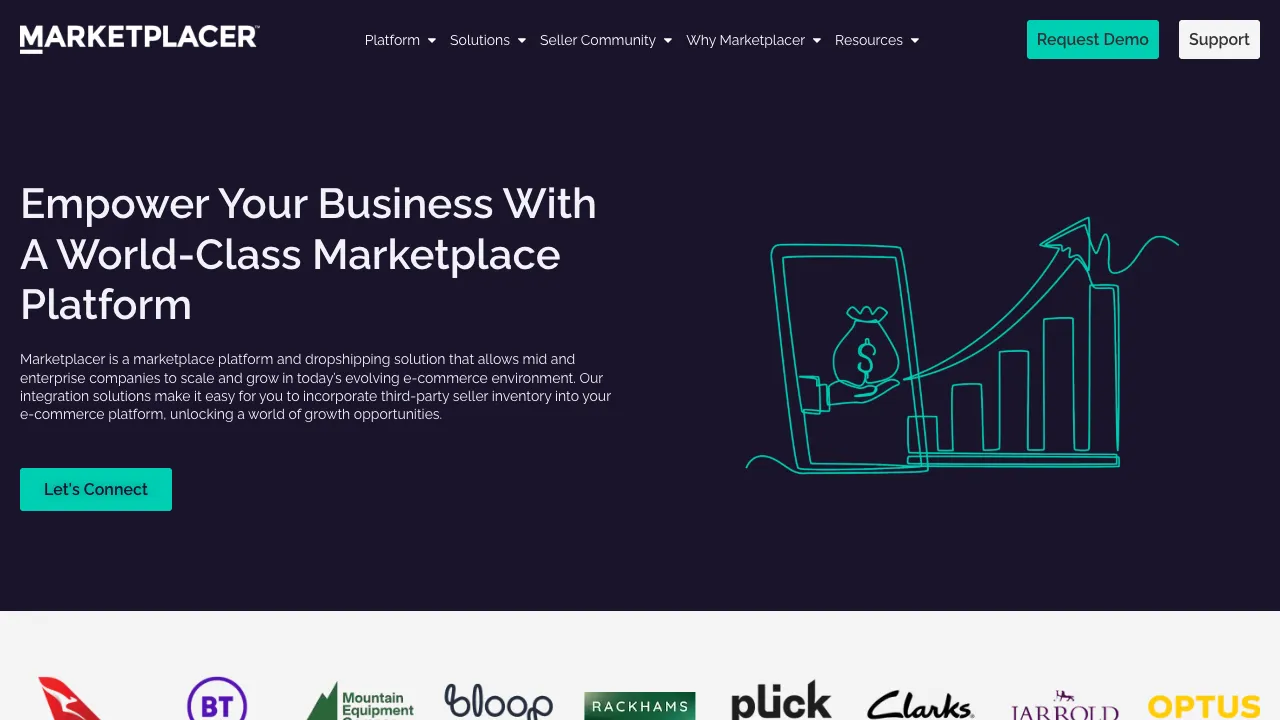
Marketplacer plays in the same enterprise space, often used by retailers to extend their range with partner brands without holding stock. Like Mirakl, it’s quote-based and sold to companies with an existing ecommerce operation.
How to choose
Start with the money. A hosted subscription is cheap in year one and gets more expensive as you grow. A one-time license costs more up front, plus hosting and a developer, but the cost doesn’t rise with every sale. Our breakdown of what a marketplace website costs runs the numbers for both.
Then match the platform to the transaction. Bookings and services fit Sharetribe or Arcadier. Shipped products fit CS-Cart, Dokan, Yo!Kart or Mercur. Retail-scale seller programs need Mirakl or Marketplacer. Wholesale and procurement marketplaces have their own needs, covered in our B2B marketplace software list. If the price is set by bidding, you need auction logic (proxy bids, soft close, reserve prices) that general marketplace software doesn’t have, and bolting an auction plugin onto a store rarely holds up. See WooCommerce auction plugin alternatives for why.
Finally, be honest about developers. Open source is only free if someone on payroll can run it.
Launching an auction marketplace?
See the multi-vendor marketplace features, try the live demo, or compare license pricing.
Frequently asked questions
What is marketplace software?
Software that runs a multi-vendor website: seller accounts and storefronts, listings, checkout, commissions and payouts to sellers.
What is the best marketplace software for a startup?
Sharetribe for a fast no-code launch, especially for services and rentals. Dokan if you already use WordPress. CS-Cart or Yo!Kart if you’d rather own the software from day one.
Is there free marketplace software?
Mercur’s core is open source, and Dokan has a free plugin. Both still cost money to host and develop, and free tiers usually lack split payments and seller verification.
Hosted or self-hosted marketplace software?
Hosted is faster and cheaper to start. Self-hosted costs more up front but gives you full control of the code and data, and no per-transaction platform fees. Our post on SaaS vs. self-hosted software covers the trade-off.
Can I build an auction marketplace with general marketplace software?
Only with plugins, and they tend to struggle with proxy bidding, soft close and last-minute traffic. A dedicated multi-vendor auction platform handles those natively.
