TL;DR: the best B2B marketplace software
- Mirakl: enterprise distributors and retailers opening to third-party sellers.
- Virto Commerce: complex B2B, procurement and multi-vendor models on one platform.
- OroCommerce: B2B commerce with a built-in marketplace module and CRM.
- CS-Cart Multi-Vendor: affordable self-hosted B2B or B2C marketplace on a one-time license.
- Mercur: open-source starting point for developer-led B2B builds.
- Premium Auction Software: B2B marketplaces where price is set by bidding or reverse auctions.
- RaftLabs: fully custom build when no platform fits.
Selling surplus, equipment or contracts to trade buyers by auction? Our multi-vendor auction marketplace supports dealer-only bidding and reverse auctions on a one-time license.
B2B marketplace software runs a platform where businesses buy from many suppliers in one place: an industrial parts portal, a wholesale marketplace for independent retailers, a procurement hub for a hospital group. It looks like consumer marketplace software from the outside. Underneath, it needs things a consumer marketplace never does: company accounts with several buyers, negotiated price lists, requests for quote, approval chains and invoices on net-30 terms.
That’s why most of the tools in our general marketplace software list struggle with B2B, and why the options below are a shorter, more specialized set.
What B2B marketplace software needs
- Company accounts with multiple users and roles (buyer, approver, admin).
- Customer-specific or tiered pricing, plus volume breaks.
- Requests for quote (RFQ) and negotiated offers, not just a cart.
- Approval workflows and spending limits.
- Invoicing on payment terms, purchase order numbers and tax exemptions.
- Integration with ERP systems for stock, pricing and orders.
If a platform’s demo only shows a shopping cart and a credit card checkout, it’s a consumer marketplace with B2B marketing on top.
B2B marketplace software compared
| Platform | Hosting | Pricing | Best for |
|---|---|---|---|
| Mirakl | Hosted (enterprise) | Quote | Large distributors and retailers |
| Virto Commerce | Enterprise deployment | Quote | Complex B2B and procurement marketplaces |
| OroCommerce | Enterprise deployment | Quote | Manufacturers and distributors needing B2B commerce plus marketplace |
| CS-Cart Multi-Vendor | Self-hosted or cloud | One-time license from $3,590 | Mid-size B2B or mixed marketplaces |
| Mercur | Self-hosted | Open source (MIT core) | Teams with developers |
| Premium Auction Software | Self-hosted | One-time license, $2,999 for multi-vendor | B2B auctions and reverse auctions |
| RaftLabs (custom) | Your choice | MVP from about $55,000 | Unusual matching or payment logic |
Enterprise platforms
1. Mirakl
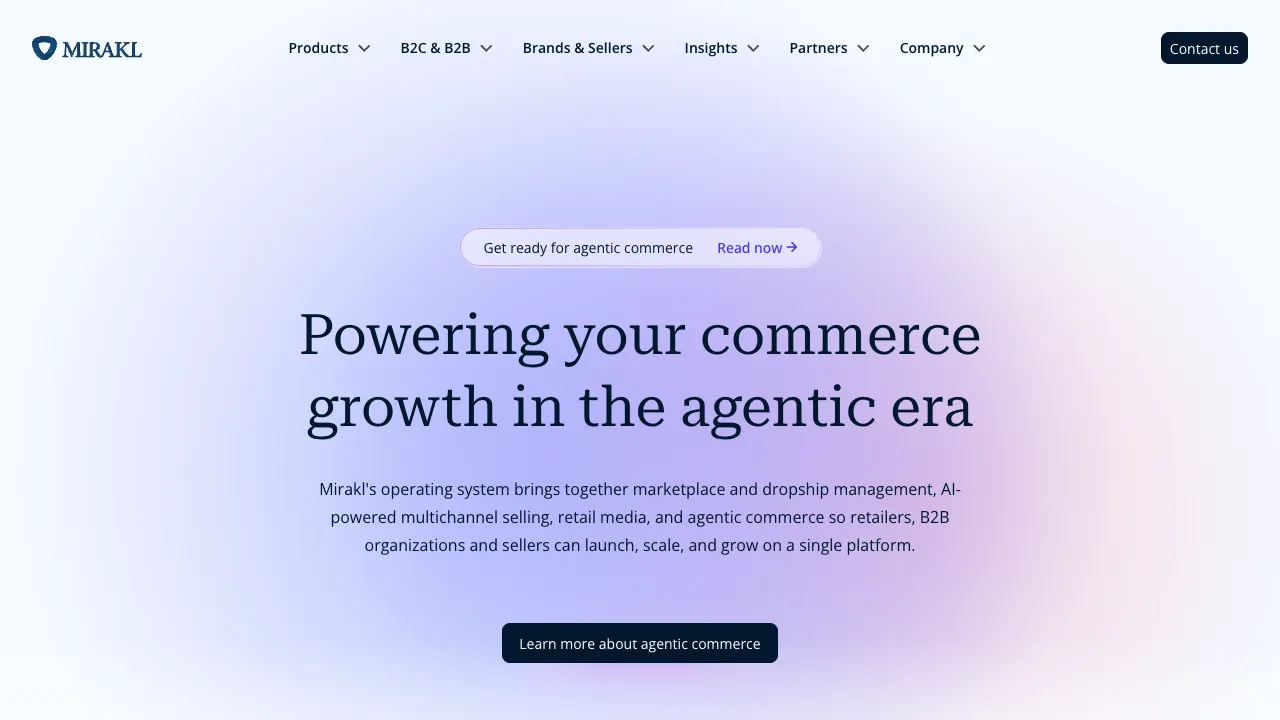
Mirakl is the best-known enterprise marketplace platform, with separate products for B2C and B2B. Distributors use it to add third-party and dropship suppliers to their own catalog without holding the stock. It’s strong on seller onboarding and catalog quality at scale. It’s also quote-only and a multi-month implementation, so it only makes sense for companies with an existing large ecommerce operation.
2. Virto Commerce
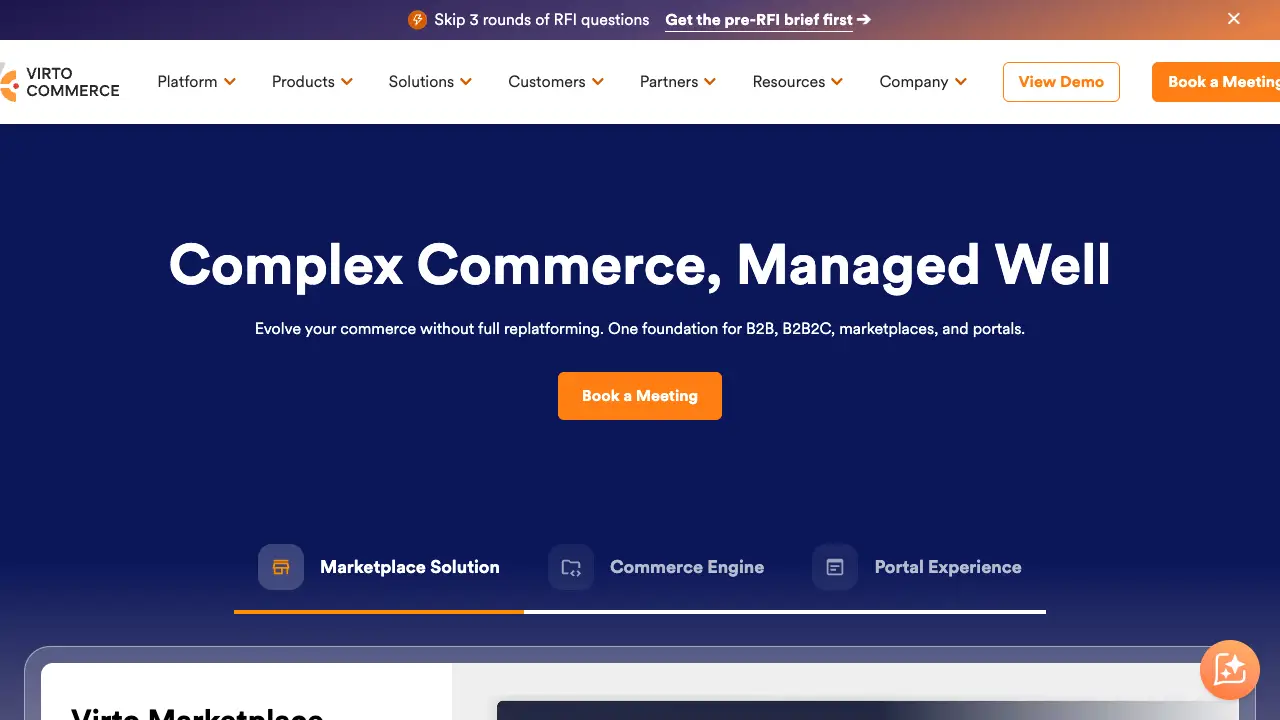
Virto Commerce positions itself as one foundation for B2B, B2B2C, marketplaces and portals. Its marketplace product covers multi-vendor, group purchasing (GPO) and procurement marketplace models. Reviewers describe it as open-source and API-first, built for enterprise B2B, with contract pricing, quote management, company hierarchies and approval workflows. Pricing is by quote. Expect a developer-heavy implementation in return for the flexibility.
3. OroCommerce
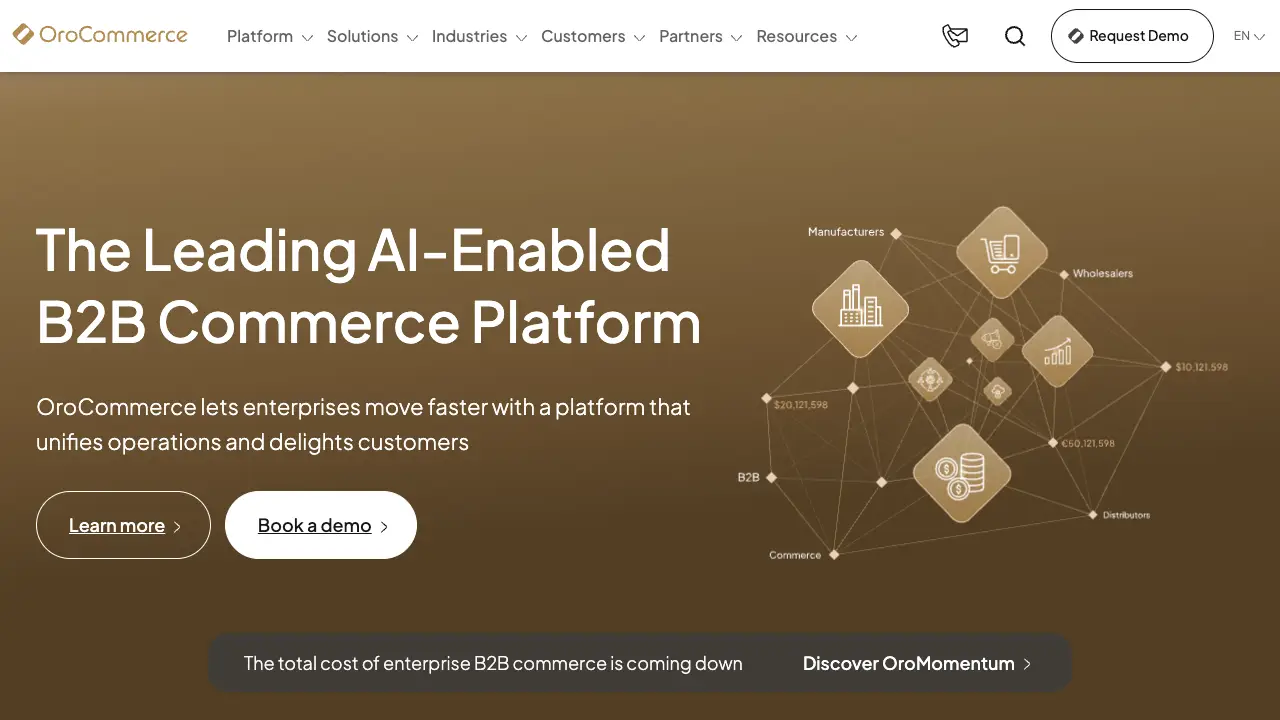
OroCommerce is a B2B commerce platform with a natively integrated CRM, CMS, DAM and marketplace module (OroMarketplace, launched in 2021 on the same open-source architecture). It suits manufacturers and distributors who want B2B ordering and a marketplace in one system rather than two. Pricing is by quote. Like Virto, budget for a certified implementation partner.
Self-hosted and open source
4. CS-Cart Multi-Vendor
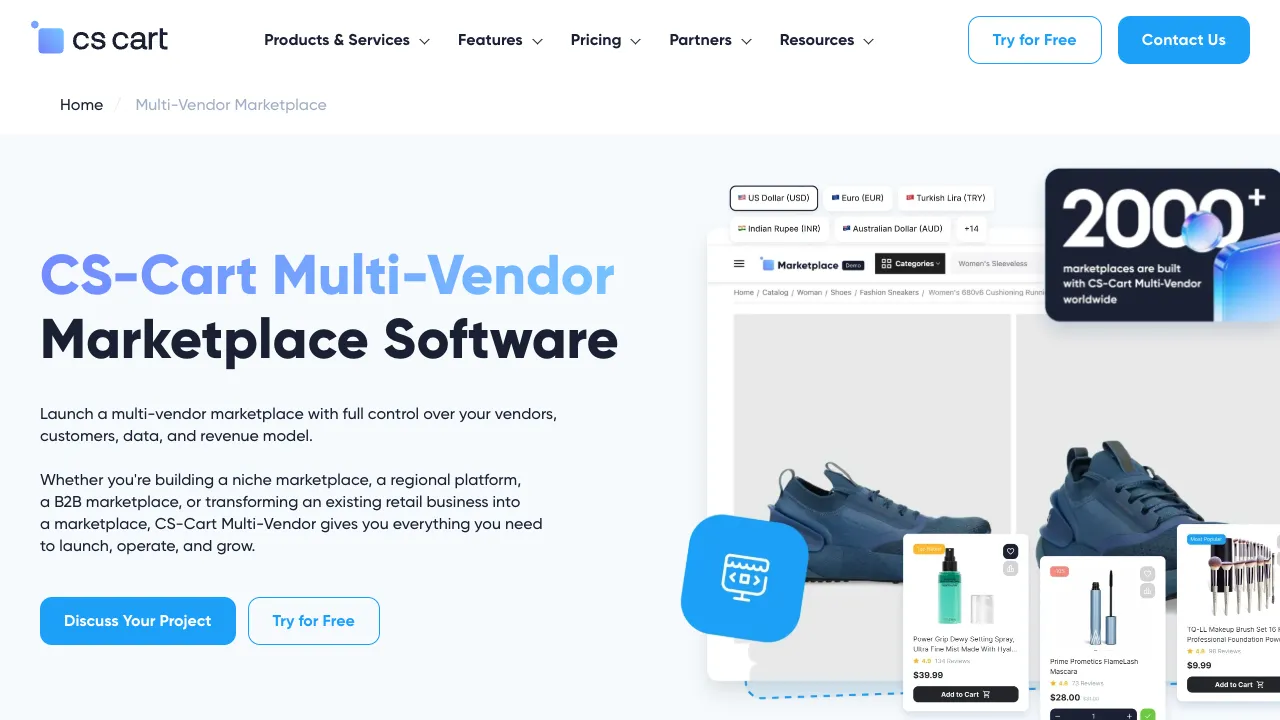
CS-Cart Multi-Vendor pitches itself for niche, regional and B2B marketplaces alike. It’s the most affordable self-hosted option in this list: CS-Cart’s documentation lists lifetime licenses from $3,590 (Multi-Vendor Plus). B2B features such as quotes and company accounts are thinner than in Virto or Oro, and often come from add-ons, so check each one against the list above.
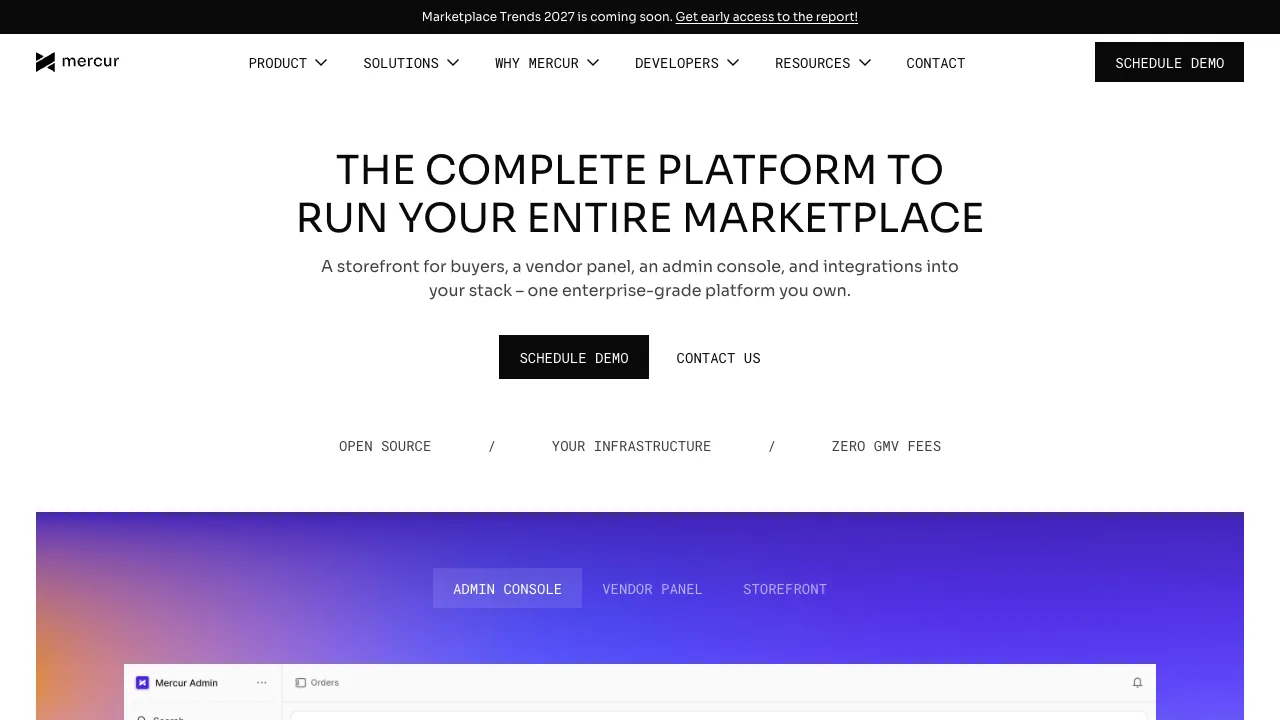
5. Mercur
Mercur is an open-source marketplace layer on the Medusa commerce framework, with an MIT-licensed core, a vendor panel, commissions and payouts. For B2B you’ll be building quotes, company accounts and approvals yourself, so it suits a team with TypeScript developers who want full control and no license fee.
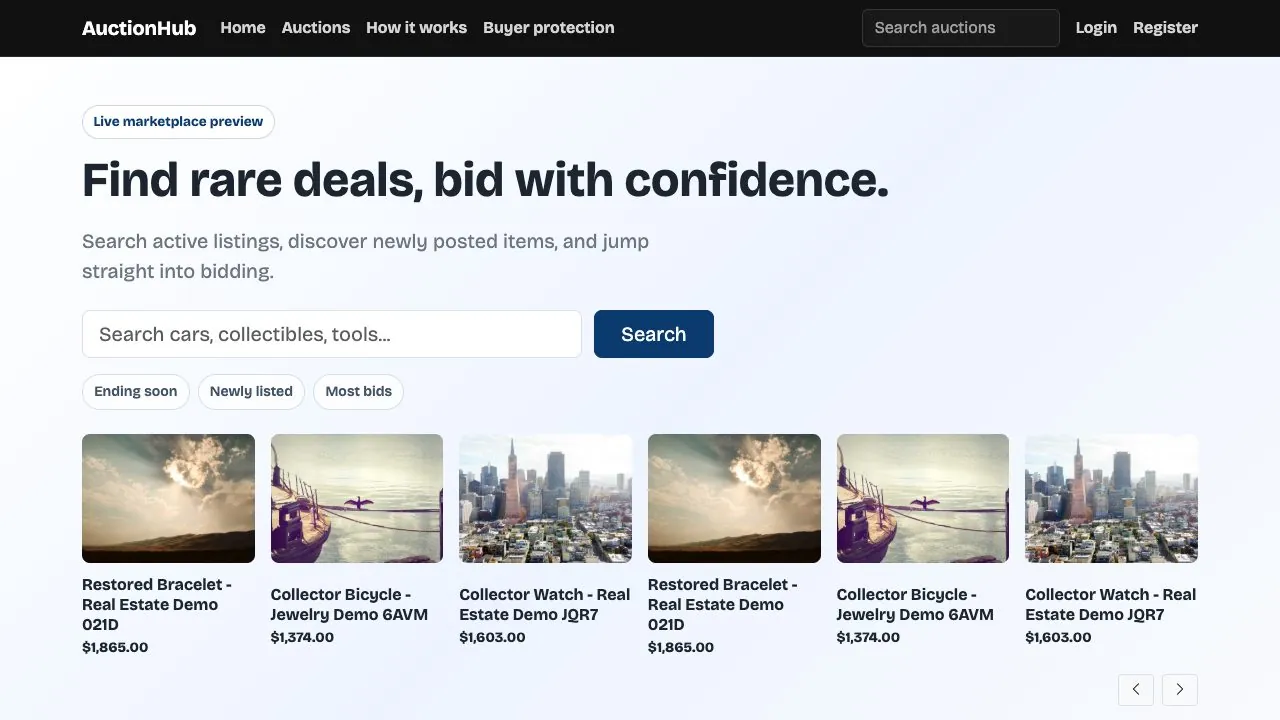
6. Premium Auction Software
Ours, and the right pick only for one kind of B2B marketplace: one where price is set by bidding. Think surplus and excess stock sold to trade buyers, used equipment for dealers, or a procurement portal where suppliers bid down on contracts. It supports dealer-only and invitation-only bidding, bidder deposits and approval, Buy It Now, sealed bids and reverse auctions with supplier pre-qualification, weighted scoring and draft purchase orders. The Enterprise license ($2,999, one-time) adds multi-vendor selling, API access and 30 hours of custom development.
For fixed-price catalog ordering with negotiated price lists, Virto or Oro are a better fit.
Custom build
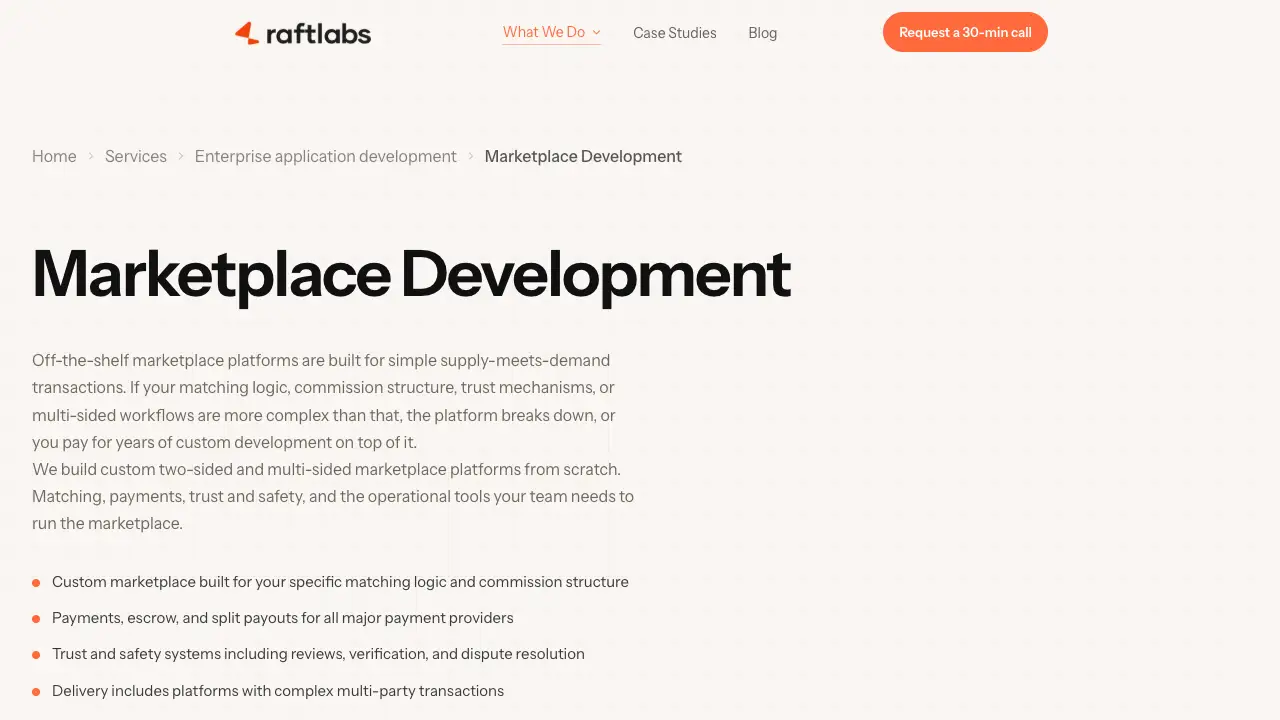
7. RaftLabs
RaftLabs builds two-sided and multi-sided marketplaces from scratch on fixed-cost contracts with full IP ownership, and estimates a focused marketplace MVP at $55,000 to $100,000. Worth it when your matching, commission or payment logic doesn’t fit any platform. Otherwise, a platform plus custom modules is faster and cheaper. Our guide to building a site like Alibaba covers that B2B and RFQ architecture.
How to choose
Start with how prices are set. Negotiated catalog prices and repeat ordering point to Virto, Oro or Mirakl. A simpler wholesale marketplace on a budget points to CS-Cart. Prices set by competition, whether buyers bidding up or suppliers bidding down, point to an auction platform.
Then look at who will run it. Enterprise platforms need an implementation partner and a budget in the high five or six figures. Self-hosted licenses need someone to look after the server, though some vendors (including us) install and set everything up for you. And check our breakdown of marketplace website costs before you commit.
Running B2B auctions or supplier bidding?
See the multi-vendor marketplace and reverse auction features, try the live demo, or tell us about your marketplace.
Frequently asked questions
What is B2B marketplace software?
Software that runs a multi-vendor platform where businesses buy from many suppliers, with company accounts, negotiated pricing, quotes, approvals and invoicing on payment terms.
What is the best B2B marketplace platform?
For large distributors, Mirakl, Virto Commerce or OroCommerce. For a smaller budget, CS-Cart Multi-Vendor. For marketplaces where price is set by bidding, an auction platform with dealer-only and reverse auctions.
How much does B2B marketplace software cost?
Self-hosted licenses start at a few thousand dollars. Enterprise platforms are quote-based and usually run well into five or six figures a year with implementation. A custom MVP typically starts around $55,000.
Can a B2B marketplace include auctions?
Yes. Surplus, equipment and commodity marketplaces often sell by auction to approved trade buyers, and procurement marketplaces use reverse auctions. That needs bidding features most catalog platforms don’t have.
