GiveSmart is a capable platform, and organisations running a full event fundraising programme get value from it. The problem is that a lot of nonprofits are on enterprise pricing for one gala and one online auction a year, which is not where the platform’s value sits.
These eight alternatives cost less. The question with each is what you give up, and for several the honest answer is not much.
Comparable capability, different pricing
1. Qgiv
Broad fundraising platform with strong auction functionality, peer-to-peer campaigns and recurring giving. Generally better value than the enterprise tier for organisations that want auctions as part of a wider programme rather than as the centrepiece.
2. OneCause
The other enterprise option. Worth quoting alongside GiveSmart specifically because competitive tension moves pricing more than anything in the sales conversation.
3. Classy
Primarily a broader fundraising and campaign platform rather than an auction specialist, but relevant if auctions are one channel among several. Strong on donor experience and recurring giving.
Mid-market value
4. Handbid
Mobile-first with a genuinely good bidder app and strong live event tooling — fund-a-need, paddle raise, leaderboards. For an organisation whose core need is a well-run gala, this frequently delivers the same result for less.
5. Auctria
Excellent item and donor management with flexible, transparent pricing. Popular with schools and community groups, and capable well beyond what its price suggests.
6. Accelevents
Event platform with solid auction capability. Worth considering when ticketing, sessions and sponsors need managing alongside the auction.
Budget and specialist
7. Silent Auction Pro
Long-established, straightforward, and priced for organisations running one or two events a year. Not the slickest interface, entirely adequate functionality, and considerably cheaper.
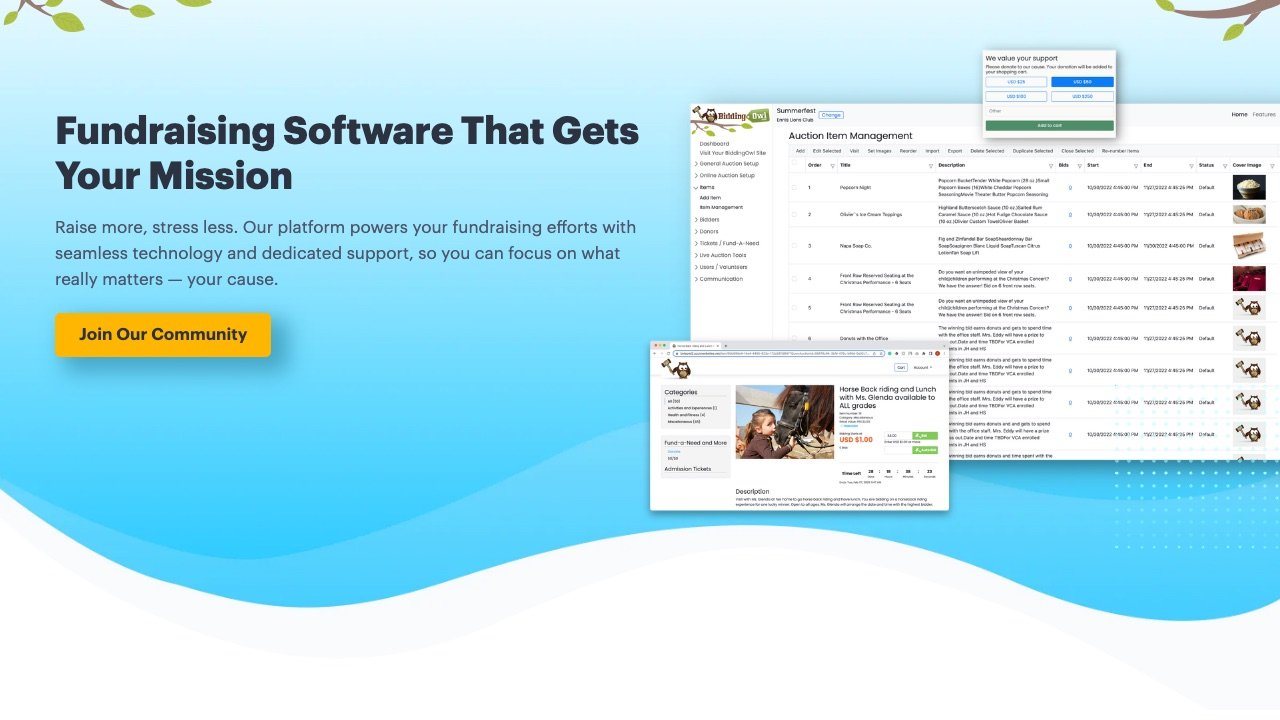
8. BiddingOwl
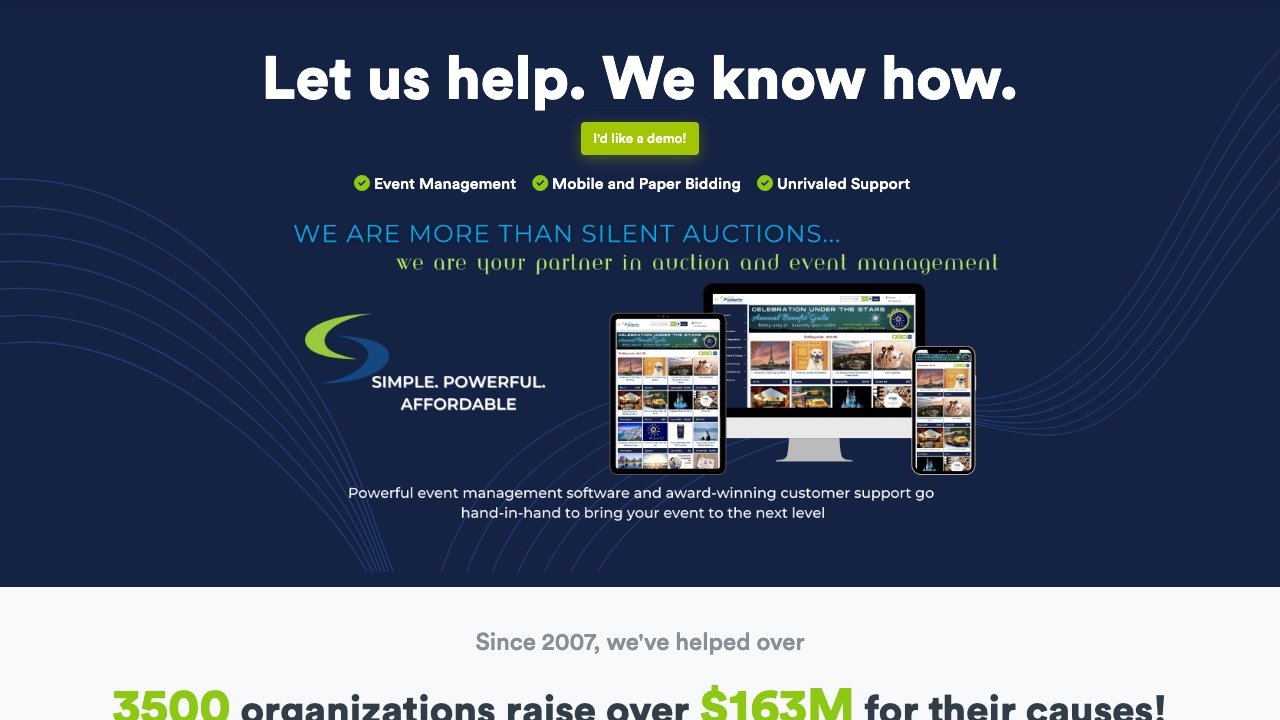
Purpose-built for silent auctions rather than adapted from a general event platform. Mobile bidding, outbid notifications, reporting. Affordable and it does the job.
What you should not compromise on
Cheaper is fine. Cheaper at the cost of these four things is not:
- Outbid notifications. The single feature that most increases totals. A bidder who does not know they have been outbid does not bid again.
- Card on file at registration. Automatic charging at close removes the checkout queue and materially improves collection rates.
- Soft close. Extending an item when a late bid lands prevents sniping and lifts final prices.
- Data export. If you cannot get your donor list out in a usable form, you are renting your own supporters.
Everything else — leaderboards, custom branding, integrated ticketing — is genuinely optional depending on your event.
The fee model matters more than the price
Three structures exist, and they produce very different net outcomes:
- Flat platform fee. Predictable, best when you raise a lot.
- Percentage of funds raised. No upfront risk, expensive on a successful event.
- Bidder-covered fee. An optional contribution at checkout. Uptake is usually high, which can make the platform close to free to the organisation.
Payment processing is charged separately on essentially every platform, so compare it explicitly rather than assuming it is included.
The point at which owning beats renting
Organisations running several auction events a year, or a continuous online auction, frequently pay more in cumulative platform fees than an owned deployment costs. The second driver is data ownership — bidders in your own system are donors you can steward year-round rather than records in a vendor’s database.
See silent auction software for what that includes, and the best silent auction software for nonprofits for the full platform comparison.
Frequently asked questions
Will a cheaper platform raise less money?
Not if it has outbid notifications, soft close and card-on-file checkout. Those three drive the result; most of the remaining price difference buys breadth you may not need.
Can we switch platforms between events?
Yes, though item and donor data migration takes work. Export everything before your contract ends, not after.
What is the real cost of a platform?
Platform fee plus payment processing plus staff time to configure it. The third is routinely ignored and is often the largest. Talk to our team if you want that costed properly.
