There is no single “best” online auction site, and anyone who tells you otherwise is selling something. A platform that is brilliant for offloading a barn full of tractors is useless for a signed first-edition novel. What actually matters is match: does the site already have the buyers who want your specific thing, and does its fee structure leave you with a margin worth the effort?
So this list is organised by what each platform is genuinely good at, not by some invented overall score. We have spent years building bidding engines for auction houses, dealers and nonprofits, so we tend to look at these sites the way a mechanic looks at a car — what is under the bonnet, where the friction is, and what it would cost to build something similar. That perspective is baked into every entry below.
The general-purpose giants
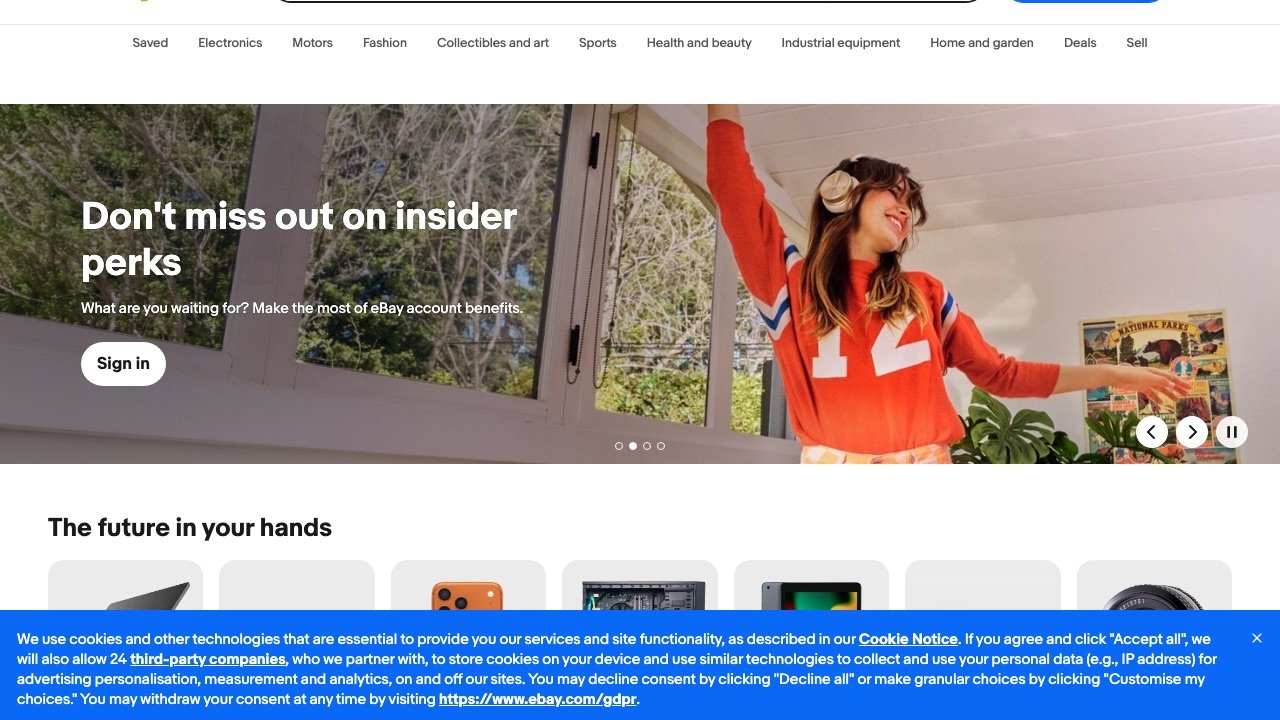
1. eBay — the default, for better and worse
eBay is still the largest consumer auction venue on the planet, and its auction format remains genuinely useful for items with uncertain value. The catch is that eBay has spent a decade nudging sellers toward fixed-price listings, so pure auctions now compete for attention against a wall of Buy It Now inventory. Fees vary heavily by category, and the buyer protection framework strongly favours the buyer in disputes.
Use it when: you need liquidity fast and your item is common enough that search traffic will find it. Skip it when: your margins are thin or your item needs expert context to sell for what it is worth. We covered this in more depth in our guide to the best eBay alternatives.
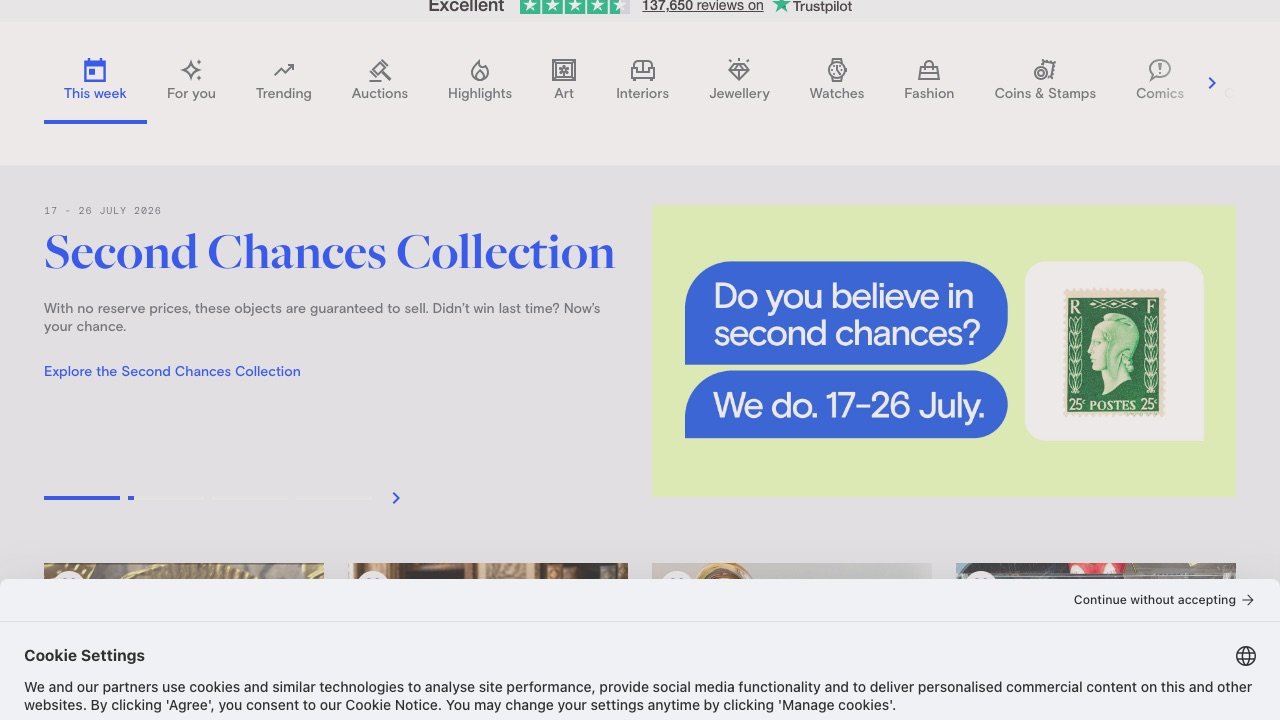
2. Catawiki — curation as a business model
Catawiki takes the opposite bet: every lot is reviewed by an in-house expert before it goes live. That gatekeeping keeps junk out and gives buyers confidence in categories where authenticity is the whole ballgame — watches, coins, classic cars, art. Sellers give up control over listing timing and pay for the privilege, but the vetting genuinely lifts hammer prices in specialist categories.
3. Bonanza and eBid — the low-fee challengers
Both position themselves as cheaper alternatives to eBay, and both are honest about the trade: lower fees, far less traffic. They work as secondary channels for sellers who already drive their own audience through social or email. They do not work as a primary storefront unless you are prepared to do all your own marketing.
Auction house aggregators
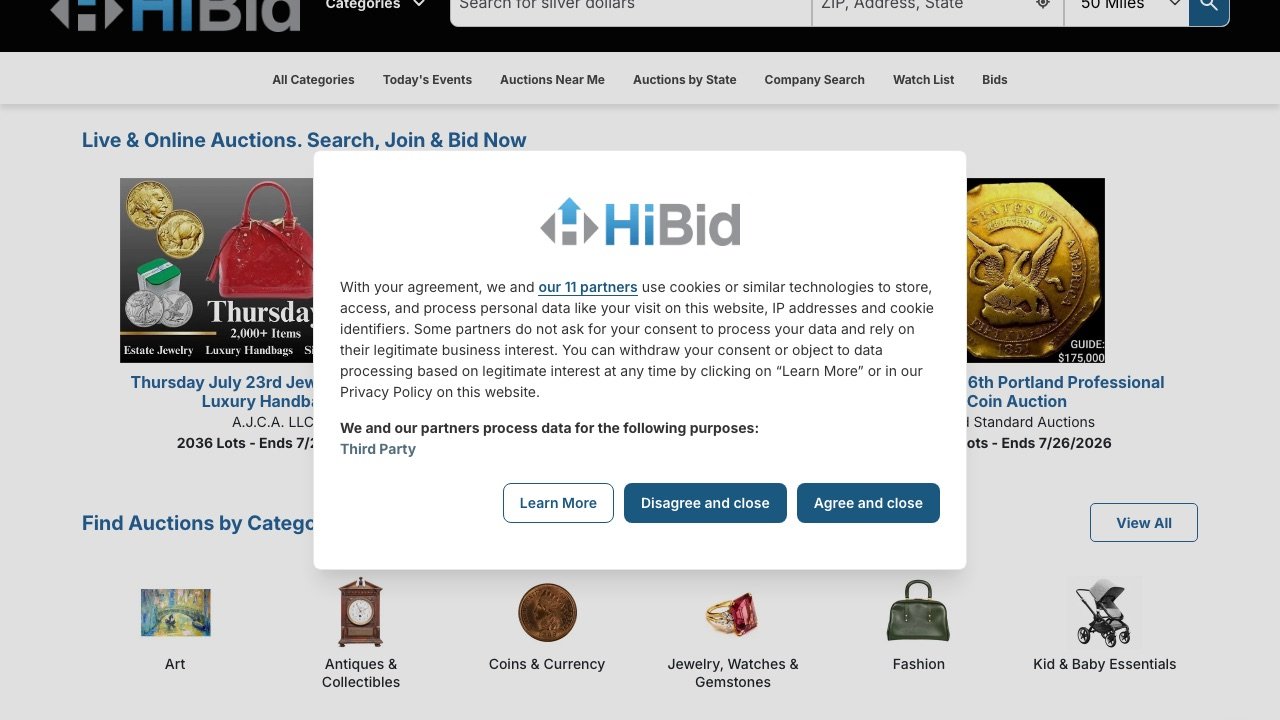
4. HiBid
HiBid is where a very large slice of North American auctioneers list their timed and simulcast sales. It is less a marketplace than a shared shopfront for independent auction houses, which means listing quality varies enormously from one seller to the next. For buyers, it is one of the best places to find estate, farm and liquidation lots at genuinely low prices.
5. LiveAuctioneers
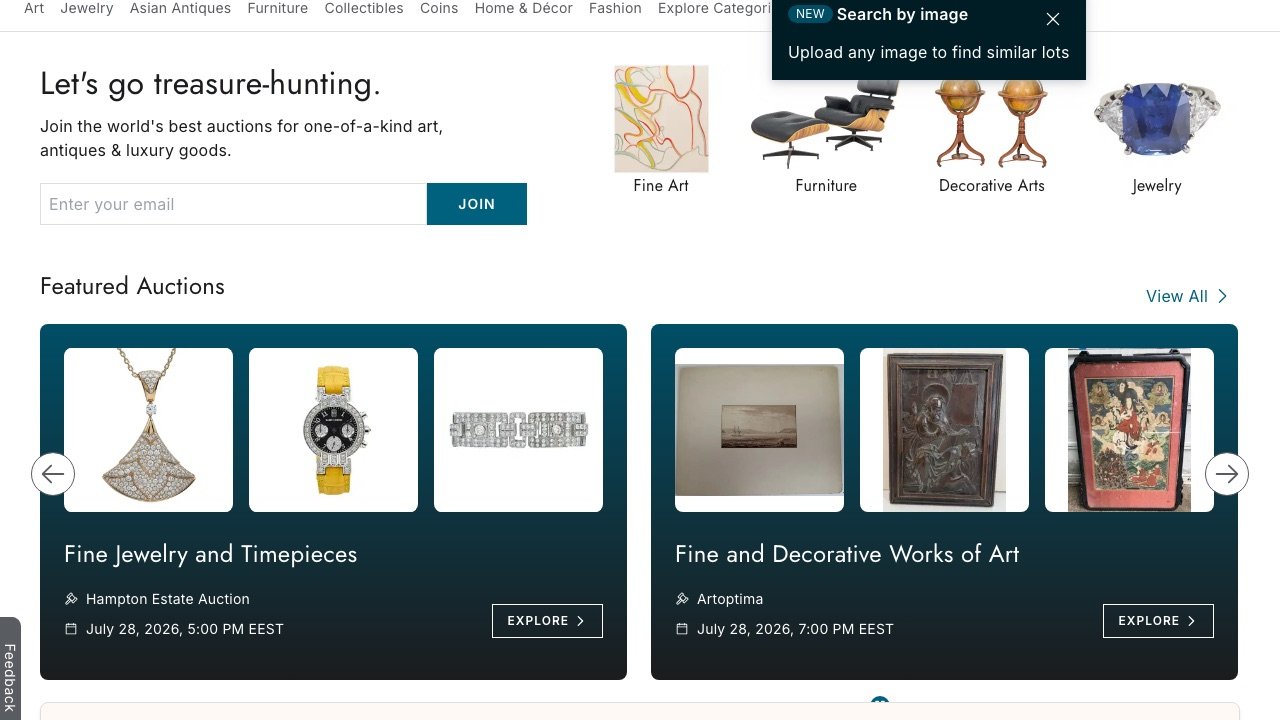
The go-to aggregator for art, antiques and collectibles, with live-streamed bidding from traditional salerooms. Buyer’s premiums here are meaningful — often in the 20-28% range once the online surcharge is added — so factor that into any bid. If you are unclear how that works, our explainer on what a buyer’s premium is breaks it down properly.
6. Invaluable and 7. BidSpotter
Invaluable overlaps heavily with LiveAuctioneers in fine art and antiques, with a stronger European saleroom presence. BidSpotter is the industrial equivalent — machine shops, printing equipment, plant closures. Both illustrate the same structural point: aggregators own the audience, and the auction house rents access to it.
Vehicles and heavy equipment
8. Copart and 9. IAAI
The two dominant salvage and insurance vehicle auction networks. Both operate member-gated bidding with licence requirements in most US states, and both run enormous physical yards behind the digital front end. If you are looking at this space commercially, our breakdown of car auction software covers the technical requirements — VIN decoding, condition reports, proxy bidding at scale.
10. Bring a Trailer and 11. Cars & Bids
The enthusiast end of the market, where the comment section is the product. Both curate submissions heavily, and both have shown that a well-moderated community will pay above book value for a well-documented car. We wrote about replicating that model in your own exclusive automotive auction site.
12. Ritchie Bros and 13. IronPlanet
Now under one corporate roof, these two handle construction and industrial machinery at a scale nothing else matches. Unreserved sales are the signature feature — every lot sells on the day, no minimums — which draws serious bidders who know they are not wasting their time.
Government, surplus and storage
14. GovDeals
Municipalities, school districts and police departments liquidating everything from patrol cars to office furniture. Prices can be extraordinary because the seller’s motivation is disposal, not profit. Registration is straightforward and the inventory turns over constantly.
15. StorageTreasures
Self-storage lien auctions, digitised. The unit-of-unknown-contents format is a genuinely interesting piece of auction design: bidders are pricing risk, not goods, which produces very different bidding behaviour from a normal catalogue sale.
What this list actually tells you
Look at the pattern. Every platform on this list wins because it owns a specific audience and speaks that audience’s language — not because it has better bidding technology. The bidding engine underneath eBay, HiBid and GovDeals is conceptually the same: lots, increments, proxy bids, soft-close timers, invoicing.
That is why so many operators eventually stop renting space on someone else’s marketplace and build their own. When you control the platform you control the buyer relationship, the fee structure and the data. Our guide on how to build an auction website walks through the decision properly, and the auction website builder page shows what a modern stack includes out of the box.
Frequently asked questions
Which online auction site has the lowest fees?
Among general marketplaces, eBid and Bonanza consistently undercut eBay. But low fees on a site with no traffic is a false economy — a 3% fee on a lot that never sells is worse than 13% on one that does.
Are online auctions safe for high-value items?
They can be, provided the platform enforces identity verification and escrow-style payment holds. Curated venues like Catawiki and specialist houses handle this well. If you are building your own platform, KYC verification is not optional above a certain lot value.
Can I run auctions on my own website instead?
Yes, and for most established sellers it is the better long-term play. You keep the margin, the customer list and the branding. See buy online auction software for what that costs and how quickly it can be live.
Thinking about launching your own auction site? Talk to our team — we will tell you honestly whether your niche has enough demand to justify it.