StockX did something genuinely clever: it stopped treating sneakers as unique objects and started treating them as fungible commodities. A size 10 Jordan 1 in deadstock condition is interchangeable with any other size 10 Jordan 1 in deadstock condition, which means you can run an order book instead of a listings page.
That single insight is the whole product. If your category has the same property, the model is worth copying. If it does not, copying it will fail. This article covers both halves.
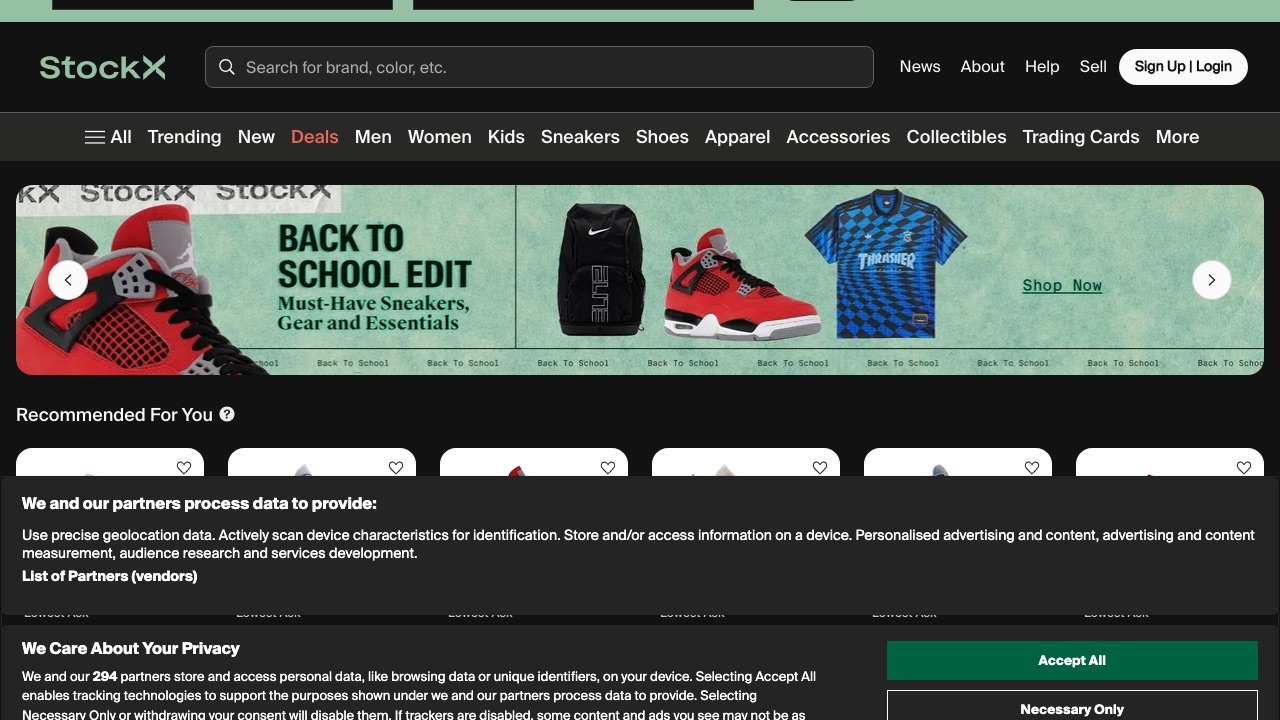
1. The bid/ask order book
Instead of sellers posting items and buyers browsing them, both sides post prices:
- Bids — buyers commit to pay X for a specific product in a specific size and condition
- Asks — sellers commit to sell the same specification at Y
- When the highest bid meets the lowest ask, the trade executes automatically with no negotiation
The technical implication is that your core entity is not a listing, it is a product variant — a canonical SKU with attributes. Every bid and ask attaches to that variant. Getting this data model right at the start is essential; retrofitting it later is close to a rewrite.
The matching engine itself needs the same discipline as an auction close: strict ordering, atomic execution, idempotency on submission, and no possibility of a bid matching two asks. It is the same class of problem discussed in proxy bidding, applied continuously rather than at a fixed close time.
2. The canonical catalogue is the hard part
An order book only works if everyone agrees on what is being traded. That means a curated product database with controlled attributes — a specific colourway, a specific size scale, a defined condition grade — that sellers select from rather than type freely.
Building and maintaining that catalogue is genuinely expensive and it never stops. New releases arrive constantly, variants get confused, and one duplicated SKU splits liquidity in two. Most people underestimate this by an order of magnitude. If you cannot commit to catalogue maintenance as an ongoing operational function, the model will not work.
3. Authentication and the middle-leg logistics
StockX and GOAT both route every item through an authentication centre: seller ships to the platform, the platform verifies, the platform ships to the buyer. Neither party ever deals with the other.
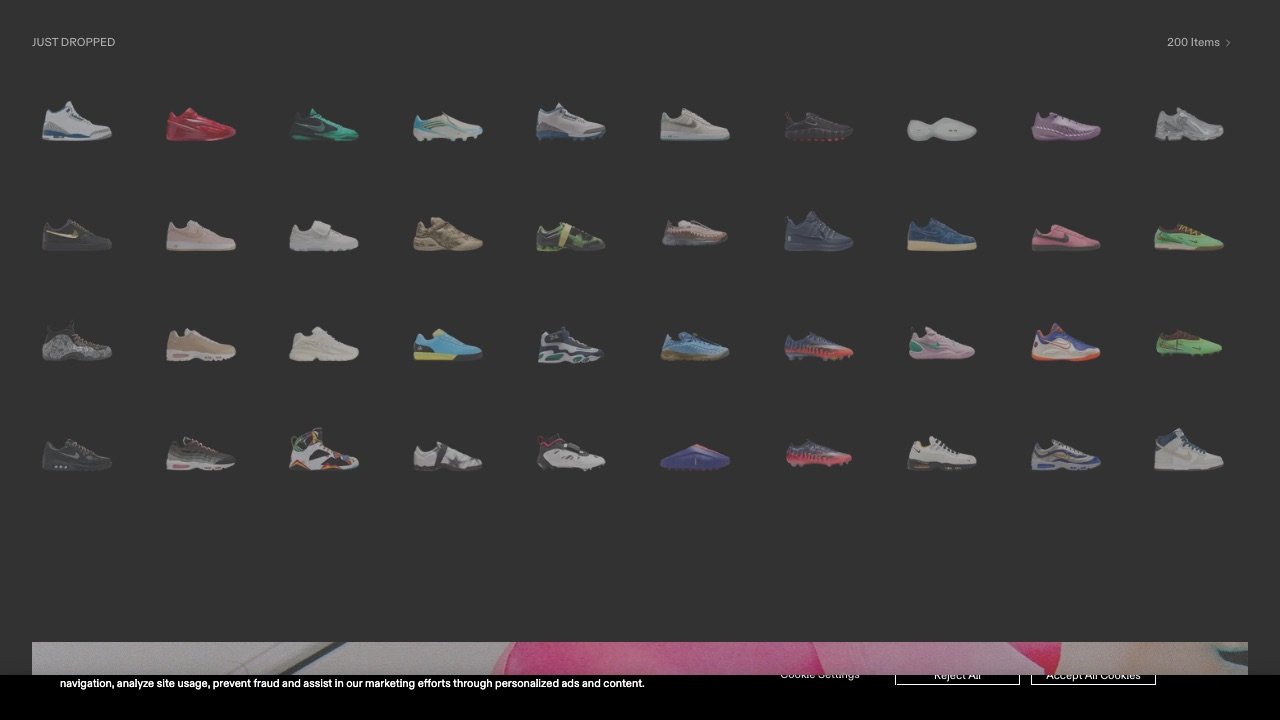
This is what makes anonymous trading of counterfeit-prone goods possible, and it is a real business with warehouses, trained staff and shipping costs. It roughly doubles transit time and adds meaningful per-transaction cost. You need to model it honestly:
- Inbound and outbound shipping on every trade
- Authentication labour per item
- Storage for items in process
- A dispute path for rejected items and returns to seller
- Insurance on goods in your custody
The alternative is peer-to-peer shipping with an escrow hold and a buyer inspection window. Cheaper and faster, but it moves the counterfeit risk back onto the buyer, which weakens the whole proposition.
4. Payments, holds and seller default
Because asks are binding commitments, a seller who fails to ship breaks the promise the platform is built on. You need penalties with real consequences — order cancellation fees, seller level demotion, suspension — and they need to be automatic.
On the buy side, bids are binding too, so card authorisation at bid time rather than at match time is essential. A matched trade that cannot collect is worse than no trade.
5. Market data as a feature
An underrated part of StockX’s product is the price history chart. Because every trade is a real, executed transaction against a canonical SKU, the resulting data is genuinely accurate — unlike asking prices on a classifieds site, which are aspirational.
That data becomes a reason to visit even when you are not buying, and it is close to free to produce once the order book exists. Build it into version one.
6. Does your category actually fit?
Be honest here, because this determines whether the whole project makes sense. The bid/ask model requires:
- Fungibility — units of the same SKU must be genuinely interchangeable
- Objective grading — condition must be describable in a few discrete states, not a paragraph
- Depth — enough simultaneous buyers and sellers per SKU to produce a real spread
Sneakers, graded trading cards, watches with reference numbers, sealed video games and certain electronics fit. Antiques, art, used cars and property do not — each unit is unique, so there is no order book to build, and a conventional auction is the correct mechanism. That is why building a website like eBay is a genuinely different architecture from this one.
7. What to build and what to license
The matching engine, payments, wallet and payout infrastructure are generic and heavily regulated — license them. Spend your budget on the catalogue tooling and the authentication workflow, because those are what differentiate you and they are specific to your category.
For a hybrid model — order book on commodity SKUs, timed auctions on unique items — the multi-vendor marketplace platform and custom auction software pages cover how those combine. Budget guidance is in marketplace build costs.
Frequently asked questions
Is a bid/ask marketplace better than an auction?
Only for fungible goods with continuous demand. For unique items, auctions discover price better because there is nothing to compare against.
How much does authentication cost per item?
Realistically several dollars in labour plus the additional shipping leg. It is the reason platforms in this space need meaningful average order values to work.
Can I start without authentication?
You can, with escrow and an inspection window. Expect a higher dispute rate. Many platforms start that way and add authentication once volume justifies the facility. Talk to our team about sequencing it.