GovDeals is the biggest name in municipal surplus, but it is far from the only place public agencies liquidate property. Different platforms hold contracts with different levels of government, which means the inventory genuinely does not overlap. If you only watch GovDeals you are missing most of the market.
Here are eight alternatives worth having accounts on.
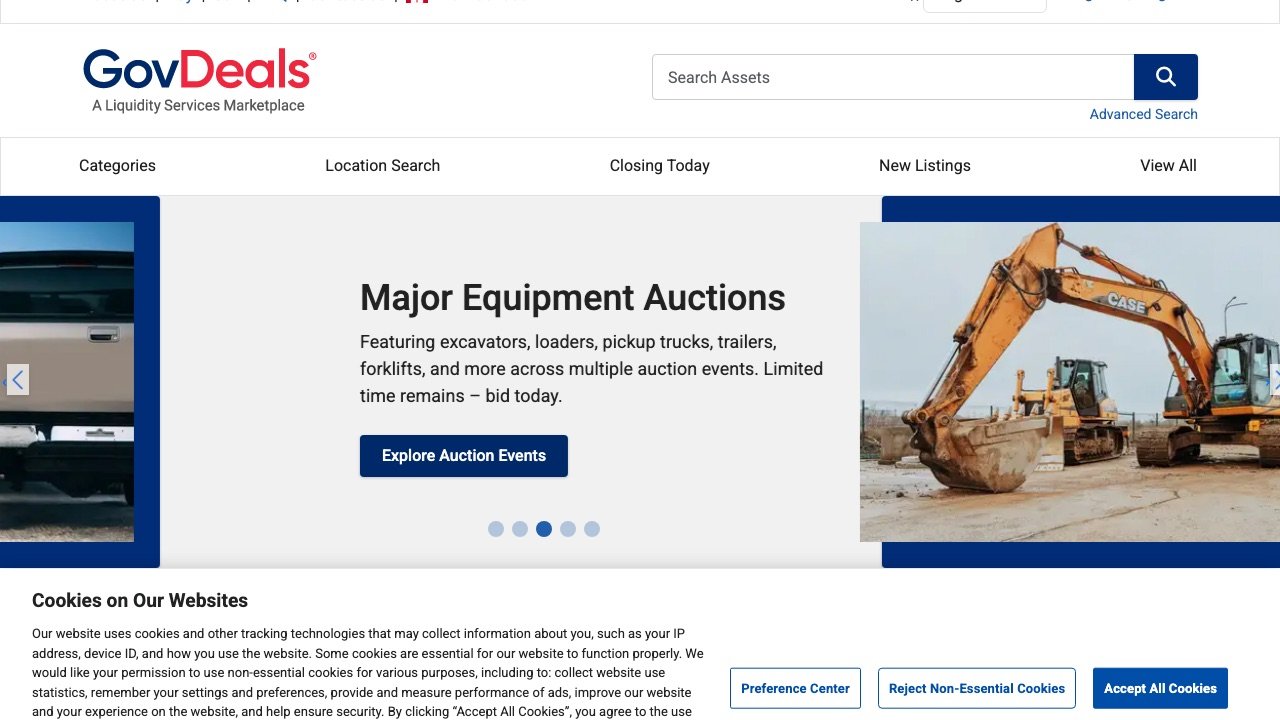
1. Public Surplus
GovDeals’ closest structural competitor, with strong relationships among school districts, universities and county governments. Inventory skews toward IT equipment, furniture, buses and light fleet. The interface is dated, which keeps casual buyers away — that is an advantage if you are serious.
2. GSA Auctions
The federal government’s own platform. Everything from vehicles and scientific instruments to industrial equipment and real property, sold directly by federal agencies with no intermediary. Registration is more involved than commercial sites and the paperwork is federal-grade, but prices reflect a seller with genuinely no profit motive.
3. Municibid
Focused on smaller municipalities, townships and rural districts. That focus is the whole point: far fewer bidders per lot than the national platforms, because most buyers never look here. Fire trucks, plows, tractors and police vehicles from small-town America.
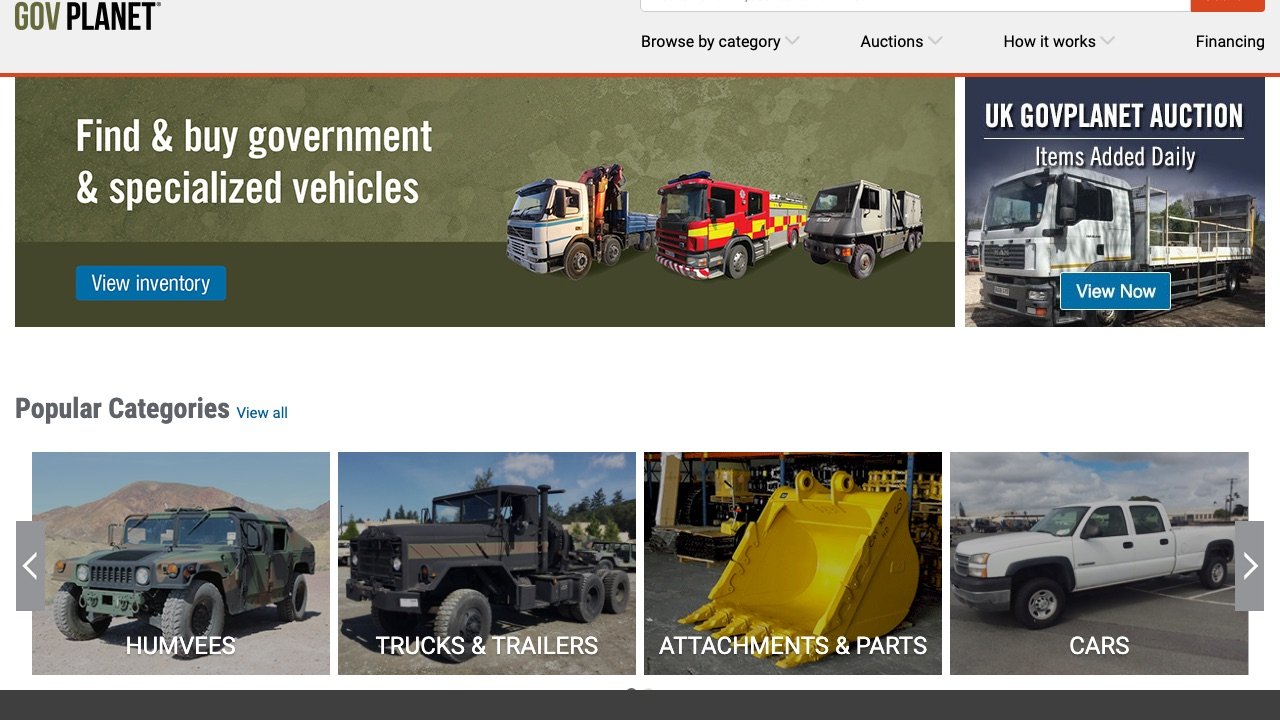
4. GovPlanet
Ex-military and government heavy equipment, part of the Ritchie Bros group. Trucks, trailers, generators, MRAPs and specialist plant. Condition varies enormously and some lots carry usage or export restrictions, so read the terms carefully. Inspection reports are better than most surplus platforms provide.
5. HiBid
Many local government bodies use a regional auctioneer rather than a dedicated surplus platform, and those auctioneers list on HiBid. Searching HiBid by location surfaces municipal sales that never appear on GovDeals.
6. AllSurplus
Liquidity Services’ broader surplus marketplace, covering commercial and government disposals in one catalogue. Useful if you want government and corporate surplus in a single search.
7. State-specific surplus programs
Many US states run their own disposal sites outside any commercial platform — state DOT fleet sales, university surplus stores, state police vehicle auctions. These are the least-competed sales in the entire category precisely because they are hard to find. It is worth an hour searching for your state’s surplus property program.
8. Police and seized property auctions
Some jurisdictions use dedicated platforms for seized and forfeited property; others fold it into their general surplus listing. Inventory here is unusual — jewellery, electronics, bicycles, occasionally vehicles — and the pricing reflects an agency that just wants it gone.
For agencies: the case for your own platform
The other side of this market is worth discussing. Public agencies pay a commission on every disposal, and that commission comes out of public funds. For a large city, county or state agency disposing of hundreds of items a year, running surplus auctions on an owned platform is frequently cheaper and gives full control over the audit trail.
What a public-sector auction platform needs that a commercial one does not: complete audit logging of every bid and every administrative action, sealed-bid support for formal procurement, publication of results as a public record, accessibility compliance, and role separation so the person listing an item cannot approve its sale.
Those are all standard requirements we build into public sector deployments — see auction management system and custom auction software. The reverse side, buying rather than selling, is covered in reverse auction software.
Frequently asked questions
Which government auction site has the best prices?
Smaller and harder-to-find platforms consistently beat the large ones, because price is a function of competition. Municibid and state-specific programs regularly produce better results for buyers than GovDeals.
Can anyone buy from government auctions?
Generally yes, with exceptions for restricted items — certain ex-military equipment, firearms, and anything with export controls. Vehicle title types may also carry state-specific restrictions.
Are government surplus vehicles a good buy?
Often, yes. Public fleets follow maintenance schedules religiously and keep complete records. The trade-off is high mileage and hard use, particularly on police vehicles.
