Copart is the biggest salvage auction network in the world, which is exactly why people look for alternatives. Big means competitive bidding, stacked fees and licence gates that keep a lot of buyers out. If you have been outbid by fifteen dollars on your last four lots, you are not doing anything wrong — you are just in the most crowded room in the industry.
Below are eight platforms that sell the same kind of inventory, plus honest notes on where each one is genuinely better and where it is just different.
Direct competitors with the same inventory type
1. IAAI (Insurance Auto Auctions)
The obvious first stop. IAAI holds different insurance carrier contracts to Copart, so the inventory genuinely differs rather than overlapping. Their condition reports and imagery are, in most buyers’ experience, more thorough — 360-degree walkarounds are standard on a lot of listings, which matters enormously when you are bidding on damage you cannot inspect in person.
Licensing rules are broadly similar to Copart’s. Serious salvage buyers register with both and treat them as one combined market rather than picking a side.
2. ACV Auctions
Not salvage in the strict sense — ACV is wholesale dealer-to-dealer — but it belongs here because it solves the same problem: buying a car you cannot physically inspect. ACV’s inspection process is the product. A trained inspector produces a standardised report including an engine audio recording, which turns out to be one of the most useful pieces of remote-buying data anyone has come up with.
Dealer licence required. Worth it if you are buying running vehicles rather than parts cars.
3. Purple Wave
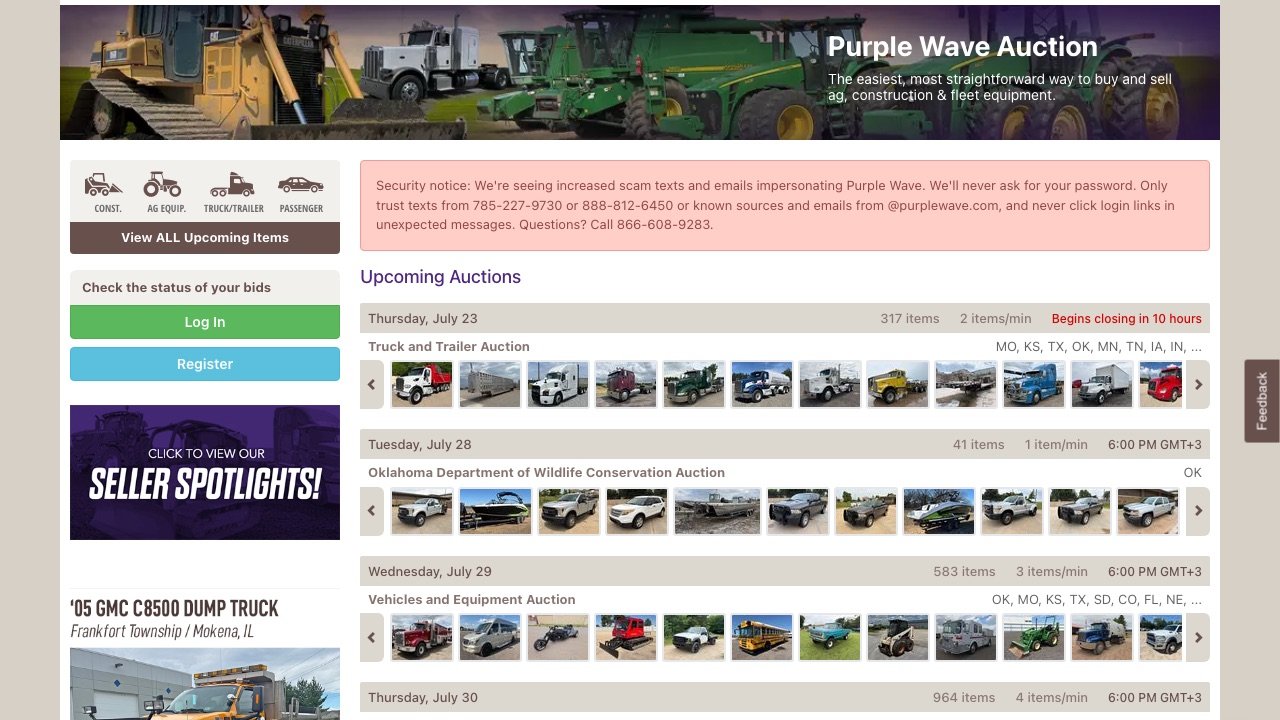
Unreserved online auctions across vehicles, trucks, trailers and equipment. No licence gate for most lots, transparent fee structure, and everything sells on the day. The absence of reserves changes bidder behaviour noticeably — people show up because they know the lot will actually trade.
No-licence-required options
4. GovDeals
Municipal and government fleet disposal. Retired police cruisers, public works trucks, ambulances and school district vehicles, generally with complete maintenance records. No dealer licence required, minimal fees, and the seller’s motivation is disposal rather than maximising price. It is the single most underrated route for a private buyer.
5. Public Surplus and Municibid
Same category as GovDeals with different agency relationships. Municibid in particular skews toward smaller townships and rural districts, which means less competition per lot.
6. eBay Motors
Still the most accessible venue for private buyers, with buyer protection that neither Copart nor IAAI offers. Salvage and repairable inventory shows up regularly from independent yards. The trade-off is inconsistent listing quality — you are relying on the individual seller’s honesty rather than a standardised inspection.
Broker routes into Copart and IAAI
7. AutoBidMaster and 8. SalvageBid
These are not alternatives to Copart so much as keys to it. Both are registered brokers that let unlicensed buyers bid on Copart and IAAI inventory for a fee layered on top of the platform’s own charges. For a single purchase that is a reasonable deal. As a repeat business model it is expensive, and at that point getting properly licensed is the cheaper path.
What the fee stack actually looks like
The headline bid price on salvage platforms is rarely what you pay. Expect some combination of a buyer fee scaled to sale price, an internet bidding fee, a gate or environmental fee, and a payment processing charge. On a $900 lot that stack can add 20-25%. On a $9,000 lot the percentage falls sharply. This is why salvage buyers who work at the cheap end feel gouged and buyers at the expensive end do not.
Government surplus wins on this metric almost every time, because public agencies are not running a fee-optimised business.
The option nobody mentions: run your own
If you are a body shop, a dismantler or a dealer group moving meaningful volume, there is a third option beyond “bid on Copart” and “bid on IAAI”: sell your own inventory through your own bidding platform, to your own network of buyers, with a fee structure you set.
This is far more common than it used to be. The bidding engine, VIN decoding, condition-report templates and proxy-bid logic are all solved problems now — see car auction software for what that includes, and must-have car auction software features for the checklist we give clients before they commit.
The commercial case is covered in launch an online car auction business. If you would rather just get numbers for your situation, talk to our team.
Frequently asked questions
Which Copart alternative has the lowest fees?
Government surplus platforms — GovDeals, Public Surplus, Municibid — consistently have the lightest fee stack, often a single modest buyer premium with no gate or internet charges.
Can I bid on salvage cars without a dealer licence?
Yes, through government surplus sites, eBay Motors, Purple Wave and licensed brokers. Direct Copart and IAAI access for branded titles generally requires a licence in most US states, and the rules vary — check your state before assuming.
Is IAAI better than Copart?
Neither is better overall. IAAI tends to have stronger condition documentation, Copart has more volume. Buyers who do this professionally use both.
