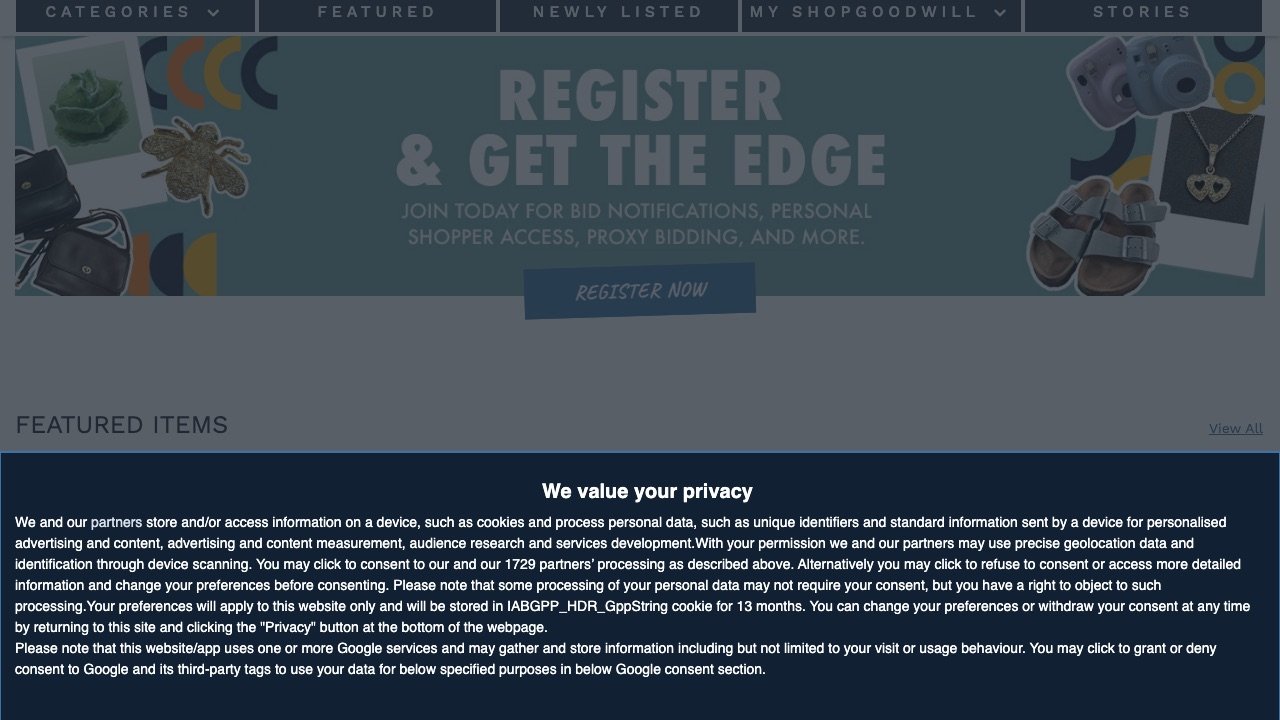
ShopGoodwill did something quietly clever. Charity thrift operations receive donations that are too valuable, too specialist or too obscure to price correctly on a shop shelf — a camera lens, a piece of studio pottery, a vintage tool. Auctioning them online lets the market price them instead of a volunteer guessing.
The result is dramatically higher recovery on exactly the items where guessing costs the most. Here is how to build it.
1. Multi-location, multi-entity structure
The structural requirement that shapes everything. Charity retail networks are typically federations — independent regional organisations under a shared brand, each with its own finances, staff and inventory.
Your platform needs:
- A seller entity per region, with its own listings, terms and payout account
- Buyers who shop across all sellers with one account
- Per-seller shipping policies, since each ships from its own facility
- Per-seller settlement, with funds routed to the correct entity automatically
- Consolidated reporting for the parent organisation, respecting entity boundaries
This is functionally the aggregator problem covered in building a multi-house bidding portal, with the simplification that all sellers share a brand and a set of policies.
2. Cataloguing must work for volunteers
The people creating listings are frequently volunteers or entry-level staff, working at volume, with no specialist knowledge of the items in front of them. Your listing tool must be designed for that reality:
- Photo-first workflow with a phone or a simple copy stand — shoot, then describe
- Minimal required fields, with sensible defaults on everything else
- Template descriptions per category so a volunteer fills gaps rather than composing prose
- Condition checklists instead of free-text, producing consistent, comparable descriptions
- Automatic measurement and weight capture where possible, since these drive shipping
- Flagging for review when a volunteer suspects an item is valuable or unusual
That last one earns its keep repeatedly. A volunteer who does not recognise a maker’s mark but knows to flag it is the mechanism that catches the genuinely valuable item before it is listed as “old vase”.
3. Starting prices and the no-reserve question
The strategic decision. Low or no-reserve starting prices attract far more bidders and generally produce better aggregate results, at the cost of occasional embarrassing outcomes on individual lots.
For a charity operation the aggregate is what matters — the goods were donated, so the cost basis is essentially zero and the risk of selling one item cheaply is small against the benefit of a larger bidder pool. Low starts are almost always correct here.
4. Shipping is the operational bottleneck
Not the auction — the shipping. A facility auctioning 400 items a week must pack and dispatch 400 parcels, from a building designed as a shop.
What the platform must do:
- Calculate shipping accurately from dimensions and weight captured at listing
- Combine shipping automatically across multiple wins from the same seller — this is essential, not optional
- Generate labels in bulk with a pick list ordered by storage location
- Offer local pickup with scheduling, which removes the shipping problem entirely for nearby buyers
- Handle oversized and unshippable items as pickup-only, clearly flagged before bidding
Combined shipping deserves emphasis. A buyer winning six items must receive one parcel and one charge. Platforms that invoice six separate shipping fees lose those buyers permanently.

5. Payment and non-payment
Charity auctions attract impulse bidding, and impulse bidding produces non-payment. Standard mitigations: card on file at registration, automatic charging at close, a defined payment deadline, and automatic suspension after a set number of unpaid wins.
Because the seller is a charity, refund and dispute policies should be generous and clearly stated. The reputational cost of a dispute handled badly outweighs the value of almost any single item.
6. Donation provenance and restricted items
Donated goods occasionally include things that cannot legally be sold — recalled products, certain weapons, items with export restrictions, materials containing regulated substances. A category rules engine that blocks these at listing time, before a volunteer publishes them, is a genuine requirement rather than a refinement.
You may also need to handle donor restrictions where an item was given for a specific purpose, and to record provenance for anything culturally significant.
7. The mission angle in the product
Worth building deliberately. Buyers on a charity auction platform are partly donors, and telling them what their purchase funded increases both bidding and repeat participation. Impact messaging in listings, in the confirmation email and in the receipt is cheap to build and measurably effective.
8. Build versus license
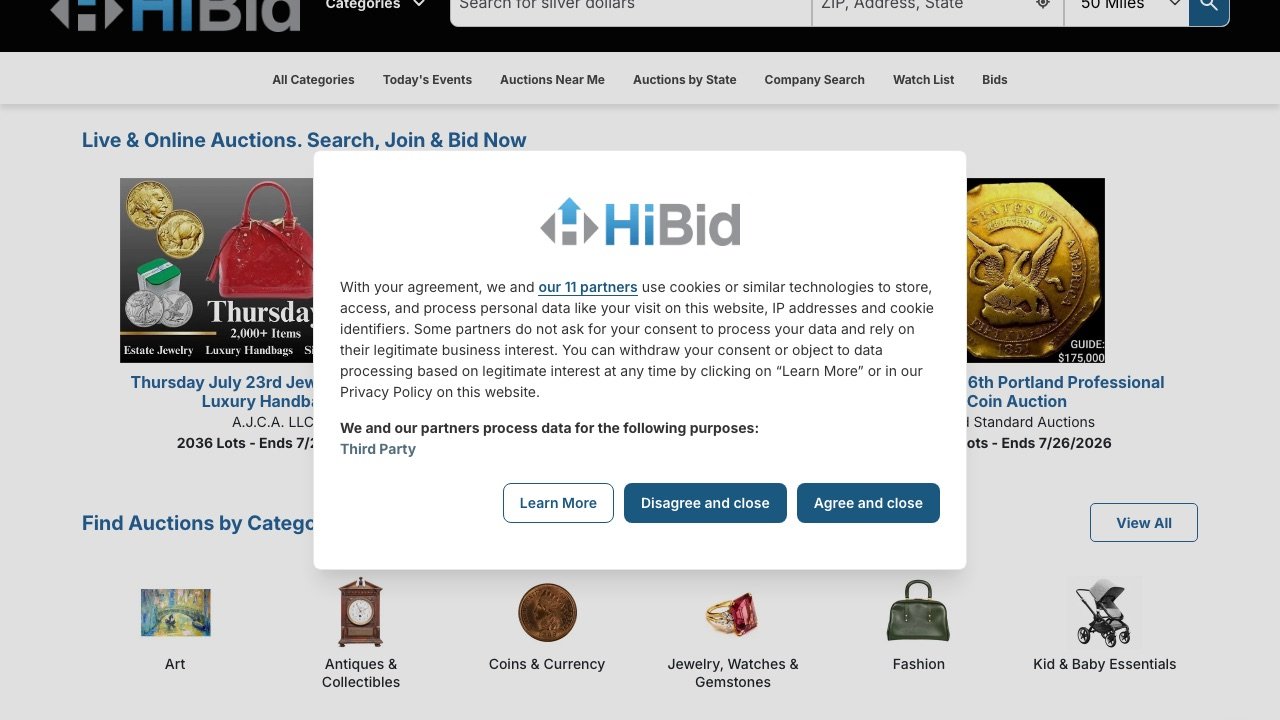
The auction engine, payments and invoicing are commodity — license them. Build the volunteer cataloguing tool and the shipping operations layer, because those determine whether the facility can physically sustain the volume.
See multi-vendor marketplace platform for the multi-entity structure, auction management system for the operational side, and launching a local online auction business for the commercial model.
Frequently asked questions
Why auction donated goods instead of selling them in-store?
Because the shelf price is a guess. Items with specialist value — cameras, tools, art, collectibles — recover far more when the market prices them, and the cost basis is zero either way.
How do we handle items that do not sell?
Relist once at a lower start, then route to the shop floor or to recycling. Build the disposition workflow into the platform rather than handling it manually.
Is combined shipping really that important?
Yes. It is the single most common complaint on charity resale platforms that get it wrong, and it directly determines whether buyers bid on multiple items. Talk to our team about implementation.
