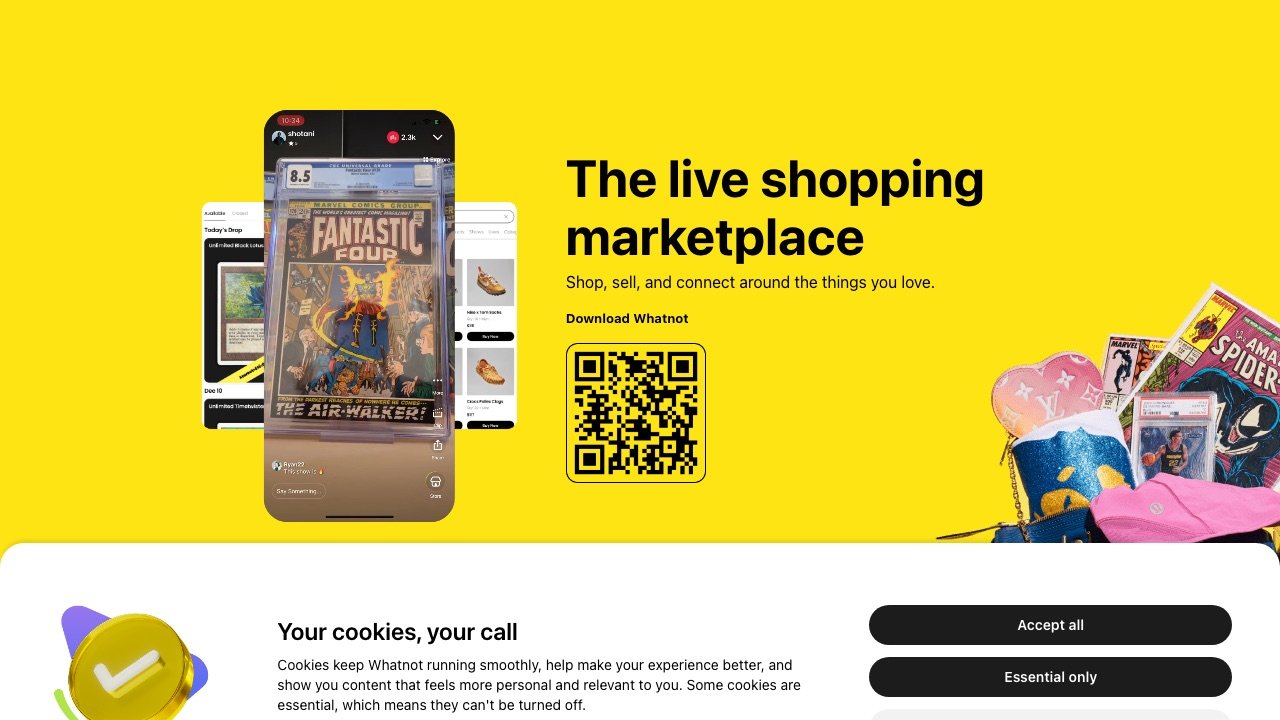
Whatnot proved something the auction industry had suspected for years: put a person on camera, give them a countdown, and conversion rates go up dramatically. The format now dominates trading cards, sneakers and collectibles.
If you are looking for alternatives it is usually because of category fit, seller approval friction, or fees. Here are eight, plus the option of running your own.
Live-format alternatives
1. TikTok Shop Live
The largest live commerce audience by a wide margin, though primarily fixed-price rather than auction. For sellers whose value is entertainment and reach rather than bidding dynamics, the audience is unmatched. Discovery is algorithmic, which cuts both ways.
2. eBay Live
eBay’s live-stream selling format, layered on infrastructure that already handles payments, shipping and buyer protection at enormous scale. Category coverage is broader than Whatnot’s, and existing eBay sellers can move into live selling without rebuilding their operation.
3. Instagram and Facebook Live selling
Not a purpose-built platform, but a substantial amount of collectibles trading happens this way, with payment handled separately. Zero platform fees and zero protection. Works when the seller has an established, trusting audience.
4. Fanatics Live
Sports cards and memorabilia specifically, with the licensing relationships and inventory access that come with it. The right alternative if that is your category.
Fast timed auction formats
5. Tophatter
Rapid timed auctions with very short bidding windows. Captures a meaningful share of the same urgency as live video without the streaming infrastructure — a genuinely useful middle path.

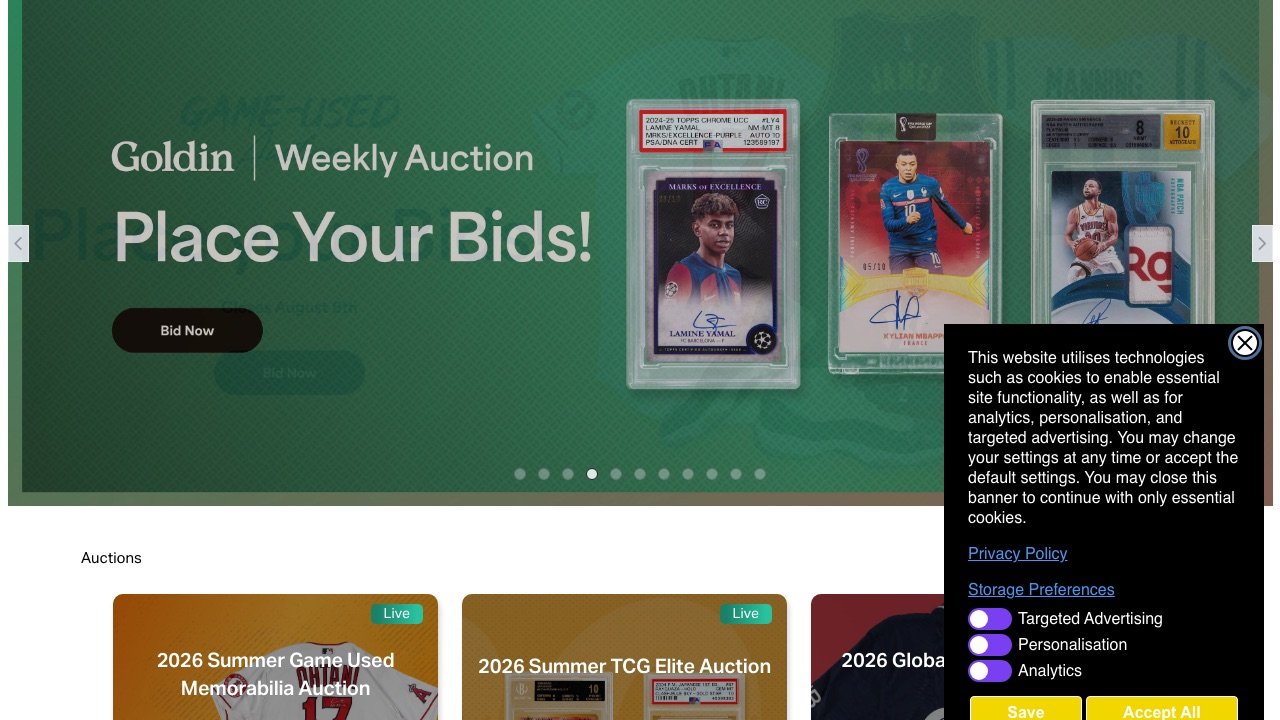
6. Goldin and specialist card auctions
Traditional catalogued auctions rather than live streams, but for higher-value cards and memorabilia they reach the serious money in a way live streams do not. Different buyer, different price tier.
Curated alternatives
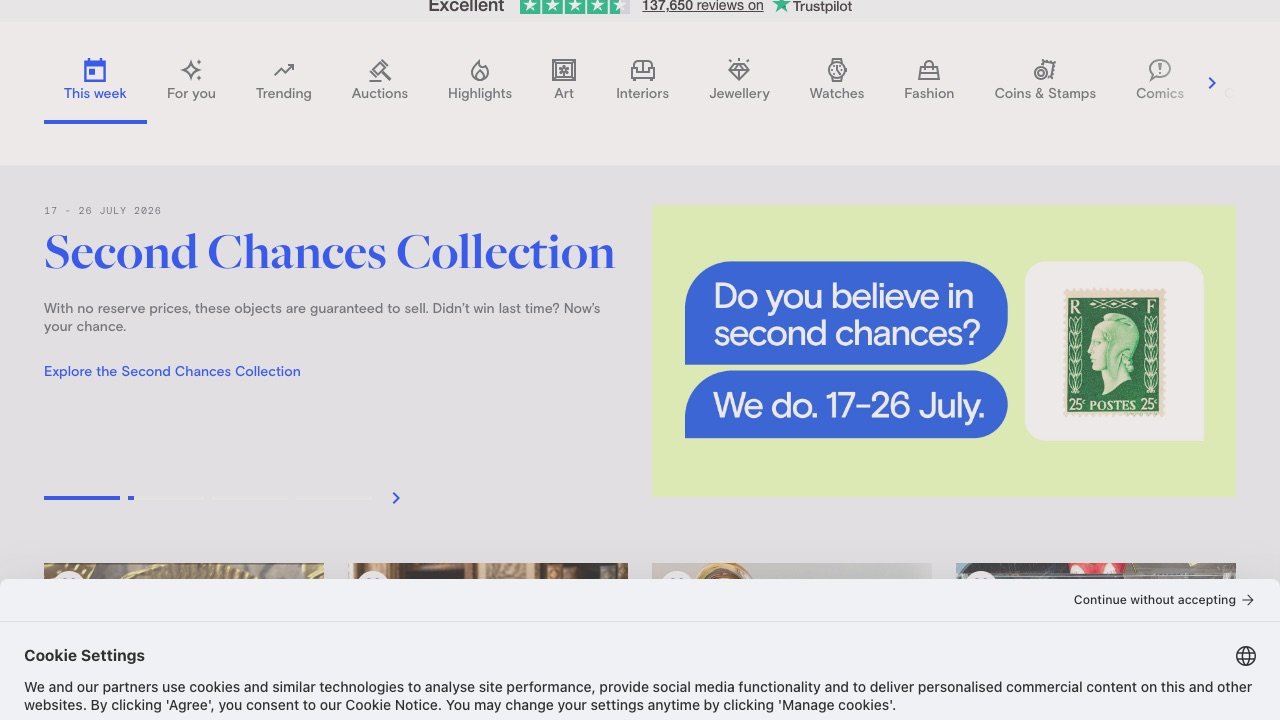
7. Catawiki
Expert-vetted timed auctions. No live video, but the vetting delivers buyer confidence that a live stream achieves through the seller’s personality instead. Better for European collectibles and for sellers who do not want to be on camera.
8. Discord and community-run sales
Established communities running their own break and auction schedules. No fees, high trust within the group, no protection for outsiders. Common in card breaking specifically.
How to choose
- Is your category live-native? Cards, sneakers, comics and collectibles work brilliantly on video. Furniture, industrial equipment and property do not.
- Do you want to be on camera? The live format is a performance, several hours at a time. Not everyone should do it, and it shows immediately when someone is uncomfortable.
- What is the total fee? Commission plus payment processing plus shipping. Compare like for like.
- How hard is seller approval? Some platforms gate streaming rights heavily, which is good for buyers and frustrating for new sellers.
- Who owns the audience? On any platform, your followers are the platform’s users. This is the argument for eventually running your own.
Building your own live auction platform
For established sellers and auction houses with an existing audience, running live auctions on owned infrastructure is increasingly viable. You keep the commission, you own the customer relationship, and you set the rules.
Be clear-eyed about the cost. Low-latency video is the single largest recurring infrastructure expense in a platform like this, and it scales directly with viewership. The bid synchronisation problem — keeping bid state consistent across thousands of viewers while video latency varies per connection — is genuinely hard engineering.
We set out the full architecture in building a live auction streaming platform. If the budget does not support video, the honest middle path is fast timed auctions with strong push notifications — you lose the entertainment layer and keep most of the urgency. See mobile auction app and building a custom auction app.
Frequently asked questions
Which platform pays sellers fastest?
Direct community sales are immediate. Platform payouts typically follow delivery confirmation or a holding period, which varies — check before committing inventory.
Do I need to stream to sell collectibles now?
No. High-value material still performs better in catalogued auctions where serious buyers do their research. Live selling excels at volume in the mid and lower tiers.
What does a live auction platform cost to build?
Substantially more than a standard auction platform, because of the video infrastructure. Talk to our team about whether a timed format would achieve your goals for less.
