The reason Ritchie Bros works is not its website. It is that a buyer in Texas will bid six figures on an excavator in Alberta without seeing it, because the inspection report is trustworthy and the sale is genuinely unreserved. Reproduce those two properties and the rest is ordinary software.
Here is what building an equipment auction platform actually involves.

1. The inspection system is the product
Everything else is secondary. Your platform needs a structured inspection workflow, not a free-text notes field:
- Category-specific templates. An excavator inspection covers undercarriage wear percentage, boom and stick condition, hydraulic function, and track tension. A combine covers concave condition, header, rotor and sieve wear. These cannot share a form.
- Enforced photo sets. Required angles per category, plus mandatory close-ups of the hour meter, serial plate and any disclosed fault. Consistency across lots is what lets buyers scan fifty machines quickly.
- Cold start video. The single most requested item by remote buyers. Make it a required field, not an optional extra.
- Structured wear ratings as percentages or defined grades, never adjectives. “Good condition” means nothing; “undercarriage 60%” is priceable.
- Fluid analysis attachment where available.
- Inspector identity and timestamp on every report, because accountability is what makes the report credible.
The guarantee layer is a commercial decision rather than a technical one, but it needs system support: a claims workflow, a dispute record, and reporting on claim rates by inspector. An inspector whose reports generate claims is a liability you need to be able to identify.
2. Unreserved sale logic
Unreserved sounds like the absence of a feature, but implementing it properly requires deliberate work:
- No reserve field on the lot, and no back-door mechanism for a seller to withdraw late
- Enforced consignment terms preventing withdrawal after a defined cut-off
- Blocking of seller and related-party bidding, with account linkage detection
- Public, permanent publication of results — including the disappointing ones
That last point is what makes the policy credible. A platform that publishes every result, including machines that sold badly, is demonstrably not hiding withdrawals. Buyers notice.
3. The equipment data model
Get this right at the start; it is expensive to change later:
- Manufacturer, model and year as controlled vocabularies rather than free text — free text destroys search
- Serial number with verification status
- Hour or mileage meter with a reading source and a photograph
- Attachments and implements as linked child records, so a tractor with a loader is one lot with two components
- Physical location with yard, row and access notes
- Title and ownership documentation status
- Lien status, which must gate release even after payment clears
Liens deserve emphasis. Selling equipment with an undischarged lien creates a genuine legal problem for the buyer and a reputational one for you. Build the check into the release workflow as a hard block.
4. Bidding mechanics
Standard, and standard is correct: proxy bidding with server-side maximums, tiered increment tables that scale with price, soft-close anti-sniping, and simulcast support if you also run live ring sales.
Equipment-specific additions worth building: choice lots, where a winner selects one or more items from a group at the hammer price and the remainder re-offer; and grouped lots that can sell individually or as a package, whichever produces more. Both are common in fleet dispersals and both need explicit support.
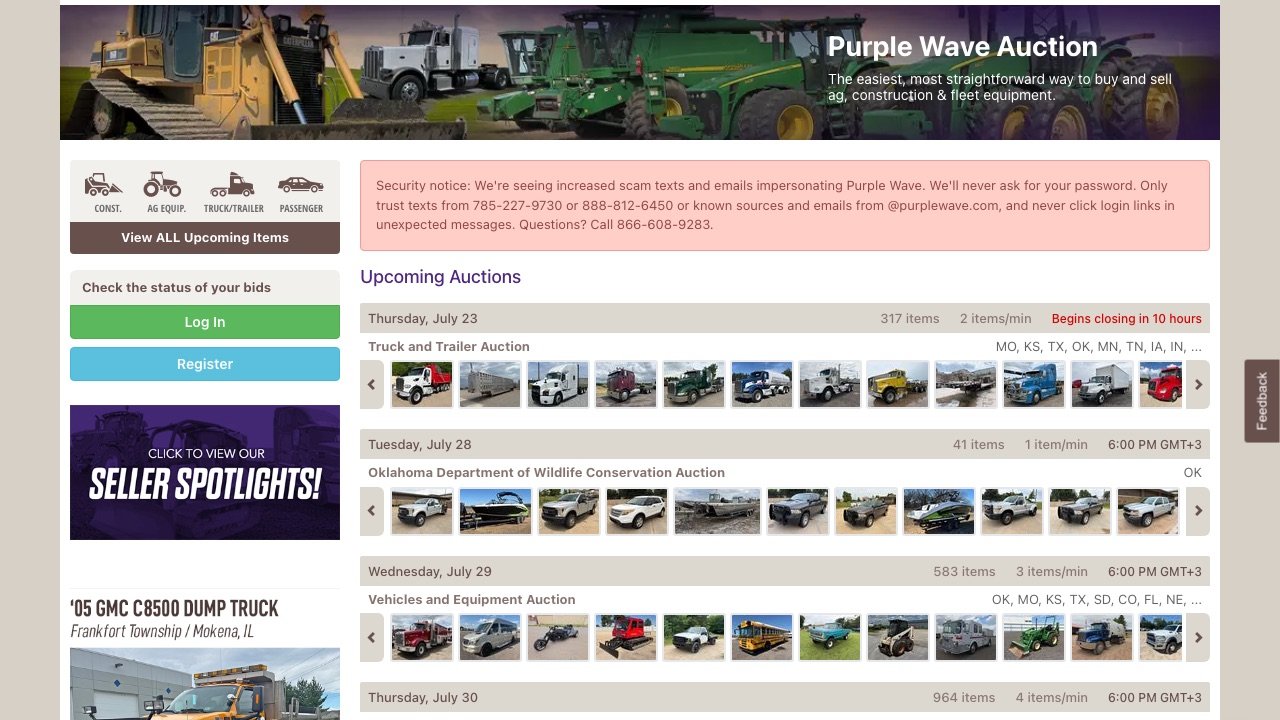
5. Transport and logistics
Freight on heavy equipment is expensive enough to change bidding behaviour. A buyer who does not know whether shipping is $900 or $4,000 will bid conservatively, and that conservatism costs the seller.
Build transport quoting into the listing page. Even an approximate estimate based on distance, weight and dimensions materially improves bidding, because it converts an unknown into a number. Integrating with a freight broker so buyers can book at checkout is better still.
6. Buyer verification and deposits
Equipment lots carry high values, so non-payment is expensive. Standard practice: a refundable deposit scaled to the buyer’s bidding limit, checked in real time before a bid is accepted; identity and business verification above threshold values; and escalating storage charges once a collection grace period expires.
Also needed: a defaulted-buyer workflow that automatically re-offers the lot and applies the deposit against the shortfall.
7. Consignor settlement
The unglamorous back office that determines whether sellers come back. Per-consignor statements showing gross hammer, commission, listing and inspection fees, transport charges and net proceeds — generated automatically, with a defined payment date that you hit.
Fleet dispersals involve dozens of lots from one consignor, so settlement must aggregate correctly and handle partial payment where some lots have collected and others have not. This is exactly the scope of an auction management system.
8. Build versus license
The honest split: license the bidding engine, catalogue, invoicing and settlement layers, and build the inspection system yourself. The inspection workflow is where your platform is different from everyone else’s, and it is the part that determines realised prices.
Cost guidance is in auction website build costs, the module set in custom auction software, and the competitive landscape in Ritchie Bros alternatives.
Frequently asked questions
Do I need physical yards to run equipment auctions?
No. The fully online model — machines stay with the seller until sold — is now well established and avoids the largest capital cost in the traditional model.
How important is the inspection guarantee?
It is the difference between a bidder committing and a bidder watching. If you cannot offer a guarantee initially, at minimum make inspections independent and consistent.
What is the hardest part to build?
The inspection template system, because it must be flexible across equipment categories while staying rigid enough to produce comparable reports. Talk to our team about how we structure it.
