Marketplace quotes range from $500 to half a million, and both ends can be honest. The gap exists because “marketplace” covers everything from a directory with a contact form to a platform handling split payments across thousands of sellers in multiple currencies.
Here is what each tier actually buys you in 2026, and — the part that matters more — the running costs that determine whether the unit economics work.
Tier 1: No-code platforms — $100 to $500 a month
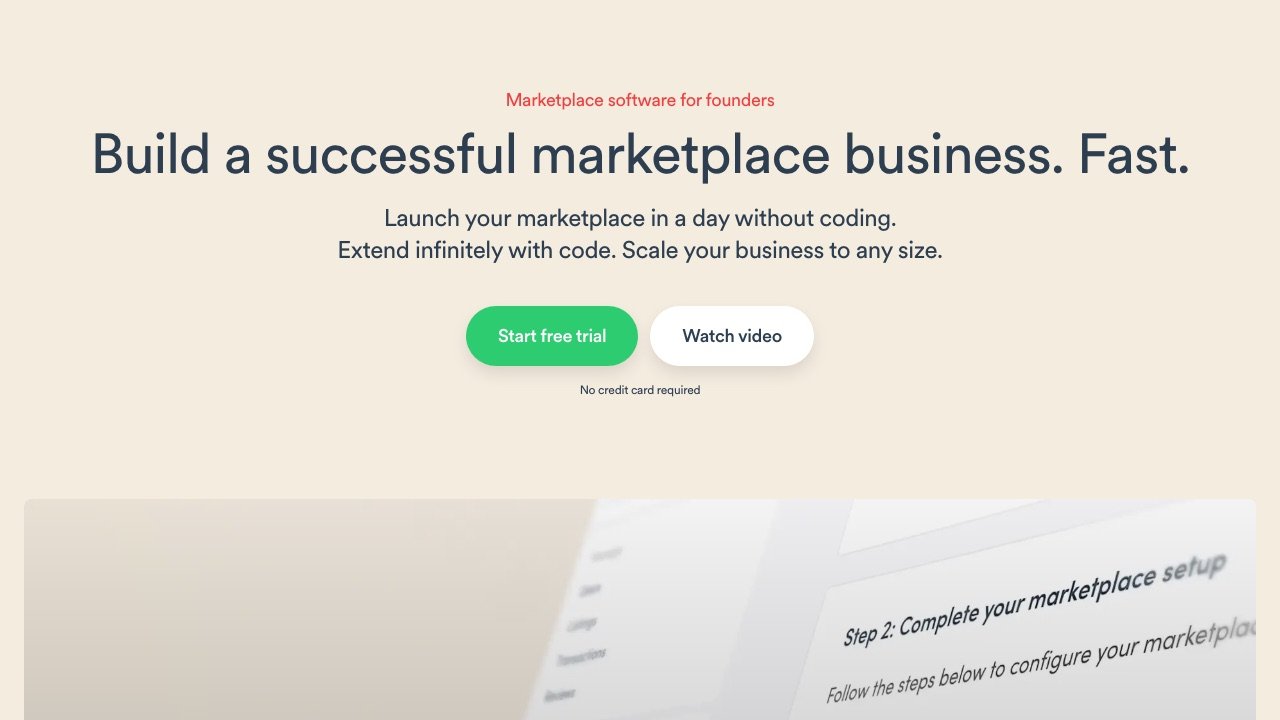
Sharetribe, Arcadier and similar hosted products get you a functioning two-sided marketplace without writing code. Vendor onboarding, listings, search, messaging, payment splitting and reviews all work out of the box.
What you are buying is speed. What you are giving up is control — you cannot fundamentally change the transaction model, and you are renting the platform indefinitely. For validating whether anyone wants your marketplace at all, that is a good trade. As a permanent home for a business doing real volume, it usually is not.
Tier 2: Licensed multi-vendor software — $2,000 to $20,000
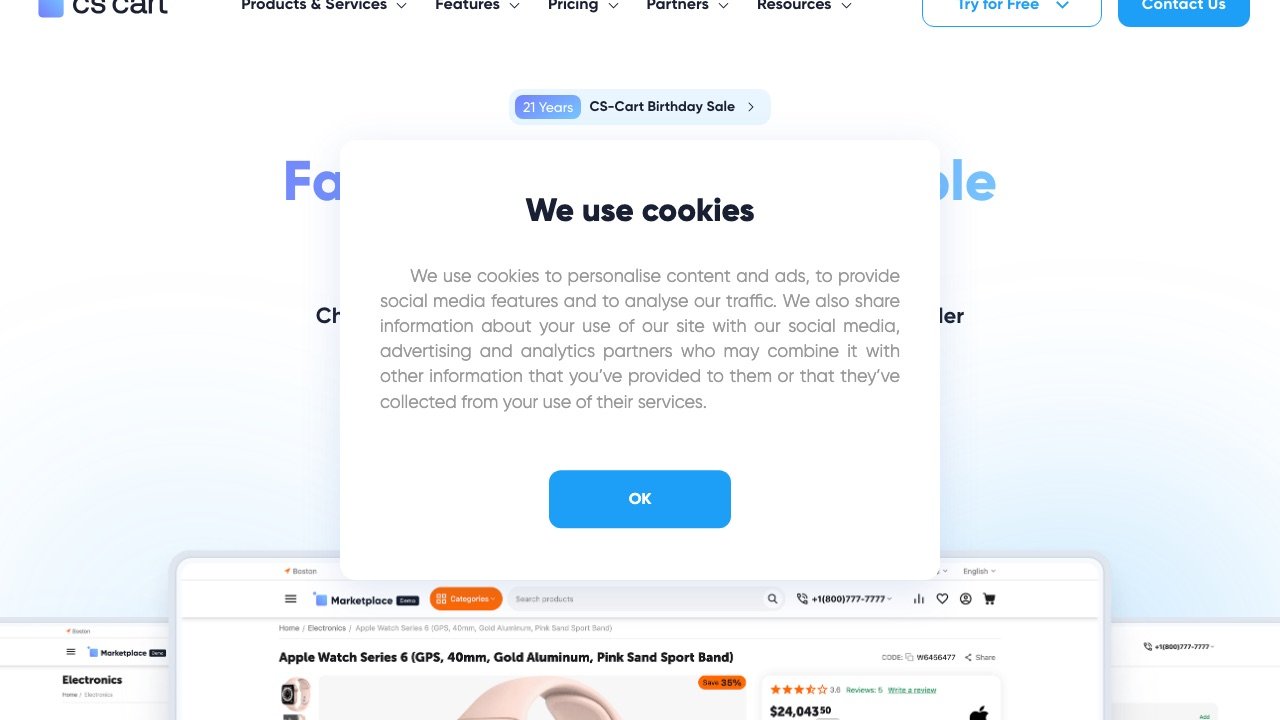
CS-Cart Multi-Vendor, a licensed marketplace platform, or a properly configured WooCommerce multi-vendor build. One-time licence, you host it, you own the code and the data.
This is where most serious operators should start. You get the generic 80% — vendor accounts, commission rules, payouts, order splitting, reviews — and you spend your budget on the differentiated part. If your marketplace involves bidding rather than fixed prices, this is also the tier where multi-vendor marketplace platform functionality and auction mechanics can be combined properly.
Tier 3: Licensed platform plus custom modules — $20,000 to $80,000
The tier that produces most successful launches. Start from proven software, then build the specific things your market needs: a bespoke matching algorithm, industry-specific listing attributes, an escrow flow, a certification or verification layer, integrations with the incumbent systems your vendors already run.
The reason this works is leverage. You are only paying to build the part that is genuinely yours, and the risky, hard-to-get-right infrastructure is already battle-tested.
Tier 4: Full custom build — $100,000 to $500,000+
Justified when the transaction model itself is novel — a marketplace for something that has never been transacted online, a regulated financial product, an exchange with an order book. Not justified because you want a different navigation layout.
The running costs that decide everything
Build cost is a one-off. These are forever, and they are what make or break the model:
- Payment processing and split payouts — around 2.9% plus a fixed fee, plus per-payout charges to each vendor. On a marketplace taking 10% commission, payment costs can eat a third of your revenue.
- Vendor acquisition — the genuinely expensive one. Marketplaces fail on the supply side far more often than the demand side, and acquiring vendors costs real money for a long time.
- Trust and safety — dispute handling, fraud screening, identity verification. Budget staff time, not just software.
- Hosting and search infrastructure — $100 to $2,000 a month depending on catalogue size. Search is usually the component that forces the upgrade.
- Maintenance — 15 to 20% of build cost annually is the realistic figure.
A worked example
A regional B2B equipment marketplace with an auction component. Licensed multi-vendor platform with source access: $9,000. Auction module and RFQ workflow: $14,000. Vendor onboarding flow and verification: $6,000. Design and branding: $4,500. Year-one hosting, payments and tooling: $5,000. Total: roughly $38,500.
At 8% commission, break-even is around $480,000 of GMV. For a B2B equipment category, that is achievable in year one — which is precisely why this tier is the sweet spot.
Where budgets get wasted
Three consistent offenders. First, building a mobile app before proving demand on the web — a responsive site validates the model for a fraction of the cost. Second, over-engineering the admin panel for scale you do not have. Third, custom-building search and recommendations when a hosted search service does it better for a fraction of the price.
Conversely, the spend that consistently pays back is vendor onboarding. Every hour of friction in getting a seller live is a seller you lose.
Our longer piece on marketplace development costs covers the feature roadmap in detail, and build a website like eBay covers the architecture if you are combining fixed-price and auction listings.
Frequently asked questions
What is the cheapest way to launch a marketplace?
A no-code platform for three to six months to validate demand, then migrate to licensed software once you have real vendors and real transactions. Validating first is almost always cheaper than building first.
How long does a marketplace take to build?
No-code: days. Licensed and configured: three to six weeks. Licensed plus custom modules: two to four months. Ground-up custom: nine months minimum.
Should my marketplace include auctions?
If your inventory is unique, used or of uncertain value, yes — bidding discovers price better than a seller guessing. See auction website builder, or talk to our team.
